


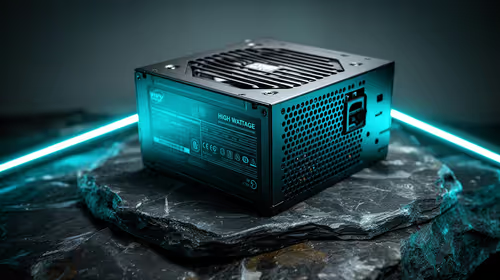
550W PSU Planning for RTX 5080 Super Builds in SA
550W for RTX 5080 Super needs a full-build check, not a simple yes. Review GPU guidance, CPU draw, transient load, connectors, PSU quality, and upgrade plans before deciding.
Read moreAn 8 kHz report rate updates the host more frequently than a 1 kHz rate, but the number alone does not prove a noticeable latency gain. The wired G316 X operates at 8 kHz, giving buyers a clear frequency to compare while keeping system and game results separate.
Polling-rate numbers describe how often a keyboard can report, not how quickly an entire game responds. An 8 kHz versus 1 kHz keyboard comparison should keep reporting frequency separate from measured latency. The wired Logitech G316 X provides the 8 kHz side of that comparison for R1,599.
The G316 X reports at 8,000Hz, up to eight times the report frequency of a 1,000Hz keyboard.
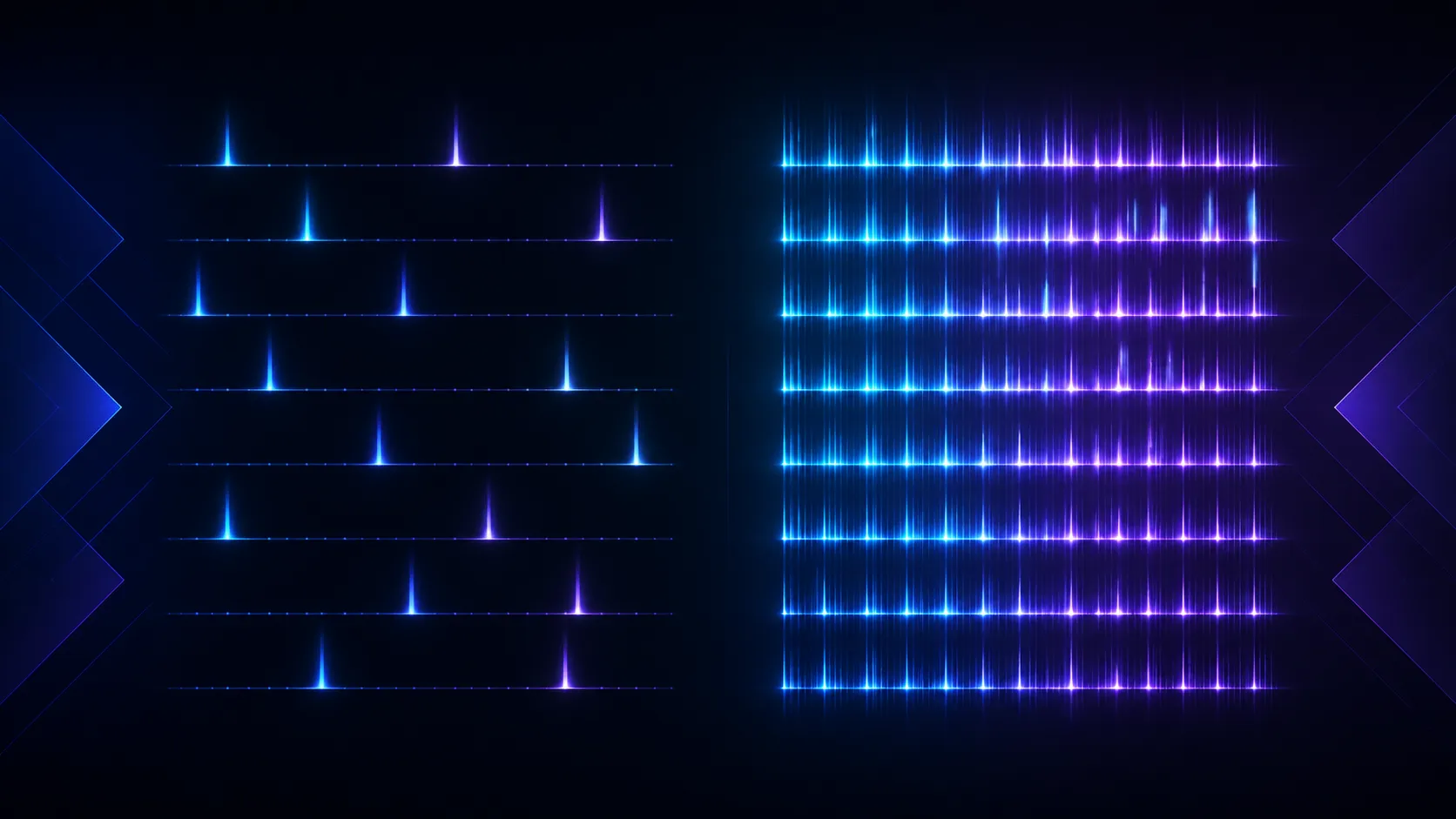
An 8 kHz keyboard can send reports to the host more frequently than a 1 kHz model. That shorter reporting interval may be relevant to a buyer prioritising high-frequency input, but the number alone does not prove a noticeable or competitive gain. Computer processing, software, the game and the display remain parts of the end-to-end path.
The kilohertz figure belongs to keyboard-to-host reporting. It does not describe switch actuation, game-engine processing or display output. Treating the rate as total latency collapses several independent stages into one number and can make a specification sound like a benchmark when no complete measurement has been made.
The G316 X is a wired 98% keyboard with an 8 kHz report rate. No wireless mode belongs in this comparison. View Evetech's Logitech gaming-keyboard range with the connection type and report figure attached to the exact model, since another board's mode or rate should not migrate across the range.
Use the same computer, port, application and repeated input sequence when comparing the two rates. Confirm each keyboard's operating state through the appropriate guidance, then observe stability. Changing the game, display settings or host load at the same time creates a different system rather than a controlled report-rate comparison.
Record configuration failures, missed input and any repeatable difference in plain language. A subjective impression can help a buyer decide preference, but it cannot establish a numerical latency result. Suitable measurement equipment and a defined method are needed before making a quantified claim about the full input chain.
Separate two outcomes in the notes. Stability asks whether the selected operating state persists without errors; preference asks which configuration the user likes. A stable 8 kHz state can exist without a strong personal preference, while an exciting first impression can occur before the setup has proven repeatable. Keeping those results apart prevents enthusiasm from becoming false measurement.
For every run, record the selected state before writing an impression. A dated sequence makes later inconsistencies visible without relying on memory.
At R1,599, the G316 X brings more than its report rate: tactile switches sit in hot-swappable sockets, double-shot PBT forms the caps and G HUB powers dynamic Lightsync RGB. A player who actively prioritises frequent wired reporting may weight 8 kHz highly. A mixed work-and-gaming buyer may place greater value on layout, switch feel or serviceability.
Run a longer normal session after the controlled check. High-frequency reporting should remain stable without forcing the user to abandon the preferred desk arrangement or software routine. Keep competitive rank and match outcomes outside the score, because they include too many uncontrolled influences to prove what one keyboard specification contributed.
Use Evetech's broader gaming-keyboard selection to compare exact 1 kHz and 8 kHz candidates. Preserve connection, report state and price beside each result instead of treating a higher number as an automatic purchase verdict.
Its onboard dial can change the rate through the dot-matrix display, making controlled comparisons easier. Use the same USB-A host, application and frame conditions for both settings. Higher frequency is concrete; a guaranteed end-to-end latency or skill gain is not.
Thermal or processor limits elsewhere in the system can matter more than the keyboard's interval.
Its wired report-rate specification is 8 kHz. That figure concerns the frequency of input reports sent toward the host.
Eight kilohertz permits more frequent host reports than one kilohertz. It does not, by itself, state the complete response time seen in a game.
No. The computer, software, game and display continue the path after the keyboard reports. A complete latency claim needs appropriate comparative measurement.
No. Competitive results involve player skill, game conditions and the wider system. Reporting frequency should not be converted into a promised rank or outcome.
The G316 X is wired; no wireless operating mode should be attributed to it. Plan the cable and host port as part of the setup.
Ready to compare reporting frequency properly? Explore Evetech keyboards with connection, confirmed rate and a repeatable input sequence kept together.
Its wired report-rate specification is 8 kHz. That figure concerns the frequency of input reports sent toward the host.
Eight kilohertz permits more frequent host reports than one kilohertz. It does not, by itself, state the complete response time seen in a game.
No. The computer, software, game and display continue the path after the keyboard reports. A complete latency claim needs appropriate comparative measurement.
No. Competitive results involve player skill, game conditions and the wider system. Reporting frequency should not be converted into a promised rank or outcome.
The G316 X is wired; no wireless operating mode should be attributed to it. Plan the cable and host port as part of the setup.
550W for RTX 5080 Super needs a full-build check, not a simple yes. Review GPU guidance, CPU draw, transient load, connectors, PSU quality, and upgrade plans before deciding.
Read more
8000Hz polling is overrated for most SA gamers because gains can be tiny next to battery drain and monitor limits. Mbombela players should weigh mouse feel, game support, and system stability before chasing the number.
Read more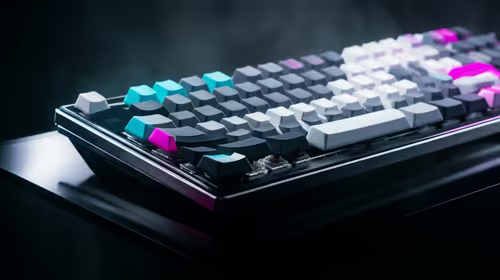
Magnetic switches are taking over SA gaming keyboards because actuation can be tuned. For Sandton gamers, rapid trigger, reset control, and profile depth can help, but layout, key feel, and software quality still matter.
Read more
Polokwane oled monitor value questions need cautious SA context because pricing can move with availability, exchange rates, specs, and warranty support. Treat the trend as a planning signal, not a fixed price promise.
Read more
Arc B580 budget builds for Midrand gamers can shift with exchange rates, supply, specs, and model tier. Treat the title as a buying prompt, then compare SA warranty, timing, and build priorities.
Read more
ROG Ally X may beat the LCD Steam Deck for SA gamers who value stronger handheld performance, more memory, and Windows flexibility. Compare battery life, controls, game libraries, and Polokwane support needs before deciding.
Read more
Minisforum's M2 Pro pairs Core Ultra X7, Arc B390 graphics and 32GB onboard memory in 1.8 litres. SA buyers should weigh its fixed memory and $1,439 launch offer against local mini PCs.

Lenovo says Legion Go failures linked to BIOS N3CN42WW are not user error. Affected SA owners should stop retrying the update, preserve proof and open a support case.

Smart monitors can add apps and convenience, but they also add privacy settings and unwanted-software risk. SA buyers should audit the operating system before paying for extras.

A fake 113GB GTA VI ISO reportedly used empty padding around a small malware payload. SA gamers should delete unofficial builds, keep Windows security active and wait for official channels.

ASUS calls the ROG GT-BN98 the first Wi-Fi 8 gaming router. SA buyers should fix coverage and client limits before paying for a future wireless standard.

Apple's M6 Mac mini adds faster AI, graphics and networking in the same compact format. SA buyers should wait for a rand listing before comparing value.
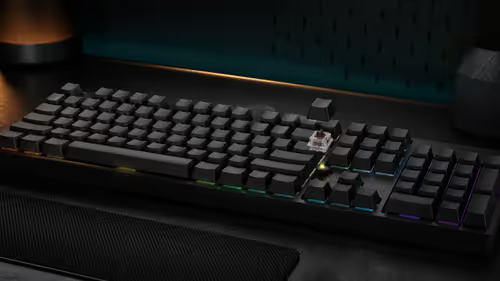
The Vulcan II XP adds hot-swappable switches, sound damping and gaming controls to a full-size wired board. SA buyers should compare feel before features.

Microsoft says Windows on Arm now has over 7,000 verified apps and games. SA buyers should still check each driver, game and work tool before switching.

Xbox Insiders can test disc-to-digital from 31 August 2026. Supported Xbox One and Series X discs gain a digital entitlement, but older discs, regions and title coverage still need exact checks.

ViewSonic's XG2738 pairs QHD QD-OLED with 240Hz and automatic panel care. SA buyers should compare warranty, brightness, ports and burn-in protection against today's R9,999-plus OLED shelf.

NVIDIA's final Windows 10 Game Ready driver is due in October 2026. SA gamers can keep using their GPU, but new game optimisations move on while critical security fixes continue quarterly.

JBL's new Quantum 520, 520X and 120 headsets cover wireless, Xbox-certified and wired use. SA buyers should compare connection, comfort and microphone needs before paying for a new badge.