


1000W PSU Planning for RTX 5090 Builds in SA
1000W for RTX 5090 needs a full-build check, not a simple yes. Review GPU guidance, CPU draw, transient load, connectors, PSU quality, and upgrade plans before deciding.
Read morelightweight wireless mice run near zero latency on a 2.4GHz dongle. For the spec choice carries through to long-term ownership and resale. Sensor, weight, battery, and wireless notes inside. Real ZAR numbers and Evetech in-stock notes included.
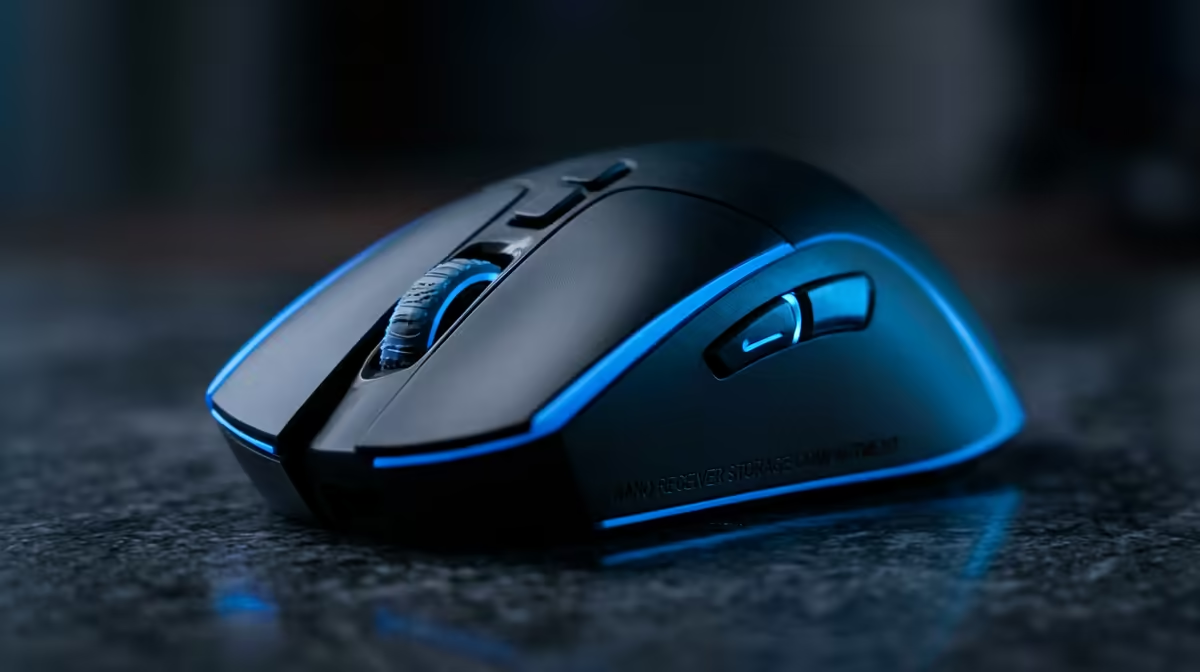
The essential mouse features to understand are: sensor type and DPI range (determines tracking accuracy), connectivity (USB-A wired, 2.4GHz nano receiver, or Bluetooth), scroll wheel type (stepped vs free-spinning), side grips (textured rubber panels for secure palm and claw grip), and nano receiver storage (a hollow battery or bottom-panel slot for travel convenience). Each feature addresses a specific part of the daily use experience.
The optical sensor is the engine of the mouse. Entry-level blue LED optical sensors track at up to 1600 DPI and suit office tasks and casual use. Mid-range gaming sensors like the PMW3327 track at up to 10,000 DPI with sub-1ms lift-off detection. High-end sensors like the PMW3395 (found in gaming mice from R900 to R1,800 in South Africa) achieve 26,000 DPI with zero smoothing and are used in esports. Polling rate is how frequently the sensor reports position to the PC: 125Hz (8ms intervals) is standard on office mice; 1,000Hz (1ms) is standard on gaming mice; 4,000Hz and 8,000Hz polling appear on flagship gaming mice and reduce perceived micro-lag further.
Wired USB-A mice deliver zero latency and require no batteries. Wireless mice with 2.4GHz nano receiver dongles (small enough to store inside the mouse's battery compartment or a bottom-panel slot) achieve 1ms to 3ms wireless latency, comparable to wired for all practical purposes. Nano receiver storage is a feature most users overlook until they travel: when the receiver is parked inside the mouse, it cannot be lost or left behind, which matters for South African students moving between res and home or for work-from-anywhere setups. Bluetooth wireless avoids the USB dongle entirely but typically adds 10ms to 30ms latency and depends on the host device's Bluetooth quality.
Side grips are rubberised or textured panels on the left and right flanks of the mouse body, designed for claw and palm grip users to avoid the mouse slipping during fast movements or long sessions. Thicker grips with a soft-touch finish absorb sweat better, which matters in warm South African summer conditions. Scroll wheels vary by intended use: a notched, tactile scroll wheel provides accurate line-by-line control in documents and spreadsheets; a free-spinning scroll wheel (common on productivity mice) allows rapid scrolling through long pages but is less precise for code navigation. Some mice include a wheel tilt function for horizontal scrolling in wide spreadsheets.
If your wireless mouse has a nano receiver storage slot (typically under the battery door or in the base), keep the receiver stored there whenever you are not at your desk. One misplaced 12mm nano dongle renders the mouse useless and replacements are not always readily available locally. Store it in the mouse by habit every time you pack up.
No. The nano receiver functions identically whether it is stored inside the mouse or plugged into the PC.
Textured rubberised side grips are durable for 18 to 24 months of daily use before the texture begins to wear smooth. Soft-touch matte plastic grips without rubber coating are less grippy but more resistant to long-term surface degradation.
After the right mouse for your desk or gaming setup? Evetech stocks wired and wireless mice with a range of sensor specs, grip styles, and scroll wheel types. Browse the full mouse range at Evetech to find the right fit.
1000W for RTX 5090 needs a full-build check, not a simple yes. Review GPU guidance, CPU draw, transient load, connectors, PSU quality, and upgrade plans before deciding.
Read more
RTX 5080 Super with a 750W PSU is more comfortable than lower wattage if the unit is quality. SA builders should still confirm GPU guidance, CPU draw, connector type, airflow, and upgrade room.
Read more
How to fix FPS drops after a RX 9070 XT starts with driver cleanup, chipset updates, thermals, and power checks. For SA gaming PCs, confirm PCIe seating, monitor refresh, frame caps, and per-game graphics settings before replacing parts.
Read more
How to fix low FPS Windows 11 Wi-Fi 7 issues starts by checking whether the problem is frame rate or network lag. Test ping, drivers, power settings, Ethernet, and game FPS before adjusting visuals.
Read more
AM5 is smart for SA builders because it supports newer Ryzen CPUs, DDR5 memory, and a longer upgrade path. Compare board cost, cooling, gaming needs, and local part availability before choosing your next PC platform.
Read more
AM5 gives Randburg gaming builders a longer upgrade path. For SA buyers, DDR5 support, newer board features, and future CPU options can justify the platform. Weigh board cost, cooler support, BIOS maturity, and upgrade timing before choosing.
Read more
RTX 5090 on a 550W PSU leaves almost no practical room for OC plans. Treat the setup as constrained, with CPU draw, power spikes, cable quality, thermals, and stability checks more important than chasing extra clocks.
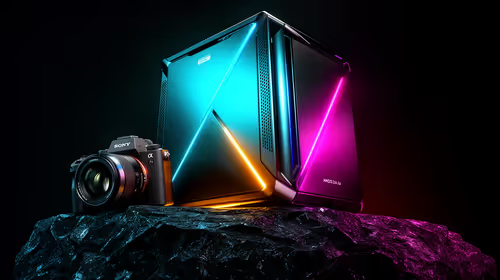
FPS drops on a Ryzen 9 9950X3D build often have a fixable cause. Check settings, drivers, thermals, background tasks, network conditions, and bottlenecks before assuming a part must be replaced.

The difference between PCIe 5.0 and PCIe 4.0 for SA gamers is mostly bandwidth headroom. Compare GPU slot needs, NVMe speed, motherboard support, and upgrade timing before paying extra for a newer platform.

Gaming PC stuck pixel checks in South Africa should confirm the monitor fault first. Use colour tests, screenshot comparison, cable swaps, display menu checks, and clear photos before deciding on support.

AMD's current driver now lists a Radeon RX 9050 4GB, while product coverage details a narrowed memory system. SA buyers should weigh the low VRAM ceiling against current local Radeon options.

Samsung Display has demonstrated a 16-inch 2.5K OLED laptop panel running at 300Hz. SA buyers should wait for a named notebook, full panel specifications and a local price before planning an upgrade.

Microsoft says some Windows 11 game crashes after recent updates are linked to RGB-related drivers. Affected SA gamers should confirm the update and driver before using the published registry workaround.
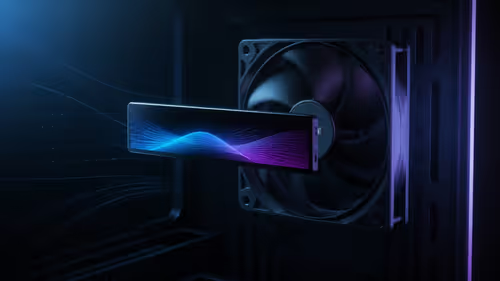
Thermalright's Fan Frame Vision-1 adds a 640x172 status screen to a standard 120mm fan. SA builders should check clearance, USB routing and local support before treating it as an easy upgrade.

Shokz OpenFit Air 2 earbuds weigh 7.2g each and use a redesigned dual-driver open-ear layout. SA buyers should choose them for comfort and awareness, not maximum isolation.

A fake 113GB GTA VI ISO reportedly used empty padding around a small malware payload. SA gamers should delete unofficial builds, keep Windows security active and wait for official channels.

The ROG Flux Charger Dock combines 260W total output, 140W laptop charging and HDMI 2.1. SA buyers should check laptop USB-C limits, display needs and local warranty first.

ASRock's Rock 360 Digital AIO adds a 1.05-inch CPU temperature display, 360mm radiator and simplified wiring. SA builders should check case fit, socket support and local warranty.