


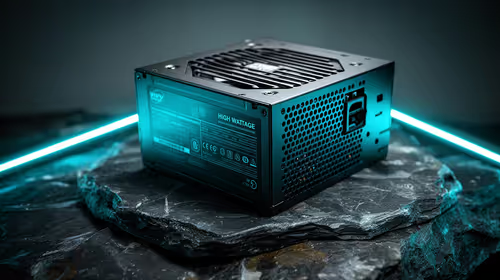
550W PSU Planning for RTX 5080 Super Builds in SA
550W for RTX 5080 Super needs a full-build check, not a simple yes. Review GPU guidance, CPU draw, transient load, connectors, PSU quality, and upgrade plans before deciding.
Read moreAnti-glare treatment is the practical choice when reflections interrupt daily laptop work. This R299 privacy filter brings anti-glare control to a 15.6-inch 16:9 screen and adds anti-spy protection for shared environments.
A glossy laptop can look crisp in controlled lighting and frustrating beside a window. An anti-glare laptop screen treatment earns its place when reflections repeatedly interrupt reading, while gloss remains reasonable where light sources are easy to manage and surface character matters more.
Anti-glare is usually the practical daily-work choice in rooms with troublesome reflections; glossy screens can remain suitable in controlled light. R299 buys the anti-glare Laptop Privacy Screen Protector Filter for a 15.6-inch 16:9 display, with anti-spy filtering included. It lets a matching laptop address glare without replacing the panel itself.
Stand behind the normal chair and look for windows, ceiling fittings and bright walls that face the display. Reflections come from the relationship between those sources and the screen, not from the laptop alone. A glossy finish may be perfectly manageable at one desk and distracting after the machine moves two metres.
Use the laptop at the brightness level you normally select. Open a dark interface, a white document and a page with coloured graphics. Dark areas often reveal reflected objects most clearly, whereas pale pages show whether overhead light creates a washed distraction. The relevant finish is the one that behaves well across your actual tasks.
The Evetech gaming accessories category can support a wider desk review. Stands and other items may change screen position, so consider them as parts of the lighting arrangement rather than unrelated extras.
An anti-glare filter adds a treated surface in front of the display. It does not convert the panel technology or alter laptop colour settings automatically. The visible experience may still change, which is why a central-seat trial with documents, images and dark screens matters.
This R299 model also carries anti-spy behaviour. That second function narrows casual side viewing, so the accessory is doing more than reflection control. Keep the tests separate: first inspect the centre view under different light, then have another person move to nearby side positions with harmless content open.
The protector is shaped for a 15.6-inch display using 16:9 proportions. Verify the laptop against both values. An incorrect outline can create exposed edges or overlap, turning a surface comparison into a fit problem.
Do not use the outer lid width as the screen measurement. Laptop specifications usually list the diagonal and aspect ratio more reliably than a ruler placed across the chassis. Once those numbers agree, follow the accessory's placement guidance and check that the active display remains evenly covered.
Buyers can review screen and monitor accessories through Evetech after recording the format. This keeps an attractive price or feature from overriding basic compatibility.
Count how often reflections make you move, increase brightness or lose your place during a normal day. A recurring interruption supports the case for anti-glare. One brief reflection at a rarely used angle may be better solved by turning the laptop or changing the room layout.
Privacy adds another value route. People who move between shared desks, study spaces or public seating may benefit from reduced side visibility even when lighting is acceptable. Someone working alone in a dim, controlled office might weigh the surface result more heavily than the anti-spy function.
R299 therefore buys a dual-purpose accessory, not a guarantee of higher productivity. Productivity depends on whether the filter reduces real distractions without making the central view uncomfortable for the person doing the work.
For this accessory, anti-glare is paired with a privacy field that favours the person directly in front of the screen. That combination suits bright shared spaces where reflections and nearby observers can interrupt the same work session. The surface remains sharp for the central user and adds scratch-proof resistance to dust and oily contact, creating a more complete daily-productivity benefit than glare reduction on its own.
No. Anti-glare is useful around persistent reflections, while a glossy surface may suit controlled lighting. The work environment should lead the choice.
It is a physical screen accessory, not an automatic brightness or colour control. Review the centre view using the settings you ordinarily use.
The filter is anti-spy as well as anti-glare, so it also reduces casual viewing from side positions around the laptop.
The intended format is 15.6-inch 16:9. Matching only the diagonal can overlook a different panel shape and lead to poor alignment.
Ready to make reflections less disruptive? Map the light around your usual desk, confirm the laptop format and compare suitable display accessories through Evetech.
No. Anti-glare is useful around persistent reflections, while a glossy surface may suit controlled lighting. The work environment should lead the choice.
It is a physical screen accessory, not an automatic brightness or colour control. Review the centre view using the settings you ordinarily use.
The filter is anti-spy as well as anti-glare, so it also reduces casual viewing from side positions around the laptop.
The intended format is 15.6-inch 16:9. Matching only the diagonal can overlook a different panel shape and lead to poor alignment.
550W for RTX 5080 Super needs a full-build check, not a simple yes. Review GPU guidance, CPU draw, transient load, connectors, PSU quality, and upgrade plans before deciding.
Read more
8000Hz polling is overrated for most SA gamers because gains can be tiny next to battery drain and monitor limits. Mbombela players should weigh mouse feel, game support, and system stability before chasing the number.
Read more
Magnetic switches are taking over SA gaming keyboards because actuation can be tuned. For Sandton gamers, rapid trigger, reset control, and profile depth can help, but layout, key feel, and software quality still matter.
Read more
Polokwane oled monitor value questions need cautious SA context because pricing can move with availability, exchange rates, specs, and warranty support. Treat the trend as a planning signal, not a fixed price promise.
Read more
Arc B580 budget builds for Midrand gamers can shift with exchange rates, supply, specs, and model tier. Treat the title as a buying prompt, then compare SA warranty, timing, and build priorities.
Read more
ROG Ally X may beat the LCD Steam Deck for SA gamers who value stronger handheld performance, more memory, and Windows flexibility. Compare battery life, controls, game libraries, and Polokwane support needs before deciding.
Read more
Minisforum's M2 Pro pairs Core Ultra X7, Arc B390 graphics and 32GB onboard memory in 1.8 litres. SA buyers should weigh its fixed memory and $1,439 launch offer against local mini PCs.

Lenovo says Legion Go failures linked to BIOS N3CN42WW are not user error. Affected SA owners should stop retrying the update, preserve proof and open a support case.

Smart monitors can add apps and convenience, but they also add privacy settings and unwanted-software risk. SA buyers should audit the operating system before paying for extras.

A fake 113GB GTA VI ISO reportedly used empty padding around a small malware payload. SA gamers should delete unofficial builds, keep Windows security active and wait for official channels.
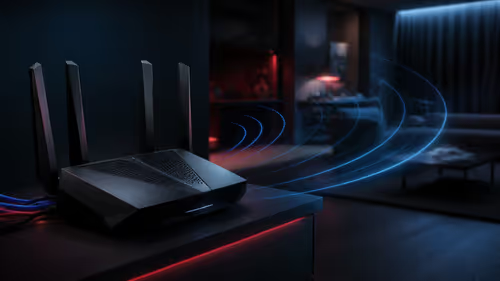
ASUS calls the ROG GT-BN98 the first Wi-Fi 8 gaming router. SA buyers should fix coverage and client limits before paying for a future wireless standard.
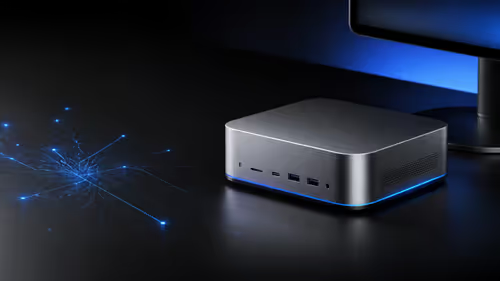
Apple's M6 Mac mini adds faster AI, graphics and networking in the same compact format. SA buyers should wait for a rand listing before comparing value.
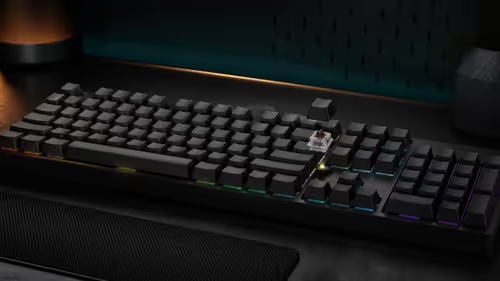
The Vulcan II XP adds hot-swappable switches, sound damping and gaming controls to a full-size wired board. SA buyers should compare feel before features.

Microsoft says Windows on Arm now has over 7,000 verified apps and games. SA buyers should still check each driver, game and work tool before switching.

Xbox Insiders can test disc-to-digital from 31 August 2026. Supported Xbox One and Series X discs gain a digital entitlement, but older discs, regions and title coverage still need exact checks.
ViewSonic's XG2738 pairs QHD QD-OLED with 240Hz and automatic panel care. SA buyers should compare warranty, brightness, ports and burn-in protection against today's R9,999-plus OLED shelf.

NVIDIA's final Windows 10 Game Ready driver is due in October 2026. SA gamers can keep using their GPU, but new game optimisations move on while critical security fixes continue quarterly.

JBL's new Quantum 520, 520X and 120 headsets cover wireless, Xbox-certified and wired use. SA buyers should compare connection, comfort and microphone needs before paying for a new badge.