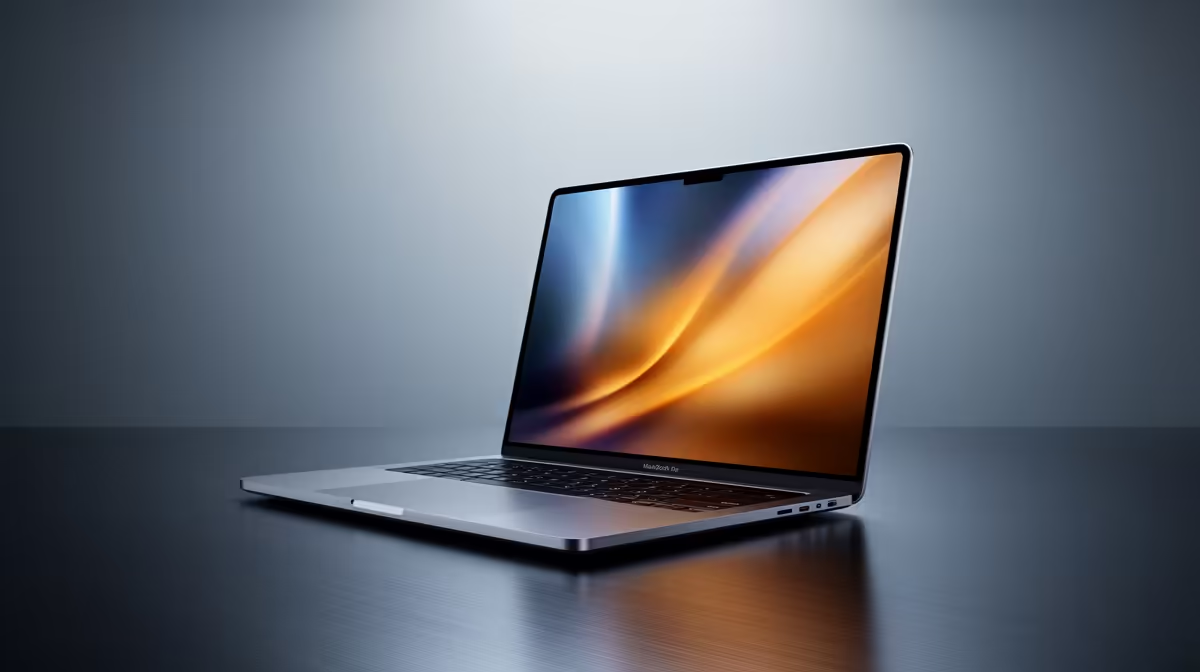
Run the Apple Intelligence compatibility list against your Mac and the cutoff is brutally clear: every model with an Intel processor is left out, and only Macs built on Apple silicon, M1 and later, make the cut. This is not Apple gating features to sell hardware. Apple silicon vs Intel Macs is an architectural divide, because the on-device AI models need a Neural Engine that Intel logic boards were never built with.
Quick Answer
Apple Intelligence runs only on Apple silicon Macs, meaning M1 or newer. No Intel Mac is supported, and no software update will change that, because Intel chips have no Neural Engine to run the on-device models. If you want these features, you need an Apple silicon machine.
The Neural Engine Is the Hard Line
Apple Intelligence is built as a hardware and software co-design, not a pure software layer. The on-device models that handle writing tools, image features, and the smarter Siri run on the Neural Engine, a dedicated block of silicon inside every M-series chip with 16 cores or more. Intel Macs route everything through the CPU and integrated graphics, with no equivalent accelerator anywhere on the board.
That is why the divide is permanent. You cannot add a Neural Engine to an Intel Mac with a firmware update any more than you can add cores to a chip that does not have them. Apple silicon also pairs the Neural Engine with a unified memory pool the CPU, GPU, and Neural Engine all share, which keeps the large model weights moving fast enough to be useful. Intel Macs lack both pieces, so they sit outside the requirement entirely.
What This Means If You Are Still on Intel
If you are running a 2019 or 2020 Intel MacBook Pro, iMac, or Mac Pro, those are the final Intel models, and they are now frozen out of Apple Intelligence and of macOS releases that require Apple silicon going forward. They still work for everyday tasks, but the AI feature set is closed to them for good.
Moving to Apple silicon is the only route in. Even a base M1 or the current entry chips clear the requirement, so you do not need a top-tier machine to get the full feature set. The MacBook range at Evetech lists which Apple silicon generation each model carries, so you can match the chip to your budget. For a quick sense of what other shoppers are picking up, the most popular laptops this month are a useful shortlist.
Frequently Asked Questions
Does my Intel Mac support Apple Intelligence?
No. Every Intel Mac is excluded because it has no Neural Engine. Only Apple silicon Macs, M1 and later, can run the on-device models, and no update will change that.
Is the cheapest Apple silicon Mac enough for Apple Intelligence?
Yes. A base M1 already meets the requirement, so even entry-level Apple silicon machines run the full feature set. The chip generation matters more than the price tier here.
Why can't a software update bring it to Intel Macs?
Apple Intelligence runs its models on the Neural Engine, which Intel chips physically lack. Software cannot add a hardware accelerator that was never on the board.
Will future Apple Intelligence features need a newer chip than M1?
Some of the most advanced features, like the next-generation Siri, are expected to need newer chips such as M3 or later. The baseline for core Apple Intelligence remains M1, but heavier features can raise the bar.
Should I keep my Intel Mac or upgrade?
If you only need everyday productivity, an Intel Mac still works. If Apple Intelligence and current macOS releases matter to you, moving to Apple silicon is the only path forward.