Paddles can move a face-button action under a spare finger without creating the action for you. Even so, controller paddles in tournaments must match the organiser's current hardware and remapping rules before competition day.
Quick Answer
Controller paddles and one-to-one button remapping are allowed in many competitions because each press still produces one game action, but no setting is legal in every tournament. Turbo, rapid fire, timed sequences and macro buttons can breach rules even when built into the controller. Wireless use can also be restricted at a crowded venue. Read the exact game and organiser rulebook, remove automation, save a plain profile and bring the approved cable or receiver. Let officials inspect the device before the match.
Paddles change reach, not the action
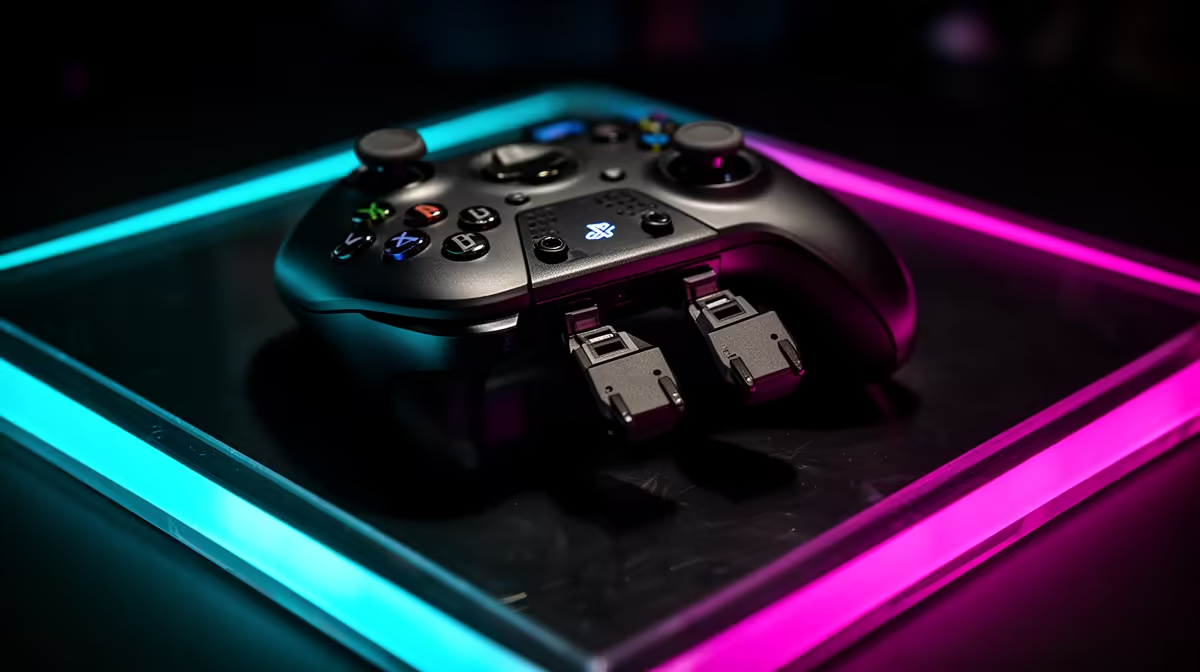
A back paddle can duplicate an existing face button so you jump or reload without moving a thumb from the stick. That remains one physical press for one mapped action.
Remapping can also move crouch, push-to-talk or a shoulder command to another control. Check whether the event limits duplicate bindings or requires a stock layout.
The paddle's existence does not grant permission. The active profile and organiser ruling decide.
Remove automation
Disable turbo, rapid fire, combo recording and any sequence that sends several actions from one press. Clear secondary layers that can activate them.
Onboard memory does not make a macro exempt. Test every paddle in the platform accessory app or plain game menu.
Factory reset can help, but confirm that cloud software did not restore another profile afterwards.
Prepare for the venue
Ask whether wireless controllers are allowed and which receivers, cables or batteries you may bring. Radio restrictions can be about interference and administration rather than competitive advantage.
Mark the clean profile, charge the pad and pack a tested data cable. Arrive early for a settings check.
Test the clean controller profile
Open the platform accessory app and press each paddle once. Confirm one expected button lights up. Hold it and check that no turbo or repeated event appears.
Test stick deadzones and trigger stops through the event's permitted controls. A physical trigger stop can change travel without creating extra actions, yet an organiser can still restrict hardware modifications.
Save the profile, disconnect the controller and reconnect it in wired mode. Some devices store one profile onboard and load another through desktop software.
Play an offline practice round with the event layout. Include menus and pause screens so an accidental secondary binding appears before the match.
For an adaptive controller or accessibility remap, ask the organiser about its supported process early. One-to-one access needs deserve a clear ruling, not a last-minute dispute.
Compare gaming controllers by platform, paddle and wired-mode support. The peripheral best-seller range can help complete the setup after you verify event compatibility.
FAQ
Are back paddles an unfair advantage?
They can improve reach, while many events permit one-to-one mappings. Check the exact rules rather than assuming approval.
Is turbo the same as remapping?
No. Turbo repeats actions from one hold. A remap moves one action to another physical control.
Will officials inspect controller settings?
They may. Keep a clean profile and follow the event's inspection or house-equipment process.
Map each paddle to one permitted action, delete turbo and sequences and get the current organiser ruling before packing the controller.