Two NAS boxes can look identical on the shelf and behave completely differently once you point Plex at them, and the reason sits in the processor. ARM versus x86 NAS is the choice that quietly decides whether your media server can transcode a 4K stream, run a virtual machine, or only shuffle files around. Pick the wrong one and you discover the limit the first time a phone asks for a downscaled stream.
Quick Answer
ARM-based NAS units are fine for file serving and direct streaming, but Plex transcoding, virtual machines and heavier apps need an x86 CPU from Intel or AMD. An x86 model with Intel Quick Sync can hardware-transcode multiple simultaneous streams that an ARM chip cannot manage in software. If Plex transcoding matters to you, buy x86.
What each architecture is good at
ARM chips are efficient and cheap, which is why they power most entry-level NAS units. For storing files, running backups and direct-playing media to a device that already supports the format, ARM is perfectly capable and sips power.
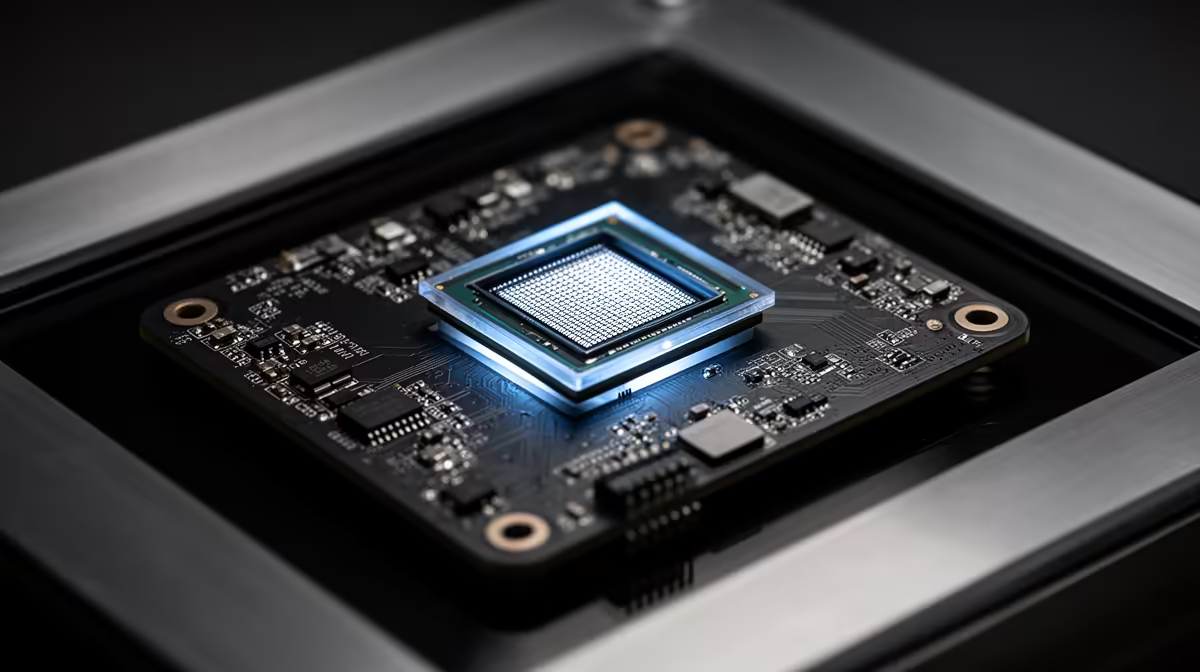
The moment a client cannot play a file natively, the server must transcode it, and that is where ARM falls down. Plex only officially supports x86 and x86-64 processors for the media server, and consumer ARM NAS chips often cannot transcode at all, since it depends heavily on codecs, drivers and how the app is packaged. An x86 Intel CPU with Quick Sync, by contrast, is built for efficient video encode and decode and can hardware-accelerate several streams at once.
Plex, virtual machines and the x86 advantage
If your library is 4K HEVC and your clients are mixed phones, TVs and browsers, transcoding is unavoidable, and you want Intel Quick Sync doing it in hardware. For reliable HEVC transcoding on a NAS, look for a JasperLake-generation Intel chip or newer. One caveat worth knowing: hardware transcoding does not work inside a virtual machine, because the VM host does not expose the low-level video hardware to the guest. Docker containers, however, can reach Intel Quick Sync, so containerised Plex on an x86 NAS is the dependable route.
Virtual machines and heavier self-hosted apps tell the same story. They want the broad software compatibility and raw headroom of x86, which ARM simply does not match at the NAS tier. The right diskless enclosure depends on which of these jobs you actually need, so it is worth weighing your workload against the NAS storage options at Evetech before committing. Whatever the architecture, the drives matter as much as the box, and the Evetech SSD best sellers are a sensible starting point for cache and fast app storage.
Frequently Asked Questions
Can an ARM NAS run Plex at all?
It can run the Plex server software in many cases and handle direct play, where the client supports the file natively. What it generally cannot do is transcode, so any stream that needs converting on the fly will struggle or fail.
What is Intel Quick Sync and why does it matter?
Quick Sync is Intel's dedicated hardware for encoding and decoding video. Plex uses it to transcode in hardware rather than burdening the CPU, which lets a modest x86 NAS handle multiple simultaneous streams smoothly.
Why can't a virtual machine use hardware transcoding?
Because VM hosts do not pass the low-level video hardware through to the guest operating system. If you want hardware-accelerated Plex on a NAS, run it directly or in a Docker container, both of which can access Quick Sync.
Which Intel generation should I look for?
For reliable HEVC transcoding, aim for a JasperLake-generation Intel chip or newer. Older or lower-tier silicon may transcode some formats but struggle with modern 4K HEVC content.
Do I need x86 if I only stream to one TV that plays everything?
Not necessarily. If every client direct-plays your files and you never transcode, an efficient ARM NAS is enough and uses less power. Buy x86 the moment transcoding, VMs or heavier apps enter the picture.
Building a media server that has to transcode? Compare the diskless NAS options at Evetech and pick an x86 model with the headroom for Plex, containers and VMs.