


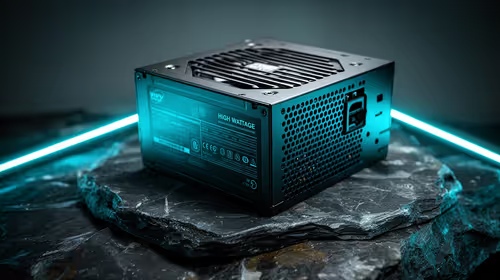
550W PSU Planning for RTX 5080 Super Builds in SA
550W for RTX 5080 Super needs a full-build check, not a simple yes. Review GPU guidance, CPU draw, transient load, connectors, PSU quality, and upgrade plans before deciding.
Read moreA high-performance AM4 build avoids overspending by reusing a supported board and funding the component that limits the target games. At R7,199, the Ryzen 7 5800X3D can anchor that plan when its eight cores and 100MB cache solve a genuine CPU constraint.
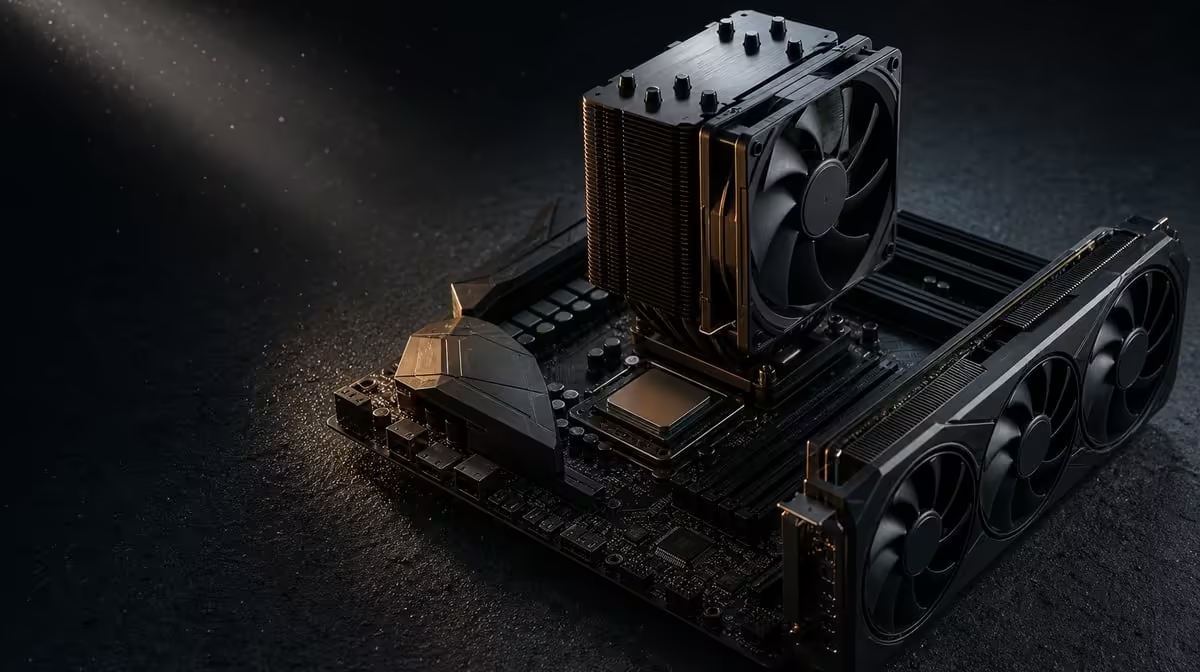
A fast gaming PC is built by funding the component that limits the chosen games, not by buying the highest tier in every category. Build a fast AM4 gaming PC without overspending by reusing parts that remain supported and balancing CPU cost with graphics. The R7,199 Ryzen 7 5800X3D can anchor that plan when eight cores and 100MB cache address a real processor constraint.
Keep a supported AM4 motherboard and serviceable memory, then spend on the bottleneck shown by representative game tests. The R7,199 5800X3D makes sense when the CPU is holding back a capable discrete GPU, but it needs a separate cooler. Avoid premium platform spending that does not change the intended resolution, frame consistency or workload.
List the titles, resolution, visual settings and desired frame-rate range. Test a repeatable scene and watch frame consistency, graphics load and processor behaviour. A machine optimised for high-frame-rate competitive play can require a different balance from one built around demanding visual settings.
Do not use product tiers as the goal. A lower-cost component that already meets the target preserves money for another constraint. Evetech's AMD CPU options can be compared after the need is defined.
The motherboard's exact model and BIOS must support the 5800X3D. Confirm that memory, power, case and storage remain serviceable. Reuse saves money when parts still meet the build, not merely because they are already owned.
Among the CPU's resources are 100MB cache, eight Zen 3 cores and support for 16 threads. Its R7,199 package contains no cooler, so use Evetech's CPU cooler range to add an AM4 option that fits the chassis and airflow.
A discrete GPU is compulsory because the 5800X3D cannot produce display output. If the card is the active limit at the desired settings, graphics spending may have greater impact. If processor work prevents a capable GPU from receiving frames quickly enough, the Ryzen 7 becomes more relevant.
Avoid paying for motherboard features that the intended build will not use. The board needs documented CPU support, stable operation and the connections required by the real parts list. Prestige alone does not improve gaming.
Begin from stable firmware, confirm memory and cooling operation, then repeat the original game route. Compare average FPS and difficult-frame behaviour under the same settings. The complete processor category can frame alternatives if the result does not justify the R7,199 path.
Without overspending means every major purchase serves the target and the completed machine is stable. It does not mean choosing the cheapest part regardless of adequacy.
Storage and memory still deserve enough budget to avoid obvious capacity or responsiveness problems, but they should not be upgraded from habit. Check real use, then retain them when they remain serviceable. The same evidence-led rule that governs the CPU should govern the rest of the parts list.
Prepare the BIOS and cooler before removing the existing processor. Keep the old CPU safe, photograph cable positions and validate the new build from stable settings. Careful preparation prevents avoidable repair costs from erasing the savings of platform reuse.
Record the final part total and game result. If the machine reaches its defined target with sound temperatures and consistent frames, additional premium parts are unnecessary. If it misses, diagnose the remaining limit before spending the unused budget.
Check current availability when the parts list is ready, then repeat the compatibility review if a component changes. A substitute cooler or processor is not automatically equivalent in fit, support or cost, so the balanced plan should follow the exact items being considered.
It reuses a documented compatible board and other serviceable parts while directing money to the measured gaming constraint.
It is sensible when processor work limits relevant games and its eight cores plus 100MB cache can serve a capable graphics card.
A separate AM4 CPU cooler is required for the 105W processor. Include any mounting or airflow work genuinely needed.
Test the intended resolution and settings. Give more budget to the part that prevents the target experience rather than following a fixed ratio.
Features that the parts list and workload never use do not improve the result. Prioritise documented CPU support, stability and required connections.
Every component meets the defined goal without unnecessary tier upgrades, and supporting costs are included honestly in the total.
Confirm hardware detection, safe temperatures and stable memory, then repeat the same game route and compare frame delivery with the baseline.
Ready to build AM4 speed around the games and parts that matter? Compare Evetech's Ryzen processors and cooling, then balance the R7,199 CPU with your GPU, supported board and measured target.
It reuses a documented compatible board and other serviceable parts while directing money to the measured gaming constraint.
It is sensible when processor work limits relevant games and its eight cores plus 100MB cache can serve a capable graphics card.
A separate AM4 CPU cooler is required for the 105W processor. Include any mounting or airflow work genuinely needed.
Test the intended resolution and settings. Give more budget to the part that prevents the target experience rather than following a fixed ratio.
Features that the parts list and workload never use do not improve the result. Prioritise documented CPU support, stability and required connections.
Every component meets the defined goal without unnecessary tier upgrades, and supporting costs are included honestly in the total.
Confirm hardware detection, safe temperatures and stable memory, then repeat the same game route and compare frame delivery with the baseline.
550W for RTX 5080 Super needs a full-build check, not a simple yes. Review GPU guidance, CPU draw, transient load, connectors, PSU quality, and upgrade plans before deciding.
Read more
8000Hz polling is overrated for most SA gamers because gains can be tiny next to battery drain and monitor limits. Mbombela players should weigh mouse feel, game support, and system stability before chasing the number.
Read more
Magnetic switches are taking over SA gaming keyboards because actuation can be tuned. For Sandton gamers, rapid trigger, reset control, and profile depth can help, but layout, key feel, and software quality still matter.
Read more
Polokwane oled monitor value questions need cautious SA context because pricing can move with availability, exchange rates, specs, and warranty support. Treat the trend as a planning signal, not a fixed price promise.
Read more
Arc B580 budget builds for Midrand gamers can shift with exchange rates, supply, specs, and model tier. Treat the title as a buying prompt, then compare SA warranty, timing, and build priorities.
Read more
ROG Ally X may beat the LCD Steam Deck for SA gamers who value stronger handheld performance, more memory, and Windows flexibility. Compare battery life, controls, game libraries, and Polokwane support needs before deciding.
Read more
Minisforum's M2 Pro pairs Core Ultra X7, Arc B390 graphics and 32GB onboard memory in 1.8 litres. SA buyers should weigh its fixed memory and $1,439 launch offer against local mini PCs.

Lenovo says Legion Go failures linked to BIOS N3CN42WW are not user error. Affected SA owners should stop retrying the update, preserve proof and open a support case.

Smart monitors can add apps and convenience, but they also add privacy settings and unwanted-software risk. SA buyers should audit the operating system before paying for extras.

A fake 113GB GTA VI ISO reportedly used empty padding around a small malware payload. SA gamers should delete unofficial builds, keep Windows security active and wait for official channels.

ASUS calls the ROG GT-BN98 the first Wi-Fi 8 gaming router. SA buyers should fix coverage and client limits before paying for a future wireless standard.

Apple's M6 Mac mini adds faster AI, graphics and networking in the same compact format. SA buyers should wait for a rand listing before comparing value.

The Vulcan II XP adds hot-swappable switches, sound damping and gaming controls to a full-size wired board. SA buyers should compare feel before features.

Microsoft says Windows on Arm now has over 7,000 verified apps and games. SA buyers should still check each driver, game and work tool before switching.

Xbox Insiders can test disc-to-digital from 31 August 2026. Supported Xbox One and Series X discs gain a digital entitlement, but older discs, regions and title coverage still need exact checks.

ViewSonic's XG2738 pairs QHD QD-OLED with 240Hz and automatic panel care. SA buyers should compare warranty, brightness, ports and burn-in protection against today's R9,999-plus OLED shelf.

NVIDIA's final Windows 10 Game Ready driver is due in October 2026. SA gamers can keep using their GPU, but new game optimisations move on while critical security fixes continue quarterly.

JBL's new Quantum 520, 520X and 120 headsets cover wireless, Xbox-certified and wired use. SA buyers should compare connection, comfort and microphone needs before paying for a new badge.