


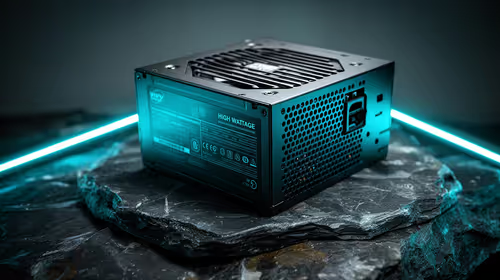
550W PSU Planning for RTX 5080 Super Builds in SA
550W for RTX 5080 Super needs a full-build check, not a simple yes. Review GPU guidance, CPU draw, transient load, connectors, PSU quality, and upgrade plans before deciding.
Read moreA mesh office chair may feel cooler when its construction and room conditions allow more seat airflow. The E3 Ultra costs R9,599; buyers prioritising mesh should identify the exact seat material first.
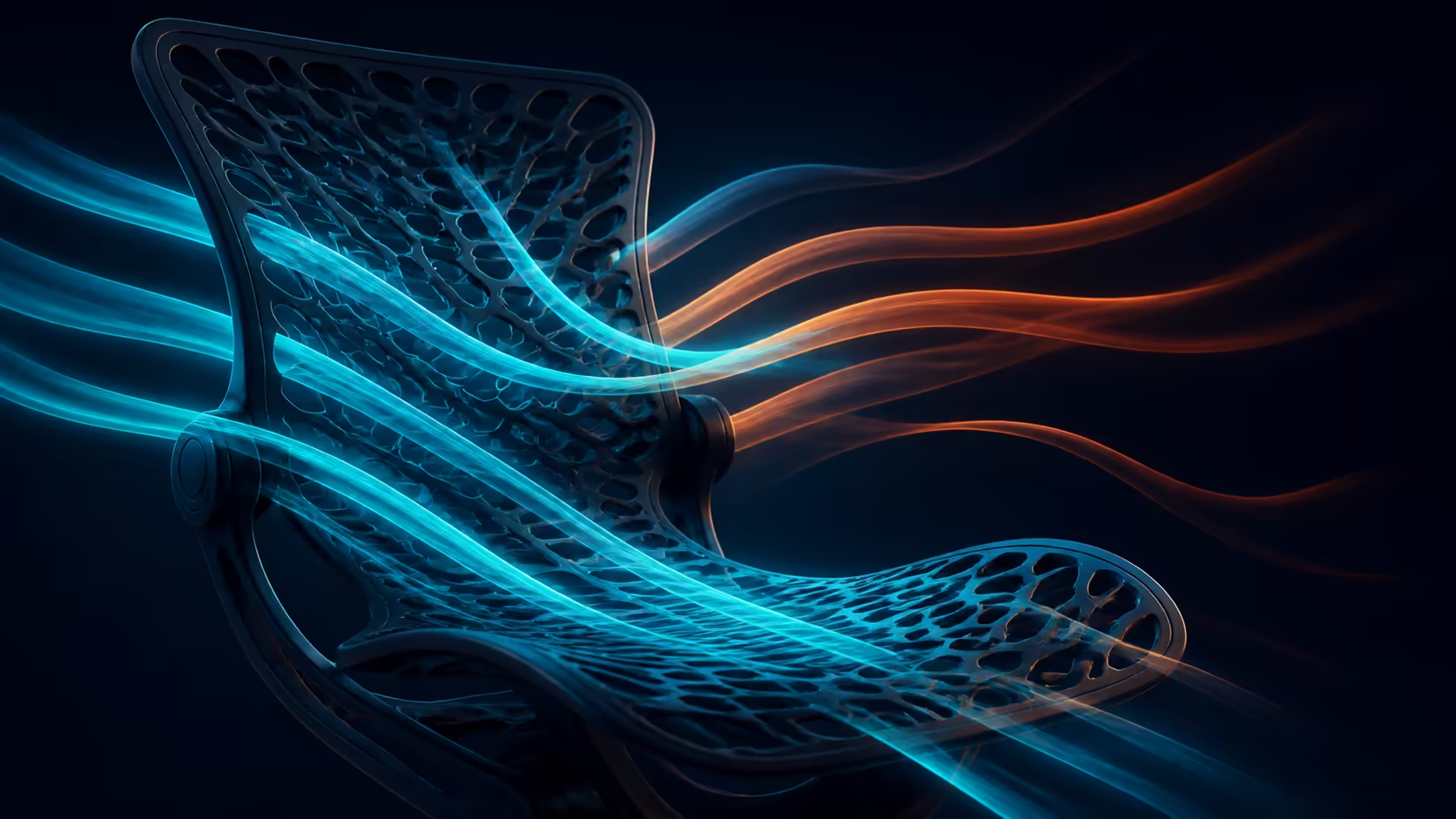
A mesh office chair for cooler sessions can help airflow, but it cannot set the room temperature or guarantee how warm a person feels. Construction, clothing, humidity and contact area all shape the result.
Yes. The E3 Ultra's full mesh cushion uses nylon and yarn with a breathable construction designed to move air during long sessions.
Mesh can permit air to move through the seating surface, which may reduce trapped warmth compared with a closed material. The R9,599 E3 Ultra is a direct example, built with a fully meshed nylon-and-yarn cushion.
Heat sensation reflects the room, airflow, clothing and metabolic differences as well as furniture. A breathable surface may change one part of that equation, yet it cannot overcome direct sun or a hot, still workspace by itself.
Look at how much of the body contacts the seat and backrest. Frame edges, weave and tension also affect the experience; "mesh" does not describe them completely.
The E3 Ultra seat uses full mesh coverage made from nylon and yarn. Match the care method to that construction and the surrounding frame.
Use Evetech's HBADA chair selection to identify models whose material is clear. Compare those surfaces by airflow, contact feel and maintenance rather than by appearance alone.
A cooler surface that does not suit the user is not a better chair. Check seat proportions, desk reach and support contact under the same clothing and room conditions. Test long enough to move beyond the initial touch.
The E3 Ultra can still be compared through its adjustment package: 8D lumbar control, 720-degree omni arm support and recline to 140 degrees. These features do not answer the material question.
Shade, ventilation, equipment heat and scheduled movement can influence thermal comfort. Treat the chair as one component of a broader workspace rather than a cooling device.
Evetech's office seating collection gives South African buyers a broader comparison. Record room conditions during each trial so a change in weather is not accidentally credited to one seat.
Cleanliness can also affect airflow impressions. Dust or unsuitable coverings may change an open surface, while cleaning products can damage materials when used without exact care guidance. Verify the construction before maintenance and observe whether any added cover defeats the reason for choosing breathability.
Keep noise, visual style and colour in their own preference column. They may matter to the room, but they do not provide evidence about air movement or contact fit.
For shared spaces, collect feedback from more than one user at comparable times of day. Different heat perception is normal, so the buying decision should satisfy the room's main use rather than promise the same thermal response for everyone.
Compare the front edge and surrounding frame as carefully as the central surface. Air movement has little value when another part creates distracting contact, so fit and breathability must remain co-equal observations. Note whether posture changes expose new contact areas during reading or calls. Repeat during the room's warmest usual period.
Cooling depends on room conditions and clothing, but the chair is definitively a mesh example. Its 1.97-inch seat-depth adjustment also changes thigh support, so compare heat and pressure together rather than crediting airflow while ignoring seat fit.
The 16.5% breathable mesh structure is designed for lasting support and durability, while the nylon-yarn construction creates the full seating surface. Test it across the warmest normal work period, not only during a brief showroom sit.
Its open cushion can assist airflow, but room heat, clothing and personal response still determine whether the change feels useful throughout a normal shift.
Open structures can allow more air movement across supported surfaces. The practical effect varies with weave, contact area, clothing and the surrounding room.
No. Personal heat, humidity, ventilation and sunlight can outweigh the surface difference, and not all mesh constructions behave alike.
Yes. The E3 Ultra has a full nylon-and-yarn mesh cushion designed for breathable support.
Buyers can assess its 8D lower-back adjustment, 720-degree omni armrest range, biaxial 4D headrest and 140-degree recline.
Use comparable clothing, room temperature, task and sitting duration. Note direct sun or fan use so the material is not credited for an external change.
No. Dimensions, contour, frame contact, support locations and desk geometry can make a breathable seat unsuitable for a particular user.
Ready to test breathable seating under real room conditions? Explore Evetech office chairs with airflow, fit and maintenance scored separately during a representative work session.
Open structures can allow more air movement across supported surfaces. The practical effect varies with weave, contact area, clothing and the surrounding room.
No. Personal heat, humidity, ventilation and sunlight can outweigh the surface difference, and not all mesh constructions behave alike.
Yes. The E3 Ultra has a full nylon-and-yarn mesh cushion designed for breathable support.
Buyers can assess its 8D lower-back adjustment, 720-degree omni armrest range, biaxial 4D headrest and 140-degree recline.
Use comparable clothing, room temperature, task and sitting duration. Note direct sun or fan use so the material is not credited for an external change.
No. Dimensions, contour, frame contact, support locations and desk geometry can make a breathable seat unsuitable for a particular user.
550W for RTX 5080 Super needs a full-build check, not a simple yes. Review GPU guidance, CPU draw, transient load, connectors, PSU quality, and upgrade plans before deciding.
Read more
8000Hz polling is overrated for most SA gamers because gains can be tiny next to battery drain and monitor limits. Mbombela players should weigh mouse feel, game support, and system stability before chasing the number.
Read more
Magnetic switches are taking over SA gaming keyboards because actuation can be tuned. For Sandton gamers, rapid trigger, reset control, and profile depth can help, but layout, key feel, and software quality still matter.
Read more
Polokwane oled monitor value questions need cautious SA context because pricing can move with availability, exchange rates, specs, and warranty support. Treat the trend as a planning signal, not a fixed price promise.
Read more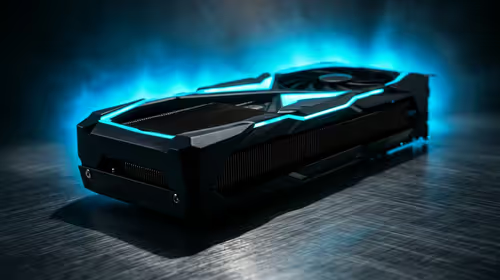
Arc B580 budget builds for Midrand gamers can shift with exchange rates, supply, specs, and model tier. Treat the title as a buying prompt, then compare SA warranty, timing, and build priorities.
Read more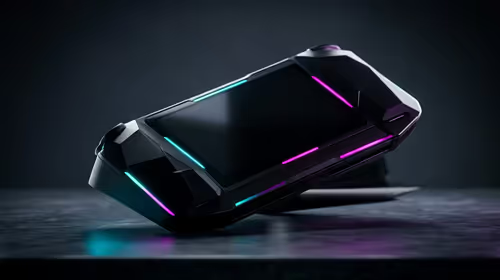
ROG Ally X may beat the LCD Steam Deck for SA gamers who value stronger handheld performance, more memory, and Windows flexibility. Compare battery life, controls, game libraries, and Polokwane support needs before deciding.
Read more
Minisforum's M2 Pro pairs Core Ultra X7, Arc B390 graphics and 32GB onboard memory in 1.8 litres. SA buyers should weigh its fixed memory and $1,439 launch offer against local mini PCs.

Lenovo says Legion Go failures linked to BIOS N3CN42WW are not user error. Affected SA owners should stop retrying the update, preserve proof and open a support case.

Smart monitors can add apps and convenience, but they also add privacy settings and unwanted-software risk. SA buyers should audit the operating system before paying for extras.

A fake 113GB GTA VI ISO reportedly used empty padding around a small malware payload. SA gamers should delete unofficial builds, keep Windows security active and wait for official channels.
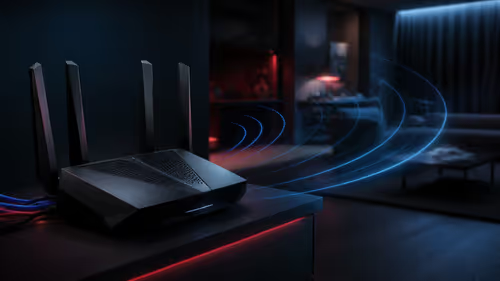
ASUS calls the ROG GT-BN98 the first Wi-Fi 8 gaming router. SA buyers should fix coverage and client limits before paying for a future wireless standard.
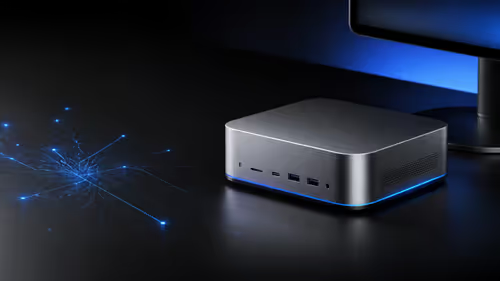
Apple's M6 Mac mini adds faster AI, graphics and networking in the same compact format. SA buyers should wait for a rand listing before comparing value.
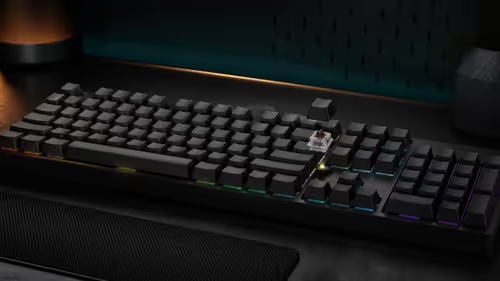
The Vulcan II XP adds hot-swappable switches, sound damping and gaming controls to a full-size wired board. SA buyers should compare feel before features.

Microsoft says Windows on Arm now has over 7,000 verified apps and games. SA buyers should still check each driver, game and work tool before switching.

Xbox Insiders can test disc-to-digital from 31 August 2026. Supported Xbox One and Series X discs gain a digital entitlement, but older discs, regions and title coverage still need exact checks.

ViewSonic's XG2738 pairs QHD QD-OLED with 240Hz and automatic panel care. SA buyers should compare warranty, brightness, ports and burn-in protection against today's R9,999-plus OLED shelf.

NVIDIA's final Windows 10 Game Ready driver is due in October 2026. SA gamers can keep using their GPU, but new game optimisations move on while critical security fixes continue quarterly.

JBL's new Quantum 520, 520X and 120 headsets cover wireless, Xbox-certified and wired use. SA buyers should compare connection, comfort and microphone needs before paying for a new badge.