


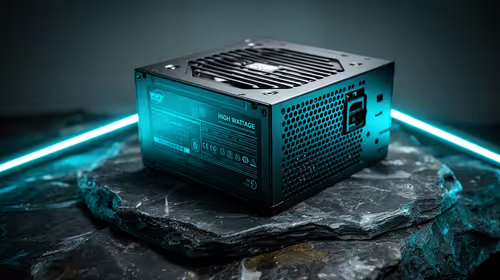
550W PSU Planning for RTX 5080 Super Builds in SA
550W for RTX 5080 Super needs a full-build check, not a simple yes. Review GPU guidance, CPU draw, transient load, connectors, PSU quality, and upgrade plans before deciding.
Read moreYes. An anti-glare privacy filter can reduce reflections during everyday laptop use. This R299 model fits a 15.6-inch 16:9 display and adds anti-spy filtering, keeping reflection control and side-view privacy together.
Glare reduction is useful only if the laptop remains comfortable for ordinary reading, data work and darker interfaces. A privacy screen filter for everyday use should therefore be tested from the centre before its reflection control or side-view privacy receives a final verdict.
Yes, an anti-glare privacy filter can reduce reflections while supporting normal laptop work, but central-view comfort should be tested across real tasks. The R299 15.6-inch Laptop Privacy Screen Protector Filter matches a 16:9 display and adds anti-spy behaviour. Fit and user preference decide whether the daily trade is acceptable.
Before fitting, open a text-heavy page, a spreadsheet, a darker application and a colour image. Use the brightness and lid angle chosen during a typical day. Note reflections, text comfort and any need to shift position.
After placing the filter according to its instructions, repeat the same sequence from the same chair. Avoid changing room lights or display controls halfway through. A stable baseline reveals whether the surface helps with reflections without confusing the result with several other changes.
The Evetech category for gaming and laptop accessories can help compare supporting items. Add them one at a time so each change to the workspace can be understood.
Locate the brightest window, lamp or overhead fitting visible in the screen. Use a dark page to identify reflected shapes, then turn the laptop slightly relative to that source. A small orientation change can work alongside the treated surface.
Glare behaviour varies through the day, so repeat at the time the original problem is strongest. The goal is not a measured percentage; it is fewer distracting reflections during the tasks that occupy real working hours.
Use invented content and have a helper move through adjacent seats. The main user should stay directly in front while brightness remains unchanged. Note where fine text and larger headings become less easy to read from the side.
Then return attention to the primary seat. Work for enough time to notice fatigue or distraction rather than deciding from a ten-second glance. Comfort is individual, so another person's preference does not settle the result for the owner.
For other display-related equipment, the Evetech monitor accessory range provides a useful comparison path. A stand or mount may change orientation, requiring the privacy test to be repeated.
This R299 protector belongs on a 15.6-inch 16:9 screen. Verify diagonal and aspect ratio from the laptop specification before discussing everyday comfort. A mismatched outline can create edge problems unrelated to the surface treatment.
Follow the exact fitting process and check alignment after carrying or cleaning the device. Screen format does not identify attachment method, and assumptions about magnets or adhesive can turn a simple evaluation into a placement fault.
If normal work remains comfortable and reflections or side exposure improve in recurring environments, the filter is doing useful daily work. If the centre view does not suit the user, compare another correctly matched option rather than forcing new display settings solely to accommodate the layer.
Keep a brief comfort log for three representative sessions. Note the task, room light, lid angle and whether the filter stayed in place throughout. A layer removed halfway through reading tells a different story from one forgotten because it caused no interruption.
Include a second workspace in the trial. Everyday use often spans more than one table, and a reflection-free morning desk can hide the condition that prompted the purchase. The additional session gives the R299 decision a broader base without requiring a technical measurement.
The design explicitly combines reflection control with a clear central image for the laptop owner. Its thin layer does not add excessive weight, and easy removal gives the owner a simple response if a colour-sensitive or collaborative task benefits from the bare panel. Routine use also gains a scratch-proof barrier against dust, oil smudges and handling, so glare reduction is not the only everyday advantage.
Yes. Assess it against the windows and lights present during normal work, ideally when the original reflection problem is most obvious.
Anti-spy filtering reduces casual readability from side positions, adding a separate benefit for shared desks and public seating.
Read text, inspect data, view dark interfaces and check colour from the central seat over a meaningful work period.
No. It is a physical layer. Keep ordinary display settings during comparison so surface behaviour can be judged cleanly.
Ready to test reflection control without compromising routine work? Use a repeatable centre-view trial, verify the screen match and compare display accessories through Evetech.
Yes. Assess it against the windows and lights present during normal work, ideally when the original reflection problem is most obvious.
Anti-spy filtering reduces casual readability from side positions, adding a separate benefit for shared desks and public seating.
Read text, inspect data, view dark interfaces and check colour from the central seat over a meaningful work period.
No. It is a physical layer. Keep ordinary display settings during comparison so surface behaviour can be judged cleanly.
550W for RTX 5080 Super needs a full-build check, not a simple yes. Review GPU guidance, CPU draw, transient load, connectors, PSU quality, and upgrade plans before deciding.
Read more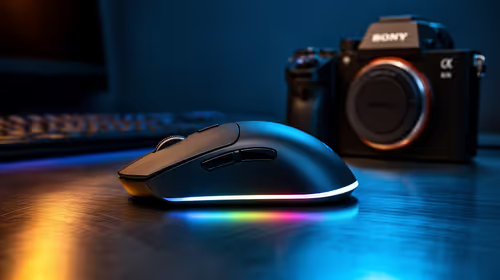
8000Hz polling is overrated for most SA gamers because gains can be tiny next to battery drain and monitor limits. Mbombela players should weigh mouse feel, game support, and system stability before chasing the number.
Read more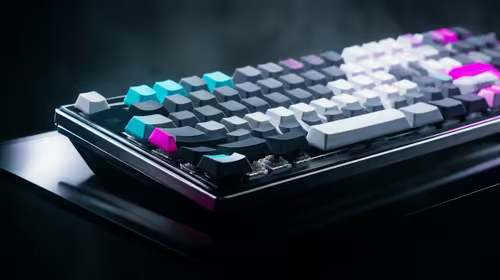
Magnetic switches are taking over SA gaming keyboards because actuation can be tuned. For Sandton gamers, rapid trigger, reset control, and profile depth can help, but layout, key feel, and software quality still matter.
Read more
Polokwane oled monitor value questions need cautious SA context because pricing can move with availability, exchange rates, specs, and warranty support. Treat the trend as a planning signal, not a fixed price promise.
Read more
Arc B580 budget builds for Midrand gamers can shift with exchange rates, supply, specs, and model tier. Treat the title as a buying prompt, then compare SA warranty, timing, and build priorities.
Read more
ROG Ally X may beat the LCD Steam Deck for SA gamers who value stronger handheld performance, more memory, and Windows flexibility. Compare battery life, controls, game libraries, and Polokwane support needs before deciding.
Read more
Minisforum's M2 Pro pairs Core Ultra X7, Arc B390 graphics and 32GB onboard memory in 1.8 litres. SA buyers should weigh its fixed memory and $1,439 launch offer against local mini PCs.

Lenovo says Legion Go failures linked to BIOS N3CN42WW are not user error. Affected SA owners should stop retrying the update, preserve proof and open a support case.

Smart monitors can add apps and convenience, but they also add privacy settings and unwanted-software risk. SA buyers should audit the operating system before paying for extras.

A fake 113GB GTA VI ISO reportedly used empty padding around a small malware payload. SA gamers should delete unofficial builds, keep Windows security active and wait for official channels.
ASUS calls the ROG GT-BN98 the first Wi-Fi 8 gaming router. SA buyers should fix coverage and client limits before paying for a future wireless standard.
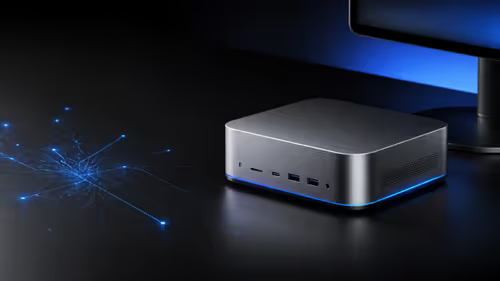
Apple's M6 Mac mini adds faster AI, graphics and networking in the same compact format. SA buyers should wait for a rand listing before comparing value.
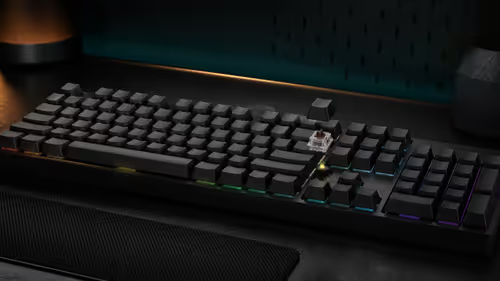
The Vulcan II XP adds hot-swappable switches, sound damping and gaming controls to a full-size wired board. SA buyers should compare feel before features.

Microsoft says Windows on Arm now has over 7,000 verified apps and games. SA buyers should still check each driver, game and work tool before switching.

Xbox Insiders can test disc-to-digital from 31 August 2026. Supported Xbox One and Series X discs gain a digital entitlement, but older discs, regions and title coverage still need exact checks.
ViewSonic's XG2738 pairs QHD QD-OLED with 240Hz and automatic panel care. SA buyers should compare warranty, brightness, ports and burn-in protection against today's R9,999-plus OLED shelf.

NVIDIA's final Windows 10 Game Ready driver is due in October 2026. SA gamers can keep using their GPU, but new game optimisations move on while critical security fixes continue quarterly.

JBL's new Quantum 520, 520X and 120 headsets cover wireless, Xbox-certified and wired use. SA buyers should compare connection, comfort and microphone needs before paying for a new badge.