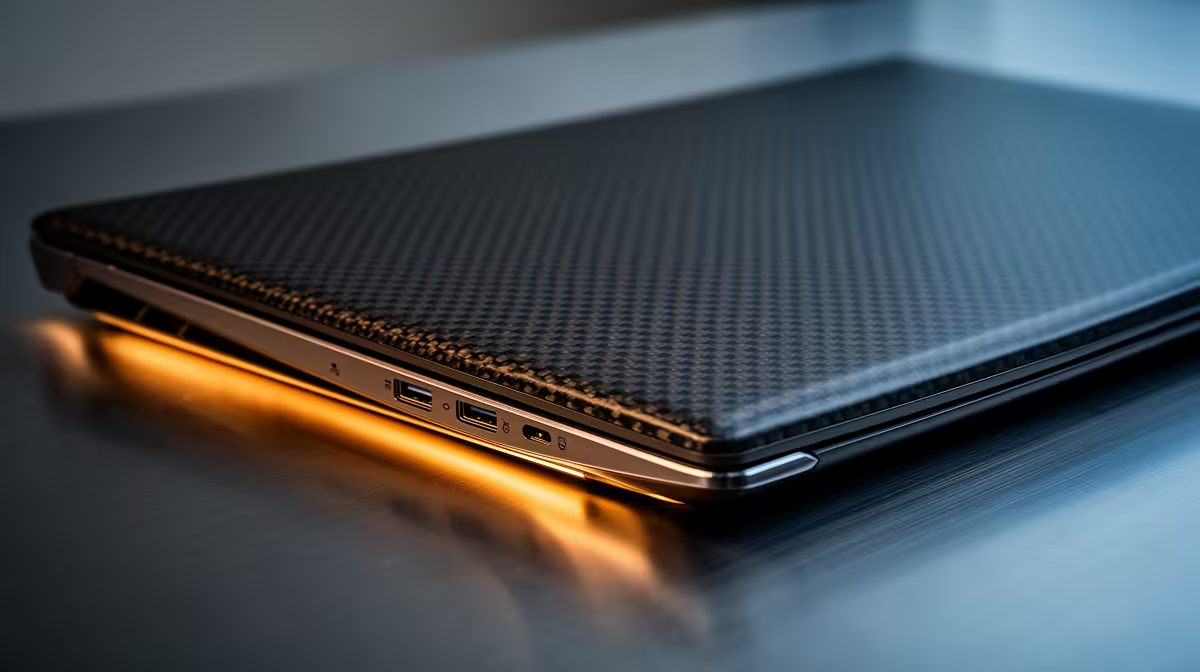
Carbon fibre can help a laptop chassis stay light and stiff, which is useful when the machine travels every day. The material name does not make a notebook drop-proof. Hinge design, internal supports and the way the panels are joined decide how the complete model handles a busy bag.
Quick Answer
Choose a carbon-fibre laptop when low weight, a firm keyboard deck and travel comfort justify its price. Compare exact-model flex, hinge behaviour, repair access and measured mass. Carry it in a fitted sleeve and keep hard objects away from the lid; a rigid composite can still crack or transfer impact to the display.
Composite construction saves mass
Carbon fibres provide strength along their orientation while resin binds them into a panel. Laptop makers can combine woven sheets, chopped fibres, magnesium frames or other materials. Two products described as carbon fibre may use different constructions and proportions.
That is why a visible weave does not prove structural performance. Some finishes are cosmetic, while the useful composite sits inside. Read the chassis description and independent durability observations for the exact laptop.
Open the current laptop best sellers beside the gaming laptop deals page, then inspect model-level mass and materials.
Check the places that move
Open the lid from the centre and watch the hinge. Type with normal pressure and check whether the keyboard deck bounces. Pressing hard on a display is a poor test and can cause damage; use published flex and teardown evidence instead.
Ports and screw mounts need reinforcement because concentrated loads behave differently from broad panel pressure. A light shell paired with a weak hinge or loose port is no travel win.
Daily protection still matters
Use a sleeve that fits without squeezing the lid. Pack the laptop against the padded back panel and keep chargers, bottles and books in separate sections. Do not lift it by one corner of the screen.
Carbon fibre can feel warmer or less metallic than aluminium, though surface finish and internal cooling shape comfort. Check fan exhaust and sustained temperatures before choosing it for performance work.
Repair access changes long-term value
Check whether the SSD, battery and cooling system can be serviced through a documented route. A bonded composite base may need different clips or fasteners from a metal panel. Follow the maker's manual rather than forcing a section that feels stiff.
Keep proof of purchase and the exact chassis model. Replacement panels and hinges need more detail than the broad laptop family name.
Frequently Asked Questions
Is carbon fibre stronger than aluminium?
It can offer high stiffness for its mass, but design, lay-up and impact direction decide the finished chassis result.
Can a carbon-fibre laptop survive a drop?
No laptop should be treated as drop-proof without a tested rugged rating. Use a sleeve and careful bag layout.
Is the material worth paying for?
It can be when lower carry weight and chassis stiffness matter every day. Compare the complete model first.
Compare lightweight laptops by exact chassis construction, hinge quality and full travel weight rather than relying on a carbon-fibre label.