Quick Answer
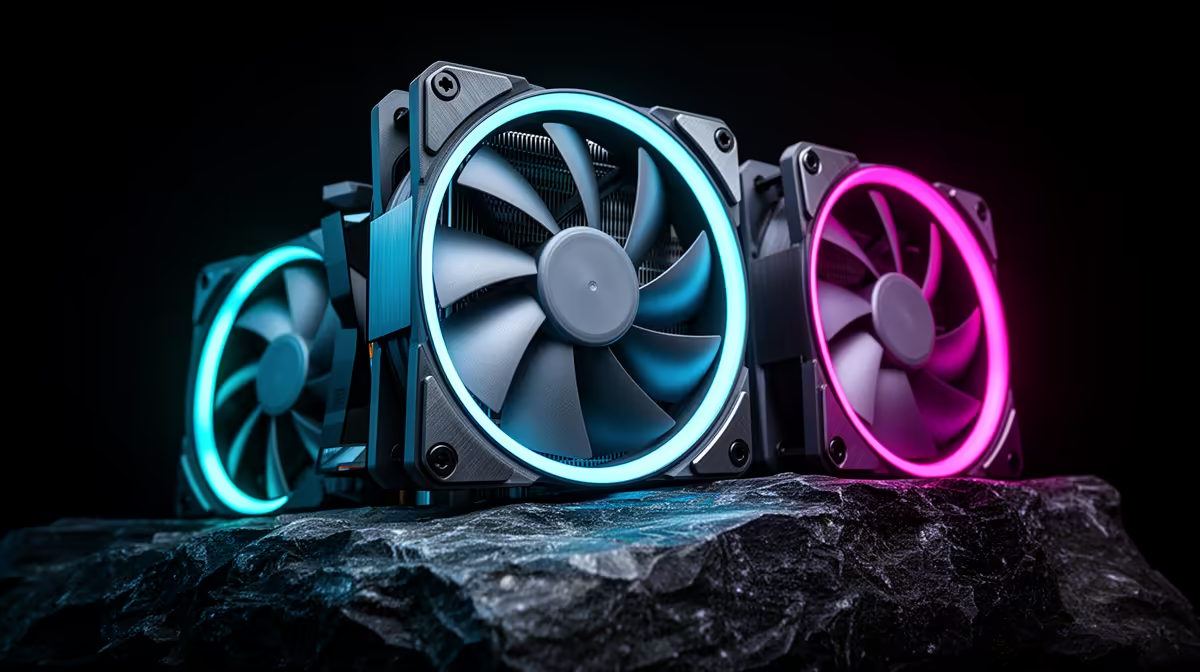
For premium buyers, the biggest case-fan mistake is overpaying for RGB while ignoring airflow and noise specs. Premium fans like the Noctua NF-A12x25 or Lian Li Uni Fan SL120 (around R400 to R750 each at Evetech) earn their price through bearings, static pressure and quiet running, not just lighting.
The SA Buyer Mistake Checklist For Premium Builds
Premium buyers slip up by paying flagship money for fans chosen on looks alone. A truly premium fan justifies its cost with a high-quality bearing for long life, strong static pressure for radiators and restrictive front panels, and genuinely low noise. The Noctua NF-A12x25 leads on airflow-to-noise; the Lian Li Uni Fan SL series combines daisy-chain cabling with solid performance, with a three-pack landing around R2,000. Each fan still draws only a few watts. RGB is fine, but it should come on top of those specs, not instead of them.
Spend Where It Counts In A Showcase Build
Match fan type to job: high-static-pressure fans on AIO radiators and restrictive mesh panels, higher-airflow fans in open intakes. Run everything on PWM with a tuned curve so a showcase build stays quiet at idle. Daisy-chain systems like Lian Li Uni Fan cut cable clutter behind the motherboard tray, which matters in a glass-panel build. Premium spend is justified by bearing quality, static pressure and noise, with the lighting as a bonus rather than the reason to buy.
FAQ
What makes a case fan worth premium money?
Quality bearings for long life, strong static pressure for radiators and restrictive panels, and low noise. RGB is a bonus on top of those specs, not a reason on its own to pay flagship prices.
Do I need high static pressure or high airflow fans?
Use high-static-pressure fans on AIO radiators and restrictive mesh front panels, and higher-airflow fans in open intakes. Matching the fan to the job gives better cooling than buying one type everywhere.
Are daisy-chain fans worth it for a showcase build?
If cable management matters, yes. Systems like Lian Li Uni Fan link fans together to cut clutter behind the tray, which keeps a glass-panel build tidy while still delivering strong performance.
-static-pressure fans on radiators and restrictive panels, higher-airflow fans on open intakes, and tune a PWM curve so even a premium build idles silently.