


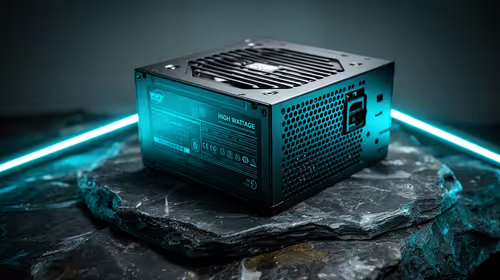
550W PSU Planning for RTX 5080 Super Builds in SA
550W for RTX 5080 Super needs a full-build check, not a simple yes. Review GPU guidance, CPU draw, transient load, connectors, PSU quality, and upgrade plans before deciding.
Read moreA steel five-star base can be considered through exact construction, rated load and complete-chair stability. The HBADA E3 Ultra is a separate R9,599 option with an aluminium-alloy base and matching support bar, not steel.

A stable office chair with a steel base must be judged as a complete structure, not assumed from the material word. Buyers should examine geometry, joints, castors, supported load and floor behaviour before calling any five-star base stable.
The E3 Ultra is not a steel-base chair; its five-star base and support bar are aluminium alloy.
For a steel-base chair, verify the steel grade, leg design, central connection, castors and explicit load rating. Steel does not automatically prove stability or durability. The R9,599 HBADA E3 Ultra follows a separate construction route: aluminium alloy is used for its supporting bar and five-star base.
Paint and polished surfaces reveal little about thickness, joints or internal geometry. Look beneath the seat at the central connection, inspect each leg for damage, and ensure castors are fitted correctly before a use test.
Ask for capacity attached to the precise chair. Never calculate a safe limit from steel alone, because the complete structure determines how load is carried.
A wide-looking base may still behave differently with unsuitable castors or on an uneven floor. Sit centrally, roll slowly, turn and reach only within a controlled test. Avoid using abrupt leaning as a substitute for proper capacity information.
Evetech's HBADA office seating collection includes the E3 Ultra for comparison, but it should not be placed in the steel column. Aluminium alloy forms its five-star base.
The E3 Ultra also uses aluminium alloy in the support bar. That construction detail identifies the product but does not establish dimensions, a weight ceiling, certification or a lifespan outcome.
Compare like with like: material, geometry, capacity and floor contact should occupy separate rows. This prevents a buyer from treating one property as evidence for several others.
Daily stability includes predictable movement and stopping. Check castor suitability for carpet, hard flooring or a protective mat, and ensure the work area is level and clear.
Compare steel, nylon and aluminium designs in Evetech's broad office seating category. At R9,599, the E3 Ultra should be valued for its actual alloy structure and chair fit, not for a steel-base requirement it does not meet.
A wobble or unexpected movement should trigger inspection rather than a material conclusion. Check assembly, fasteners, castor seating and floor level, following the chair's care instructions. Do not keep using a product that appears damaged while trying to prove whether steel or aluminium is preferable.
Observe the base during ordinary reaching and turning, not deliberately unsafe leaning. The relevant outcome is predictable support throughout intended work, within the chair's proper use and capacity.
Where several people share the chair, the heaviest intended user sets the minimum capacity requirement. Obtain that figure before purchase and keep it separate from the alloy description. This makes the structural decision relevant while leaving capacity tied to the exact model rating.
Also check the route used when the chair is moved. Door thresholds and uneven flooring can alter castor behaviour without revealing anything about the strength of the base material. Record these as environmental constraints. Retest on the normal work surface.
A buyer who specifically requires steel must select another model. For the E3 Ultra, stability assessment should use the actual aluminium structure, gravity-sensing chassis and complete-chair fit rather than rewriting the base material to match the buying topic.
Its material difference should remain explicit in any steel-base shortlist. The chair also adds a gravity-sensing chassis and four recline levels, but those systems do not transform aluminium into steel or answer the load rating requested by a steel-specific buyer.
Check the precise steel construction, leg geometry, central joint, castor fit and explicit chair capacity. The complete assembly matters more than appearance.
No. Engineering, condition, loading, floor surface and user movement all affect behaviour, so a material name cannot guarantee the finished outcome.
The E3 Ultra stands on a five-star base made from aluminium alloy. Its supporting bar is constructed from the same alloy.
It should not. This HBADA model uses aluminium alloy rather than steel, so comparisons need to preserve that distinction.
No safe capacity follows from the alloy label. Buyers need a weight limit tied to the exact complete chair before checking user suitability.
For local comparison, the E3 Ultra carries a R9,599 price. Weigh it only after separating the material and fit requirements.
Ready to evaluate base stability with material kept in perspective? Browse Evetech's office-chair range using separate checks for structure, capacity, castors and the floor beneath each candidate.
Check the precise steel construction, leg geometry, central joint, castor fit and explicit chair capacity. The complete assembly matters more than appearance.
No. Engineering, condition, loading, floor surface and user movement all affect behaviour, so a material name cannot guarantee the finished outcome.
The E3 Ultra stands on a five-star base made from aluminium alloy. Its supporting bar is constructed from the same alloy.
It should not. This HBADA model uses aluminium alloy rather than steel, so comparisons need to preserve that distinction.
No safe capacity follows from the alloy label. Buyers need a weight limit tied to the exact complete chair before checking user suitability.
For local comparison, the E3 Ultra carries a R9,599 price. Weigh it only after separating the material and fit requirements.
550W for RTX 5080 Super needs a full-build check, not a simple yes. Review GPU guidance, CPU draw, transient load, connectors, PSU quality, and upgrade plans before deciding.
Read more
8000Hz polling is overrated for most SA gamers because gains can be tiny next to battery drain and monitor limits. Mbombela players should weigh mouse feel, game support, and system stability before chasing the number.
Read more
Magnetic switches are taking over SA gaming keyboards because actuation can be tuned. For Sandton gamers, rapid trigger, reset control, and profile depth can help, but layout, key feel, and software quality still matter.
Read more
Polokwane oled monitor value questions need cautious SA context because pricing can move with availability, exchange rates, specs, and warranty support. Treat the trend as a planning signal, not a fixed price promise.
Read more
Arc B580 budget builds for Midrand gamers can shift with exchange rates, supply, specs, and model tier. Treat the title as a buying prompt, then compare SA warranty, timing, and build priorities.
Read more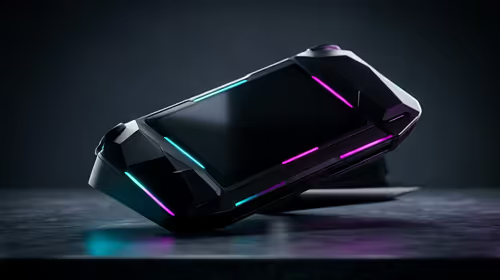
ROG Ally X may beat the LCD Steam Deck for SA gamers who value stronger handheld performance, more memory, and Windows flexibility. Compare battery life, controls, game libraries, and Polokwane support needs before deciding.
Read more
Minisforum's M2 Pro pairs Core Ultra X7, Arc B390 graphics and 32GB onboard memory in 1.8 litres. SA buyers should weigh its fixed memory and $1,439 launch offer against local mini PCs.

Lenovo says Legion Go failures linked to BIOS N3CN42WW are not user error. Affected SA owners should stop retrying the update, preserve proof and open a support case.

Smart monitors can add apps and convenience, but they also add privacy settings and unwanted-software risk. SA buyers should audit the operating system before paying for extras.

A fake 113GB GTA VI ISO reportedly used empty padding around a small malware payload. SA gamers should delete unofficial builds, keep Windows security active and wait for official channels.
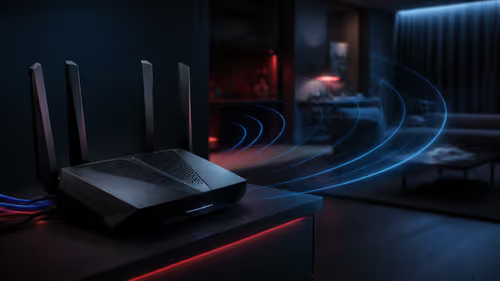
ASUS calls the ROG GT-BN98 the first Wi-Fi 8 gaming router. SA buyers should fix coverage and client limits before paying for a future wireless standard.
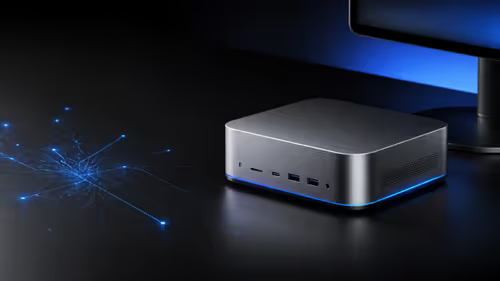
Apple's M6 Mac mini adds faster AI, graphics and networking in the same compact format. SA buyers should wait for a rand listing before comparing value.
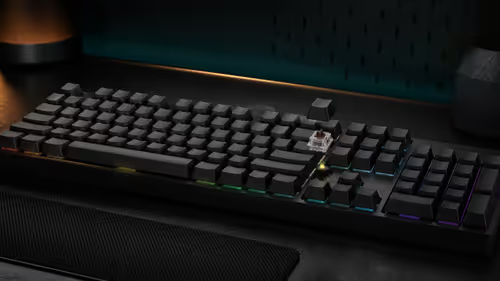
The Vulcan II XP adds hot-swappable switches, sound damping and gaming controls to a full-size wired board. SA buyers should compare feel before features.

Microsoft says Windows on Arm now has over 7,000 verified apps and games. SA buyers should still check each driver, game and work tool before switching.

Xbox Insiders can test disc-to-digital from 31 August 2026. Supported Xbox One and Series X discs gain a digital entitlement, but older discs, regions and title coverage still need exact checks.

ViewSonic's XG2738 pairs QHD QD-OLED with 240Hz and automatic panel care. SA buyers should compare warranty, brightness, ports and burn-in protection against today's R9,999-plus OLED shelf.

NVIDIA's final Windows 10 Game Ready driver is due in October 2026. SA gamers can keep using their GPU, but new game optimisations move on while critical security fixes continue quarterly.

JBL's new Quantum 520, 520X and 120 headsets cover wireless, Xbox-certified and wired use. SA buyers should compare connection, comfort and microphone needs before paying for a new badge.