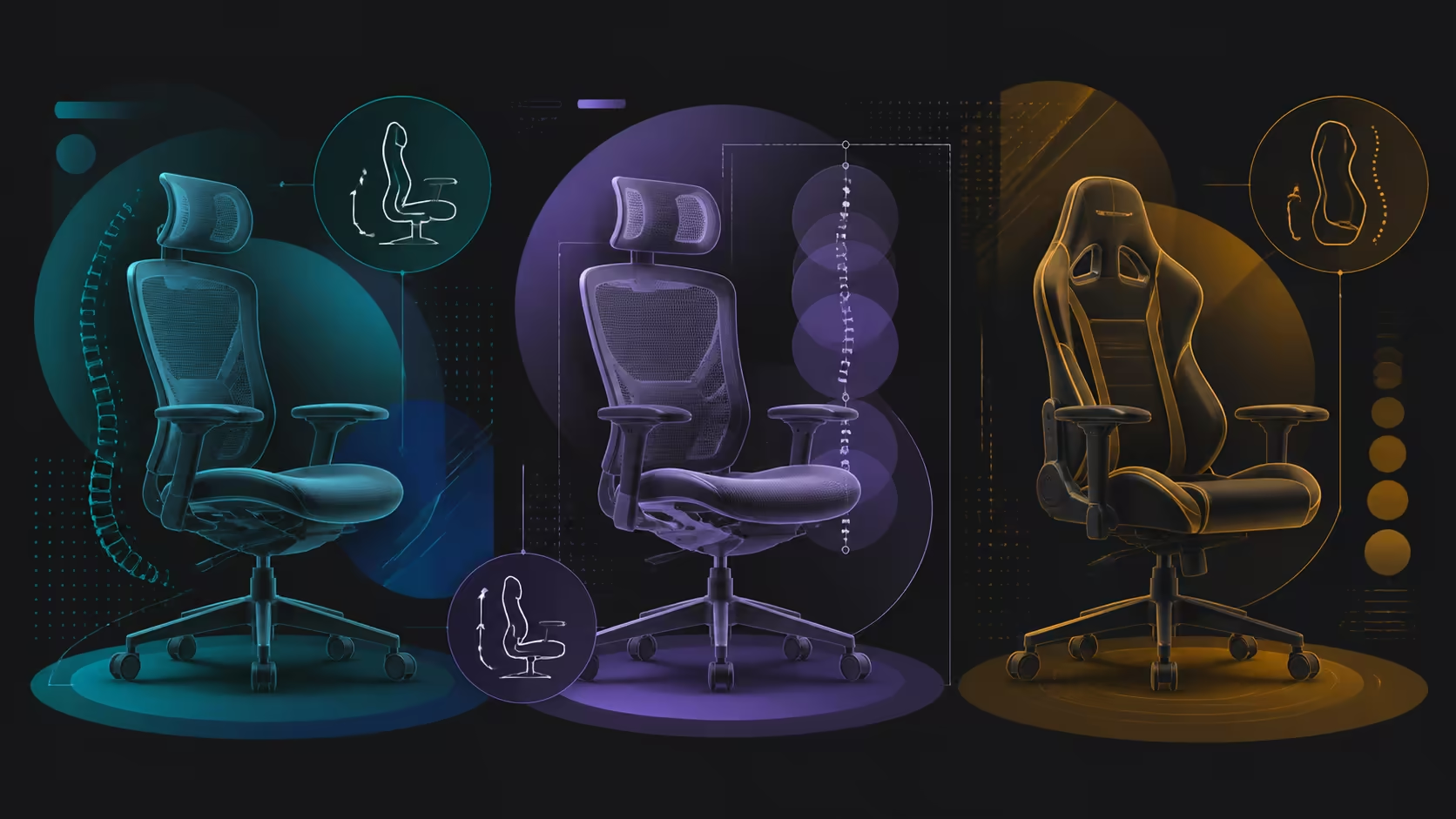
A chair shared by home-office work, study and gaming must be easy to reset before it tries to be clever. A South African ergonomic chair for shared setups should fit different tasks, users and power preferences. The HBADA X7 offers a R14,999 smart reference.
Quick Answer
The X7 suits shared South African work, study and gaming spaces through ten lumbar intensities, remembered Smart Mode preferences, 720-degree arms and a 4D headrest.
Choose a shared chair by defining each user's fit, desk reach and main posture changes, then testing whether controls are simple to restore. The X7 costs R14,999 for automatic lumbar following, directional contact adjustment, seat ventilation, massage and warmth. Plan its separate battery, exact dimensions, capacity and controls around every intended user.
🧭 Create separate task baselines
Home-office work may need close keyboard reach, study can involve reading or writing, and gaming may use a controller or mouse. Set one baseline for each task rather than forcing a single posture. Record screen and input position as well as the chair.
Browse Evetech's HBADA office-chair range after the task profiles are clear. Verify room dimensions and user capacity for every candidate instead of relying on the smart label.
🧭 Make reset instructions user-friendly
Ask each user to restore foot support, desk reach and useful lumbar contact. Test the X7's automated tracking through their normal posture changes without guessing its sensor design. A shared feature has value when everyone can use or decline it confidently.
Massage and heat should remain optional. Introduce them separately and follow exact operating guidance, especially when preferences differ. No treatment effect, mode count or temperature range should be attached to the chair.
🧭 Plan airflow, power and ownership
The ventilated cushion provides an airflow-related seat feature, but clothing, room conditions and sitting duration still matter. Give every user regular movement rather than using ventilation as permission for uninterrupted sessions.
Obtain the correct X7 battery separately before powered functions enter the shared routine, keeping its instructions accessible. Compare simpler Evetech office chairs when manual operation may reduce household friction.
Test the busiest shared-space changeover
Rehearse the transition with the least time available, such as moving from a study session to gaming or from a call to another person's work block. Restore the task baseline without rushing structural or safety checks. Record which controls or desk items cause delay.
If automated lumbar tracking reduces readjustment, note the user and movement that benefited. If another person prefers manual positioning, preserve their baseline separately. A shared chair does not need every smart function active for every occupant.
Include power handover. The verified battery item and operating instructions should stay with the chair, and every user should know how to leave massage or heat off. Do not attach guessed modes, temperatures or runtime to the handover.
After several changeovers, decide whether one shared chair remains sensible. A second simpler chair may be better when fit requirements conflict, while the X7 can justify R14,999 where its automated support, airflow and selected comfort functions serve several routines without confusion.
Lighter users can choose gentler support while heavier users can select stronger assistance against lower-back sagging. Three ventilation levels and the touch hub help each session adapt to the activity, although the separate battery and physical room fit still need planning.
A shared chair also needs a simple reset routine so the next person can restore their saved response without disturbing the hardware.
Frequently Asked Questions
What should be defined before a shared chair is chosen?
List the users, tasks, desk arrangement, required physical fit and any active functions that people actually want.
How can smart lumbar tracking suit varied use?
It can be tested across each user's posture changes, while the baseline fit and safe capacity still need individual verification.
Do massage and heat suit every shared-space user?
No. Preferences differ, and the functions should be optional. They also cannot promise a medical benefit.
What seating feature addresses airflow?
The X7 cushion moves air through ventilation without defining upholstery, foam or a measured thermal result.
How should power be planned?
The battery is excluded. Confirm the correct requirement and operating instructions before relying on active functions.
Which physical details must be checked?
Confirm dimensions, complete load guidance, room clearance and any required movement range for each user. The X7's smart features do not supply those values. A shared setup remains conditional until every intended person clears the physical fit rows. Preserve each person's task baseline and the steps needed to restore it after the chair changes hands.
Rehearse the busiest changeover before deciding that one shared chair can serve every routine, with each person's restoration steps kept in the handover note.
Repeat the busiest changeover monthly.
Ready to make one chair work across several real routines?
Explore Evetech seating with user profiles, reset steps, airflow and power planning prepared.