Quick Answer
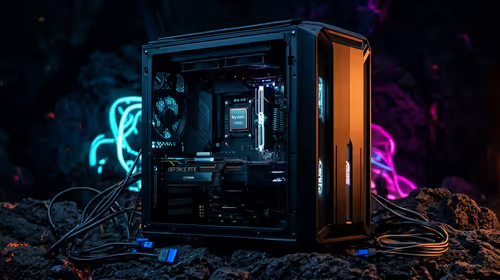
A Core Ultra 9 285K with RTX 4060 Ti is not a bad content creation pairing; the bottleneck depends on whether your apps lean on CPU encode, GPU effects, VRAM, or storage. For SA buyers, plan the whole workstation in the R18,000-R32,000 range rather than judging the CPU and GPU alone. The practical target is 1080p creator previews and 60-144 fps gaming, with GPU effects as the main limit.
Where The Limit Usually Appears
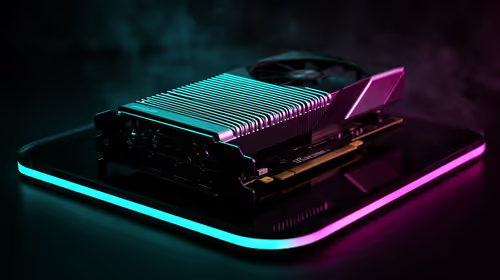
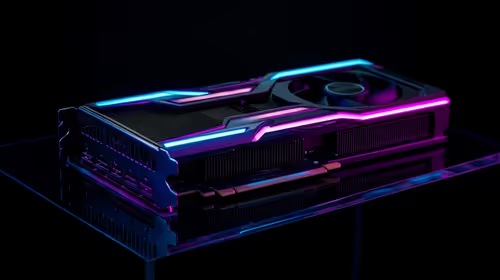
The Core Ultra 9 285K handles timeline management, exports, background apps, and general responsiveness. The RTX 4060 Ti carries accelerated effects, 3D viewports, AI-assisted tools, and gaming output where the software supports it. In Premiere Pro, DaVinci Resolve, Blender, OBS, and photo tools, the limit can move from CPU to GPU to SSD depending codec, effect stack, and project size.
Memory, Storage, And Power Matter
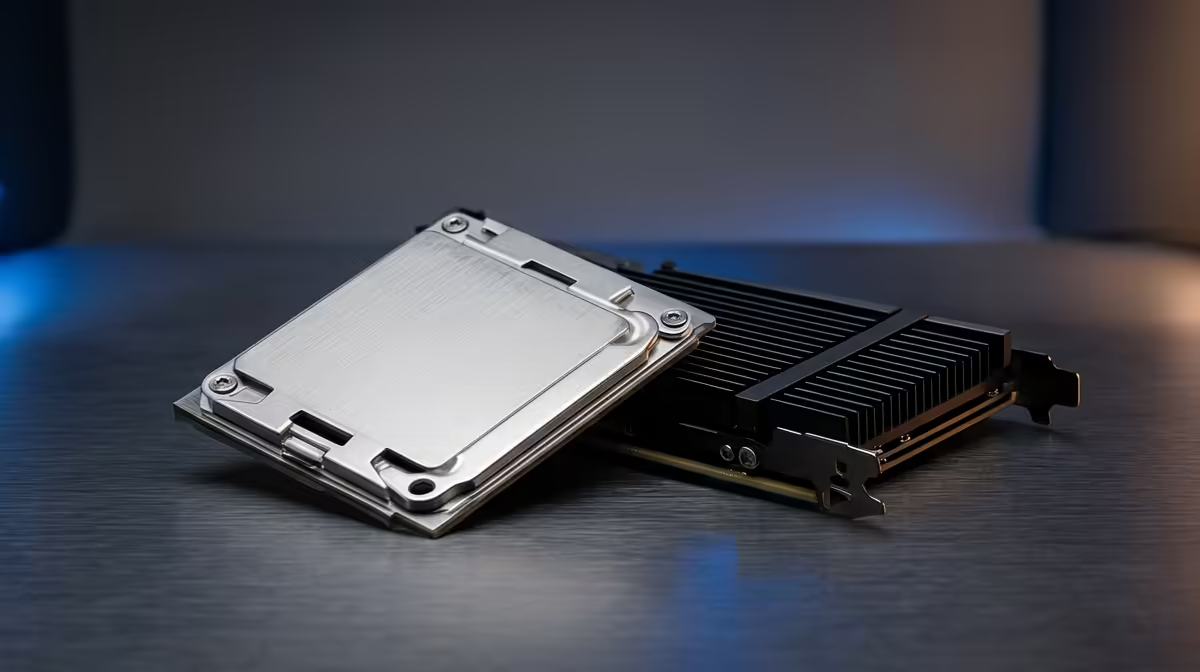
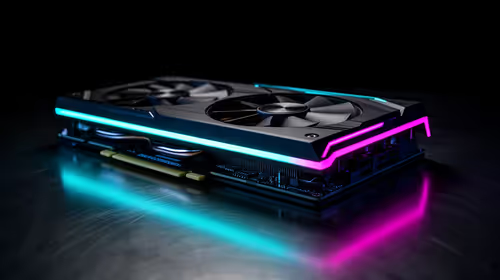
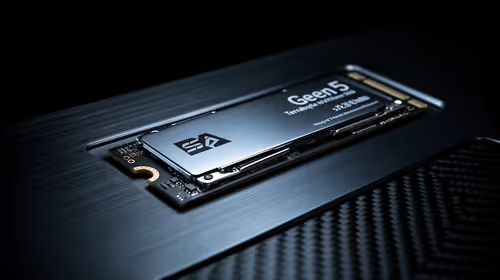
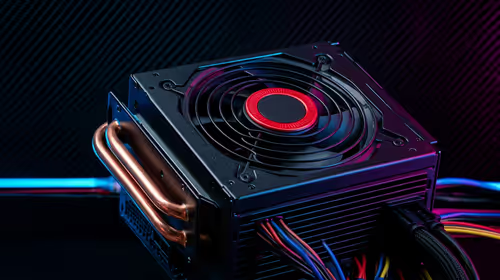
For this entry to mid-range pairing, use 32GB DDR5 and a 1TB NVMe SSD as the planning floor. A premium graphics card cannot hide a cramped SSD or too little memory when cache files, preview renders, browser tabs, and source footage compete. Check case airflow and connector requirements before checkout, especially with larger RTX and Radeon cards.
Gaming And Creator Balance
At 1080p esports settings, a high-end GPU can wait on the CPU more often. At 1440p and 4K, the graphics card usually becomes the tighter point, especially with high textures, ray tracing, or render effects. For mixed SA desks, the better question is whether the machine stays responsive while exporting, recording, and browsing at the same time.
FAQ
Is this CPU too weak for the GPU?
Usually no for content creation if memory, storage, and cooling are planned properly. The GPU may be the limit in effects-heavy work, while the CPU matters more for encoding and multitasking.
How much RAM should I choose?
Use 32GB for entry creator work and 64GB for heavier 4K video, large photo batches, or Blender scenes. More RAM is useful only when your projects actually fill it.
Should I spend more on the GPU or storage?
Spend more on the GPU when effects, 3D, AI, or high-resolution gaming are the pain point. Spend on a faster 2TB NVMe scratch drive when loading, cache, or exports stall despite low GPU use.
Pro Tip
your heaviest normal project as the test: if it fills RAM or the scratch SSD before the RTX 4060 Ti is busy, fix that platform limit first.