Quick Answer
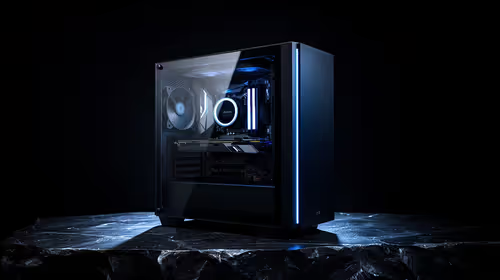
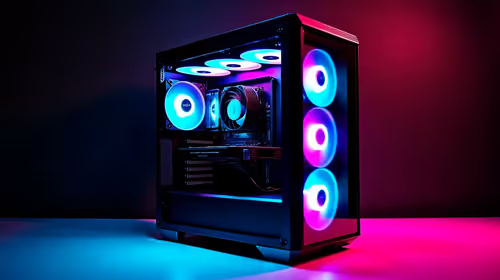
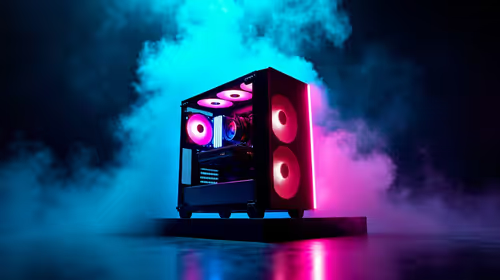
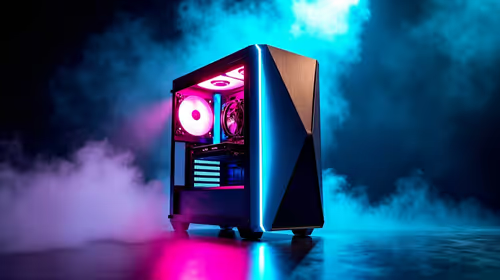
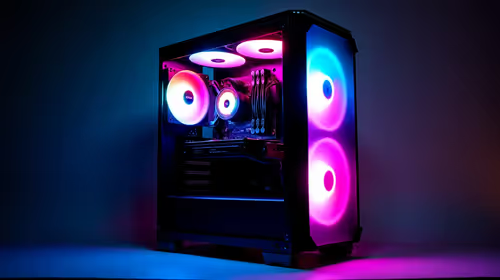
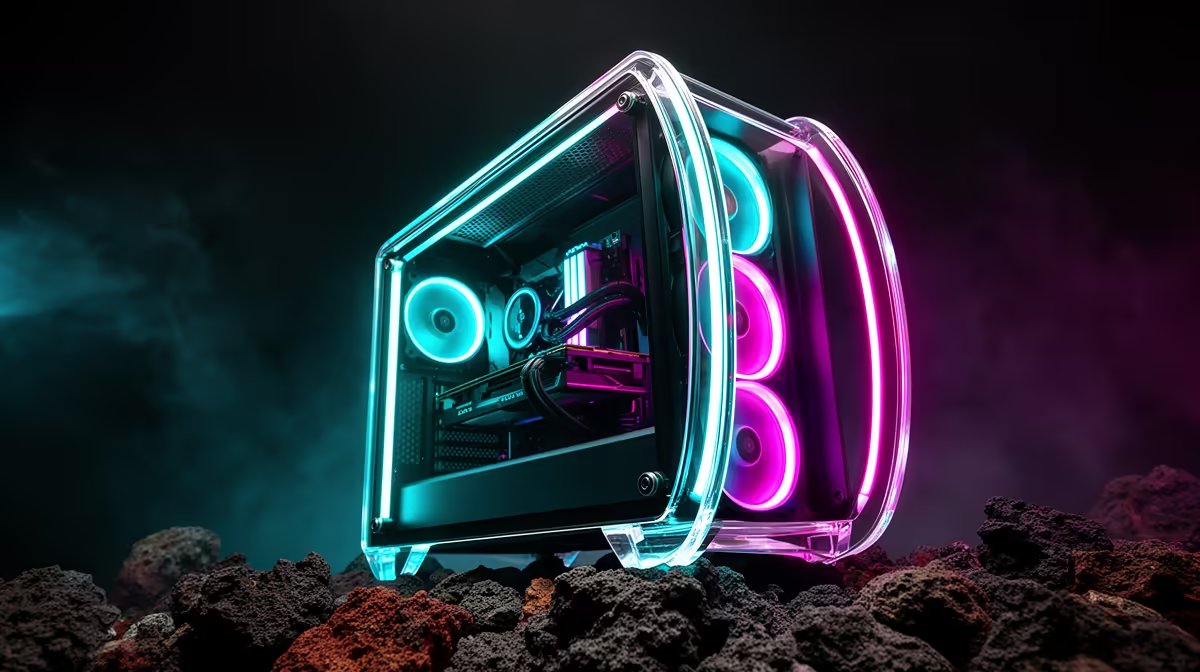
Curved tempered glass side panels wrap around the front and side of a PC case in a single bent sheet, giving a panoramic view of the build interior. They are three to four millimetres thick, thermally strengthened to resist impact, and provide a wider viewing angle than flat side panels without meaningful thermal trade-offs when the front of the case has mesh intakes.
How Curved Tempered Glass Panels Are Made and Mounted 🖥️
The glass starts as a flat sheet that is heated to around 620 degrees Celsius and pressed into a mould that defines the bend radius. Once cooled, the glass retains the curve and is roughly five times more resistant to impact than annealed glass of the same thickness. Most curved panels used in PC cases bend at a radius of 350 mm to 600 mm and span from the front bezel edge to the rear of the chassis. Mounting is either magnetic (held by neodymium magnets along the frame perimeter) or tool-free latch (two or four retention clips that snap into slots).
Visibility and Aesthetic Impact Inside the Build ✨
The bend angles the glass so you see more of the motherboard and GPU simultaneously from a natural seated position. A flat panel viewed at thirty degrees to the side shows the GPU fan shroud edge-on; a curved panel viewed from the same angle keeps the GPU face and motherboard visible. This matters most for builds with high-quality components: an RTX 5080 Founders Edition, a white ARGB CPU cooler, and custom sleeved cables photograph significantly better behind curved glass. The optical distortion from the curve is minor at bend radii used in PC cases and does not noticeably affect the perceived colours of ARGB lighting.
Durability, Cleaning, and Practical Considerations 🔧
Tempered glass does not scratch easily but shatters when struck at a point rather than spread across a surface. Always handle panels by the edges and never place them on hard surfaces face-down without a cloth. For South African builders who move their PCs to LAN events, a padded sleeve for the glass panel is worth the investment. Cleaning is straightforward: a microfibre cloth with a small amount of isopropyl alcohol removes fingerprints and dust without leaving streaks. Avoid ammonia-based glass cleaners, which can affect any UV-cured edge coating on the glass. In dry Highveld conditions, static electricity attracts fine dust particles to glass surfaces quickly, so a monthly wipe is realistic.
Transport Glass Panels Separately to LANs ⚡
If you take your PC to LAN events at venues like Rage Expo or local gaming centres, remove the curved tempered glass panel and wrap it in a microfibre cloth before placing it in a padded bag. Even minor impacts from transport in the back of a car on SA roads can crack tempered glass along the edge. It takes two minutes and prevents an expensive replacement.
FAQ
Does curved tempered glass affect airflow compared to a flat panel?
No, the side panel does not have intake holes regardless of whether it is flat or curved. Airflow depends on front, top, and rear openings, not the side panel. The curve affects aesthetics and visibility only.
Can a curved tempered glass panel break during normal PC use?
Under normal stationary use, no. Tempered glass panels are durable against vibration and typical desktop knocks. The risk is during transport or from a direct point impact, such as dropping a screwdriver on the panel edge.
Are curved tempered glass cases worth the extra cost over flat glass cases?
If your build uses high-quality components or custom lighting that you want to display, the wider viewing angle justifies the premium. Cases with curved glass typically cost R200 to R600 more than equivalent flat-panel versions, which is a modest premium for a significant aesthetic upgrade.
Want a build that looks as good as it performs? Browse Evetech's selection of curved tempered glass PC cases across multiple sizes and price ranges, with local stock and delivery across South Africa.