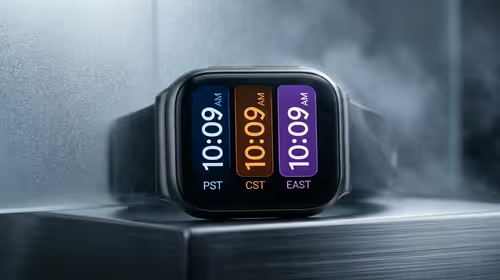
For data science students, a smartwatch is a focus and time-management aid, not a compute tool. The real work depends on the machine, so spend accordingly.
Quick Answer
A smartwatch matters for data science students mainly for focus timers, deadline reminders and health tracking during long sessions; it has no role in actual computation. Prioritise RAM and a capable laptop first. Entry smartwatches are stocked locally from around R1,200.
Where a Watch Helps Coursework
Data science means long stretches running models and writing code. A watch with focus timers supports deep-work blocks, deadline reminders keep assignments on track, and movement or stress alerts prompt healthy breaks during marathon training runs.
What Actually Drives the Work
Model training and large datasets lean on RAM and CPU. A laptop with at least 16GB RAM handles typical coursework datasets, and 32GB helps with larger ones. That is where the budget belongs, not in a flagship watch.
Sensible Choice
An entry watch around R1,200-R2,500 covers timers, reminders and tracking. Spend the difference on more RAM or a faster SSD, which directly speed up data science workflows where a watch cannot.
FAQ
Does a smartwatch help with data science coursework?
Only indirectly, through focus timers, deadline reminders and health tracking during long sessions. The actual computation depends on your laptop's RAM and CPU, not the watch.
What hardware matters most for data science students?
RAM first: 16GB handles typical coursework, 32GB helps with larger datasets. A fast SSD and capable CPU follow. These drive model training where a watch has no role.
How much should I spend on a smartwatch as a student?
An entry model from around R1,200 to R2,500 covers timers and tracking. Put the rest toward more RAM or a faster SSD, which speed up your actual data work.
Put your budget into 16-32GB RAM and a fast SSD for data work first; add an entry smartwatch only for focus timers and break reminders.