Quick Answer
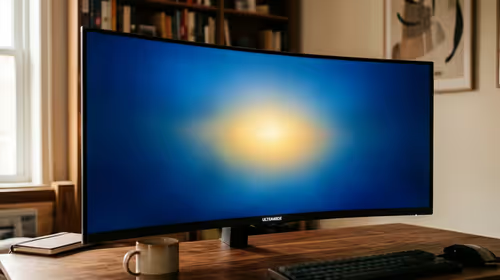
Most DDR5 build low-FPS cases after a GPU driver update are fixed by resetting the refresh rate, clean-installing the driver, and clearing shader caches. On a 240Hz display, also confirm Windows is still set to 240Hz instead of 60Hz or 144Hz.
First Checks
Check the simple numbers first: Windows refresh rate, in-game frame cap, V-Sync state, GPU utilisation and CPU package temperature. A 240Hz monitor should show 240Hz in Windows display settings before you blame the GPU. Use a known game or benchmark and write down the before-and-after numbers, such as 80 fps versus 180 fps, so the fix is measurable. Do not test with ten changes mixed together; isolate the driver, refresh rate, BIOS and memory steps.
Driver And Firmware Order
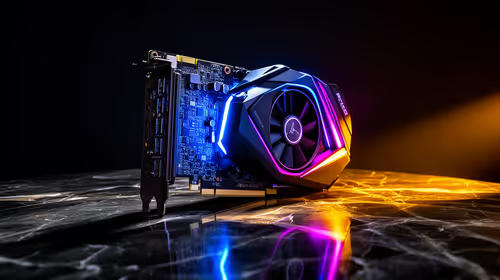
For SA gaming PCs built around Ryzen 7 7800X3D, Core Ultra 9 285K, RTX 4090, RX 9070 XT or DDR5-6000 memory, install in this order: chipset driver, GPU driver, monitor firmware if available, then game updates. A replacement 32GB DDR5 kit can sit around R1,500-R3,500, but do not buy parts until the software stack is clean.
Hardware Checks Worth Doing
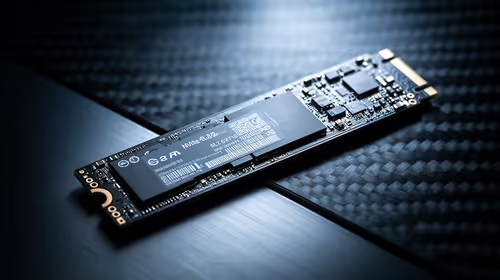
If the issue remains, check PCIe power cables, GPU seating, BIOS version, RAM training and SSD health. B850 and AM5 boards can be sensitive to old BIOS builds when EXPO is active. For a 240Hz setup, confirm the cable supports the target mode; DisplayPort is usually the safer path for 1440p 240Hz.
FAQ
Should I roll back the GPU driver?
Yes, roll back if the issue started immediately after the new driver and the previous driver was stable. Keep the installer for the stable version until the next release proves reliable on your machine.
Can a motherboard driver cause low FPS or crashes?
Yes. Chipset drivers affect PCIe behaviour, power states and USB devices, so a mismatch can create stutter, crashes or weak GPU utilisation even when the graphics driver looks correct.
When should I replace hardware?
Replace hardware only after the same fault appears with a clean driver install, stable BIOS settings and normal temperatures. If the GPU, RAM or board fails a repeatable stress test, then price a local replacement through Evetech.
Fix the fault before buying parts
Record the refresh rate, driver version, BIOS version and one FPS result, then compare replacement ddr5 memory only if the same fault survives the clean test.