Quick Answer
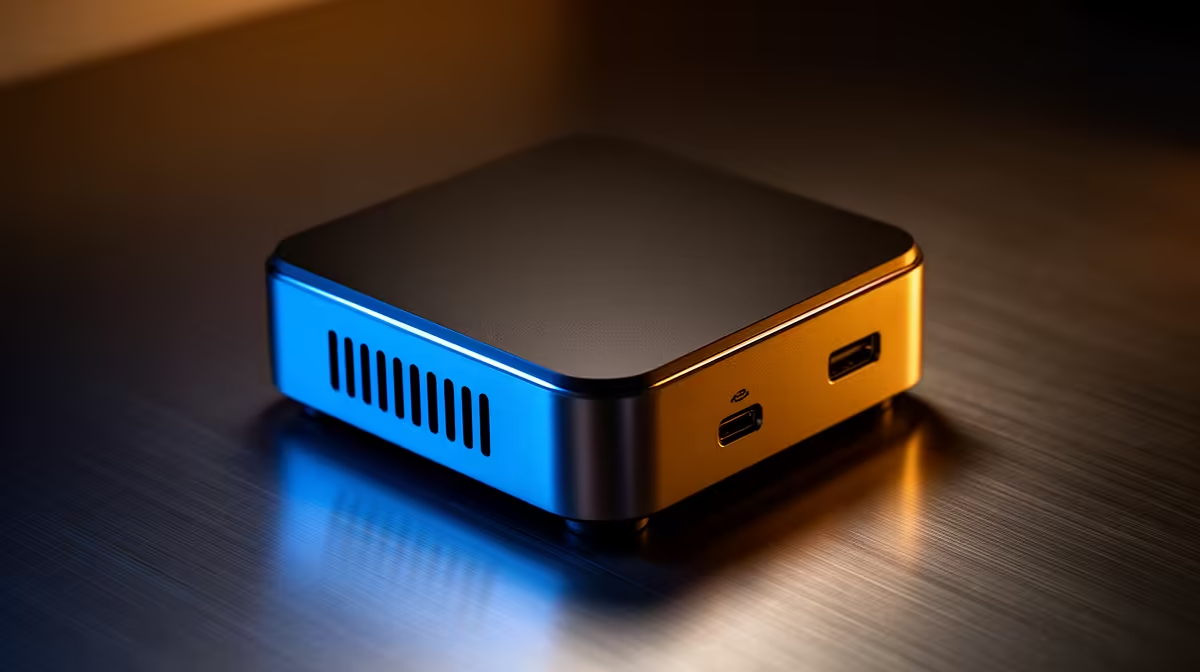
Budget upgraders do not need a premium mini PC, just the right specs. A unit with a Ryzen 5 or Core i5, 16GB RAM and a 512GB NVMe SSD around R8,000-R12,000 handles office work, browsing, 1080p media and light gaming. Premium R18,000-R25,000 mini PCs only earn their price for heavy multitasking, creative work or local AI.
Right Specs Beat A Premium Badge
For a budget upgrader replacing an old tower or laptop, the win is choosing the specs that matter, not the most expensive box. A Ryzen 5 or Core i5 with 16GB RAM and a fast NVMe SSD around R8,000-R12,000 feels snappy for everyday computing, web, video and office apps. The jump to a premium Ryzen 7/9 unit at R18,000-plus only pays off if you genuinely multitask heavily or do creative rendering. For most budget upgrades, that money is better kept or spent on a monitor.
Where Your Upgrade Rand Goes Furthest
On a budget, prioritise the SSD and RAM over raw CPU grunt. Moving from a hard drive to an NVMe SSD is the single most noticeable speed jump, and 16GB RAM stops the stutter that 8GB causes with many tabs open. A current Ryzen 5 or Core i5 is plenty of CPU for daily use. This order, storage and memory first, CPU second, GPU only if you game, gives the biggest felt improvement per rand on a mini PC upgrade.
Honest Limits Of An Entry Mini PC
Set expectations: an entry mini PC with integrated graphics handles 1080p media, office work and light or esports gaming, not demanding AAA titles at high settings. If you want serious gaming, a mini PC is the wrong shape and a tower with a discrete GPU is better value. For everything short of that, a well-specced entry mini PC is a quiet, compact, capable upgrade that does not need premium pricing to do its job.
FAQ
Do budget upgraders need a premium mini PC?
No, a Ryzen 5 or Core i5 with 16GB RAM and a 512GB NVMe SSD around R8,000-R12,000 handles everyday work and light gaming. Premium units only pay off for heavy multitasking or creative work.
What gives the biggest speed improvement on a mini PC?
An NVMe SSD over an old hard drive, followed by 16GB RAM. The CPU matters less for daily use, so spend on storage and memory first.
Can an entry mini PC handle gaming?
Light and esports titles at 1080p, yes, but not demanding AAA games at high settings. For serious gaming a tower with a discrete GPU is better value than a mini PC.
budget mini PC, prioritise an NVMe SSD and 16GB RAM over a pricier CPU, because storage and memory deliver the most noticeable everyday speed per rand.