Quick Answer
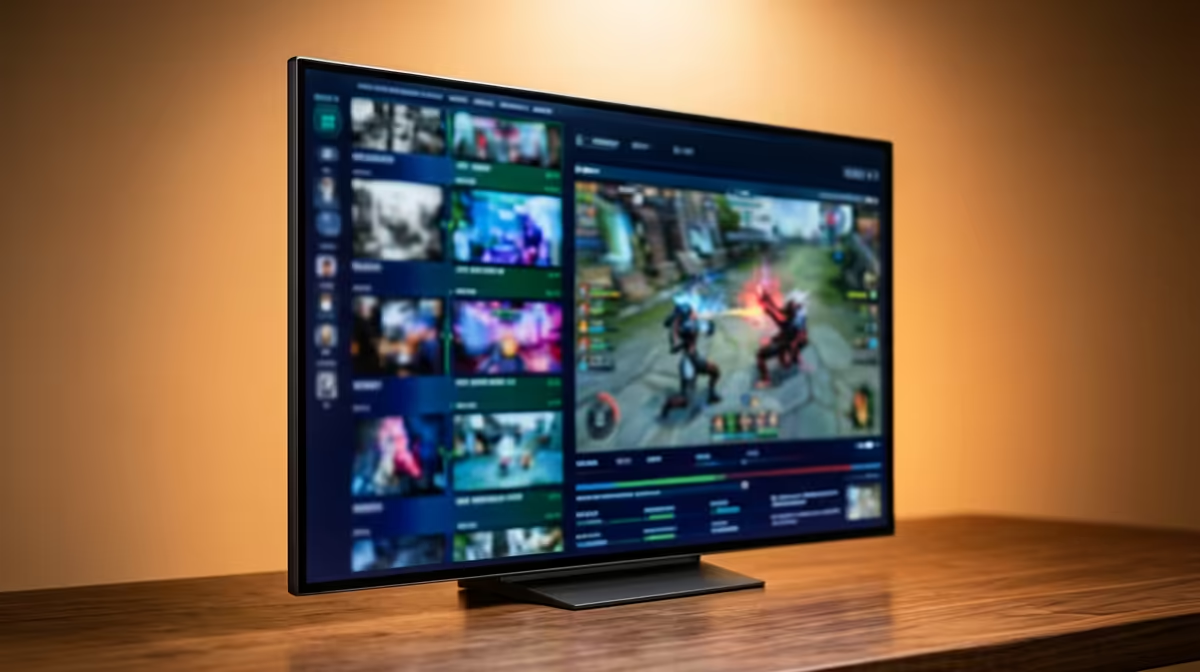
No, a 240Hz monitor is usually the wrong priority for 4K video editing unless competitive esports is the real focus. A 4K IPS display with strong colour coverage, or a second 1440p high-refresh screen for games, is the cleaner setup. Use roughly R4,500 to R12,000 as a cautious SA planning band and compare real stock before committing. The safer shortlist starts with MSI G274QPX, ASUS TUF VG259QM, or a 4K IPS creator display, then narrows by a GPU and game settings that can hold near 240 fps.
Start with the workload
A 240Hz panel only matters when the game can actually feed it. For 4K video editing plus casual esports, 144 Hz or 165 Hz is often the better value unless you play competitive shooters every week. A buyer playing Valorant at 240 fps has a different need from a buyer editing 4K footage, streaming on YouTube, or playing story games on a TV. Name the workload first, then choose the part that removes the clearest limit.
In South Africa, also account for delivery time, warranty handling, desk space, and whether the rest of the system is ready. A strong part inside a cramped case, weak router path, or 8GB RAM machine will not feel like a clean upgrade.
Compare the real spec that matters
The key check is not the printed refresh rate alone. Look at response time, adaptive sync, DisplayPort support, and whether your RTX 4060, RTX 4070 Super, or RX 7800 XT can stay close to 240 fps. Do not compare only the biggest number on the box. For laptops, check GPU wattage and RAM. For monitors, check refresh rate and panel type. For motherboards, check VRM cooling and M.2 slots. For audio gear, check sample rate, pickup pattern, and desk noise.
The named shortlist, MSI G274QPX, ASUS TUF VG259QM, or a 4K IPS creator display, gives you a concrete starting point. If prices are close, choose the option with better cooling, local warranty comfort, and enough headroom for at least two to three years.
Avoid paying for unused headroom
For 4K video editing plus casual esports, visual quality, colour, and resolution may beat raw refresh. A 27-inch 1440p 165 Hz IPS monitor can feel better than a smaller 240Hz screen if your games rarely exceed 180 fps. A R20,000 budget can disappear quickly if every spec is treated as essential. Spend where the workload shows a measurable gain: 60 fps versus 144 fps, 16GB versus 32GB RAM, Wi-Fi 5 versus Wi-Fi 6, or a 1TB SSD instead of a cramped 512GB drive.
For Cape Town, Johannesburg, Durban, and Pretoria buyers, the practical win is a balanced setup. The right choice should fit the desk, the games, the fibre router, and the support path after the first week.
FAQ
What is the best first filter for 240Hz monitor?
Start with the workload, then remove options that miss the required spec. That keeps the shortlist smaller and prevents paying for features you will not use.
How much should SA buyers budget?
Use roughly R4,500 to R12,000 as a broad planning band, then compare live local stock. Spend above that only when the key spec, warranty, or build quality clearly improves the daily result.
Which spec should not be ignored?
Do not ignore a GPU and game settings that can hold near 240 fps. It is the detail most likely to change whether 240Hz monitor feels smooth, stable, and worth the money after a month.