Quick Answer
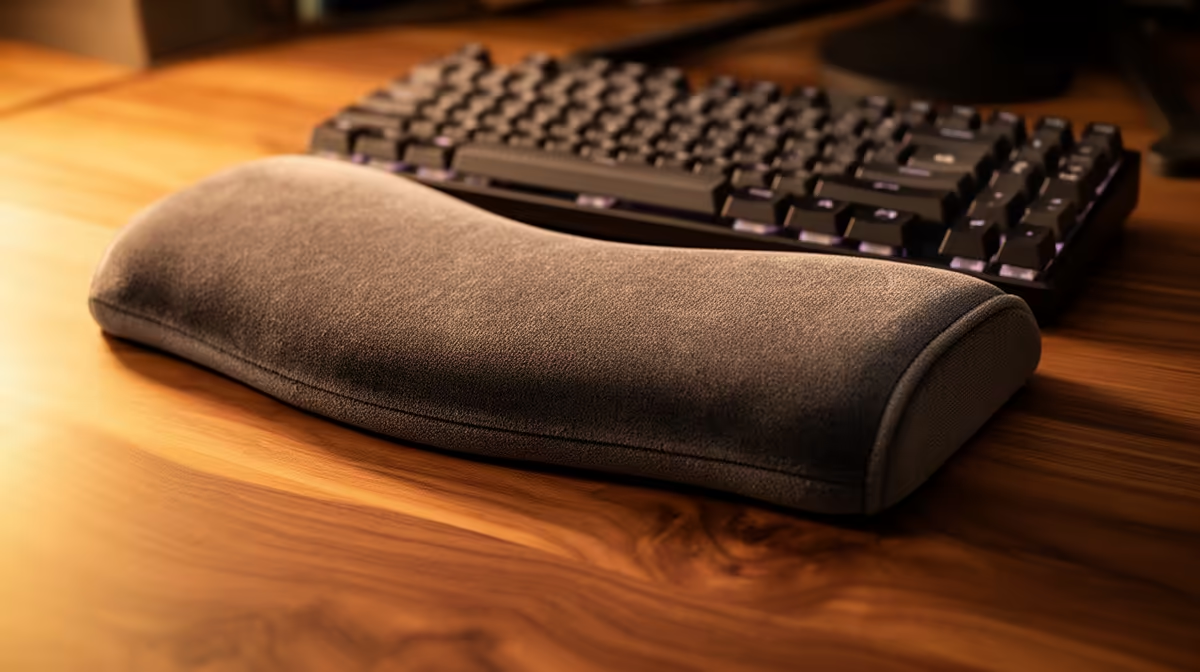
You do not strictly need a wrist rest for a mechanical keyboard, but one helps if your keyboard sits above 30mm at the front, since it keeps your wrists neutral and reduces strain over long sessions. A quality memory-foam or gel rest runs roughly R150-R400 and is worth it for typists and gamers who play for hours.
When a wrist rest actually helps
A wrist rest matters most with tall mechanical keyboards, since high front heights force your wrists to bend upward, straining the tendons over time. The ideal typing angle keeps wrists flat or slightly below the keys, around a neutral 0-10 degrees. If your keyboard has a low profile or you use a negative-tilt setup, you may not need a rest at all. For full-size and TKL boards with standard switches, a rest brings your wrist line up to meet the keys comfortably.
Choosing a rest for SA setups
At Evetech, wrist rests span roughly R150 for firm foam pads up to R400 for premium gel or memory-foam models with non-slip bases. Memory foam moulds to your wrist and suits long typing or gaming sessions, while gel offers firmer support that some prefer for fast movement. Match the rest height to your keyboard's front height, often 20-40mm, so your wrists stay level. A non-slip base matters most for gamers making rapid hand movements, and the rest is a small add-on next to a mechanical board that often runs R1,200 or more.
FAQ
Do I really need a wrist rest?
Not always. It helps most with tall keyboards above 30mm at the front, where it keeps wrists neutral. Low-profile boards may not need one.
What material is best, foam or gel?
Memory foam moulds to your wrist for long sessions, while gel gives firmer support some prefer for fast gaming. Both work; choose by feel.
What is the ideal typing angle?
Aim for a neutral wrist line, roughly 0-10 degrees, with wrists flat or just below the keys. A rest helps reach this on taller boards.
wrist rest height to your keyboard's front height, often 20-40mm, so your wrists stay level and strain-free during long sessions.