Quick Answer
No — students do not need premium DDR5; a 16GB or 32GB DDR5-5600/6000 kit covers study and light gaming for around R1,500–R3,200 at Evetech. 16GB handles Office, research and online lectures; 32GB future-proofs for the next few years and light editing. A premium DDR5-7200 kit wastes a student budget on speed coursework never uses. Buy the right capacity at a sensible speed.
Match RAM To Student Workloads
For browsing, Office, coding and online classes, 16GB DDR5 is genuinely enough and the cheapest sensible choice. If you also game, do light video editing, or want the build to last all four years without an upgrade, 32GB is the smarter spend. Either way, a standard DDR5-5600 or 6000 kit feeds a student-tier CPU fully — there is no reason to pay for more speed.
Why Premium Is Wasted On Studies
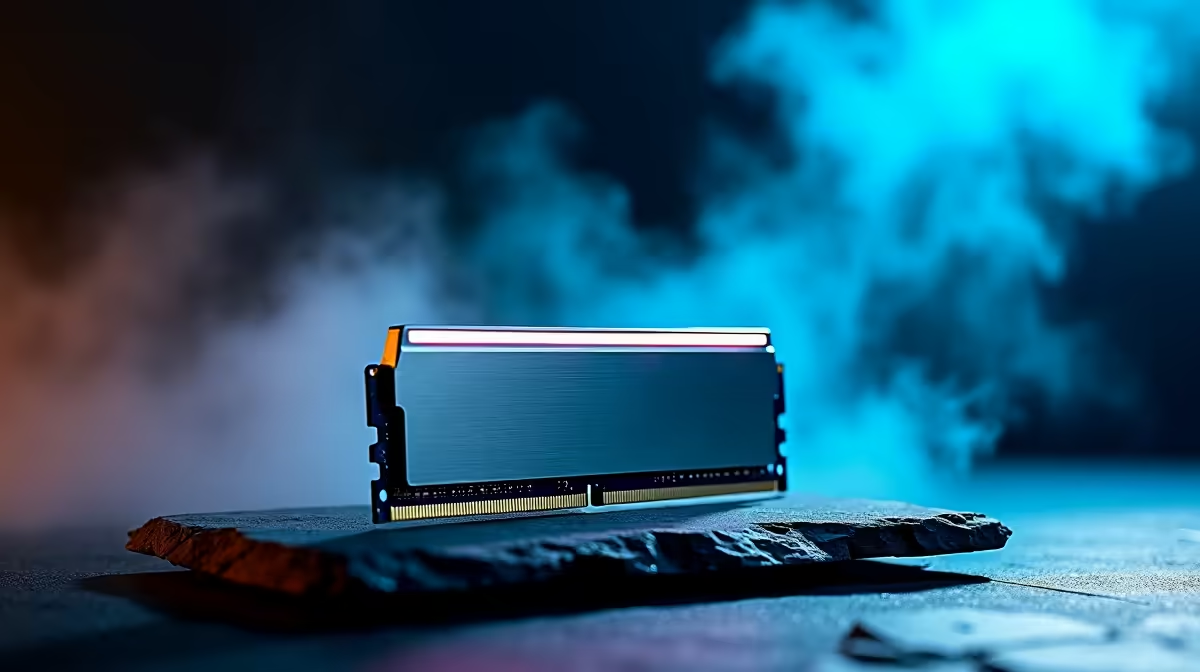
Premium DDR5 charges for ultra-high clocks, RGB and tight timings. None of these help write essays, run a browser, or sit in a Teams lecture. A student would not notice the difference between DDR5-6000 and DDR5-7200 in any coursework task. That premium money is far better kept for textbooks, a bigger SSD, or simply saved.
The Student-Smart Choice
Buy 16GB DDR5-5600 if money is tight and you only study, or 32GB DDR5-6000 if you game or want longevity. Enable EXPO or XMP in BIOS so the kit runs at rated speed. Check your board's QVL. That is the complete answer — sensible capacity and speed, no premium tier.
FAQ
How much DDR5 RAM does a student need?
16GB covers Office, research, coding and online lectures. Step to 32GB if you game, do light editing, or want the build to last several years without an upgrade. Either is plenty on student fibre and tasks.
Do students need premium high-speed DDR5?
No. Coursework never uses the speed premium kits offer. A student would not notice DDR5-6000 versus 7200 in any task, so that money is better kept for a bigger SSD or textbooks.
Is 16GB or 32GB better for a student?
16GB if budget is tight and you only study; 32GB if you also game or want longevity. Both run study tasks smoothly — the choice is about future-proofing, not present-day performance.
DDR5-5600 for pure study or 32GB DDR5-6000 if you game too — enable EXPO or XMP in BIOS, and keep the premium-kit money for a bigger SSD instead.