Quick Answer
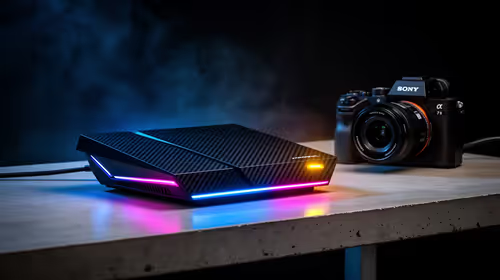
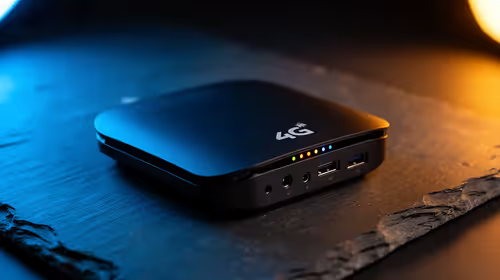
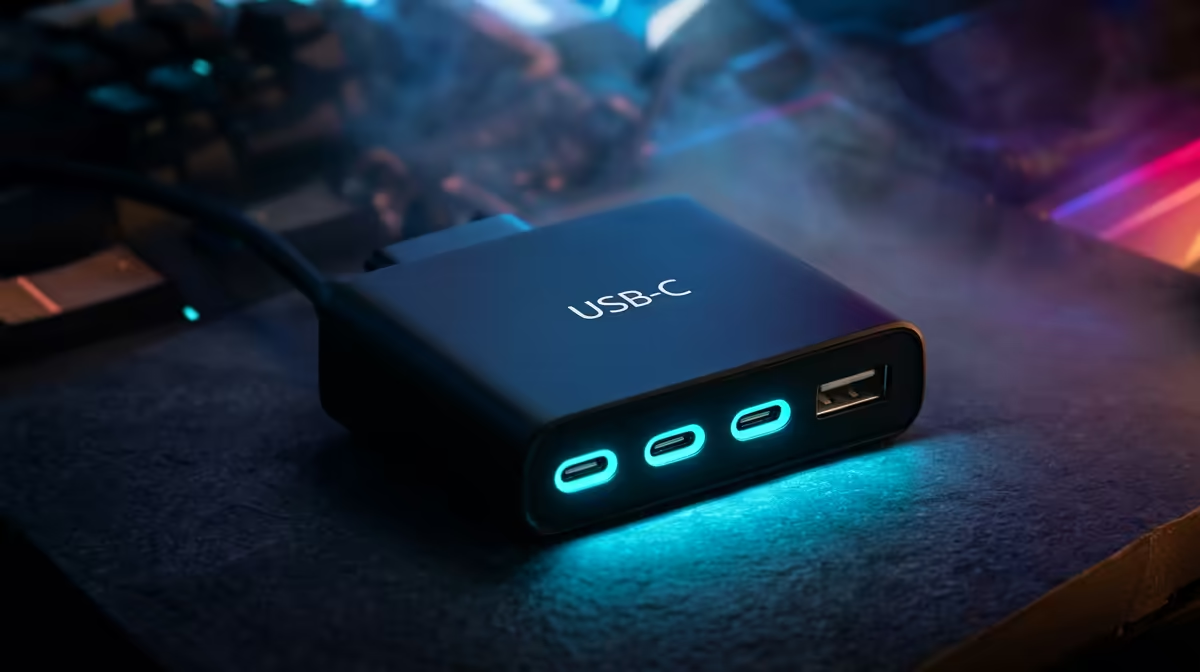
For console gamers moving to PC, a dock's display outputs are worth paying for the moment you want dual monitors or high-refresh gaming - look for HDMI 2.1 (4K 120Hz) plus a second output. A single HDMI 2.0 dock caps at 4K 60Hz. Docks with strong outputs at Evetech run R2,000-R4,500. Desktops skip the dock.
Why Display Outputs Are The Make-Or-Break Spec
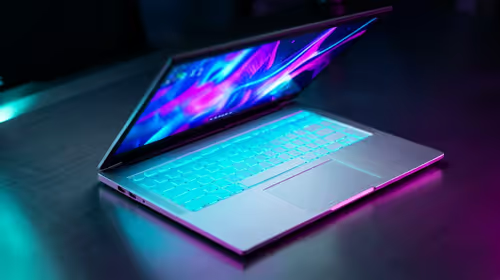
Coming from a PS5 or Xbox running 4K 120Hz over HDMI 2.1, you'll want similar on PC. On a laptop-plus-dock setup, the dock's outputs decide your ceiling. A cheap dock with one HDMI 2.0 limits you to 4K 60Hz on one screen. A dock with HDMI 2.1 and DisplayPort 1.4 supports a 4K 120Hz main monitor plus a 1080p side screen for chat and browser - the dual-screen layout most PC gamers move to.
Matching Outputs To Your Monitors
For high-refresh competitive play, confirm the dock states 1440p at 144Hz or 4K at 120Hz, not just "4K". Driving two high-refresh panels also needs a laptop GPU like an RTX 4060 or stronger. If those numbers feel like a stretch, a desktop tower with a GPU that has four native outputs is the cleaner route.
Power Alongside Outputs
On a gaming laptop, pair strong outputs with 90-100W power delivery so the machine charges under load. Outputs and power are the two specs that matter most.
FAQ
What display outputs should a gaming dock have?
HDMI 2.1 for 4K 120Hz plus a second output like DisplayPort 1.4 for a dual-monitor layout. Avoid single HDMI 2.0 docks that cap at 4K 60Hz.
Will a dock lower my refresh rate?
It can if the output is HDMI 2.0, which limits 4K to 60Hz. For high-refresh gaming pick a dock that lists 1440p 144Hz or 4K 120Hz support.
Do I need a dock if I build a desktop?
No. A desktop GPU like an RTX 4060 has multiple native outputs, so connect monitors directly. Docks only matter for laptop setups.
Choose a dock at Evetech with HDMI 2.1 and a second output so your console-style 4K 120Hz carries over to dual-monitor PC gaming.