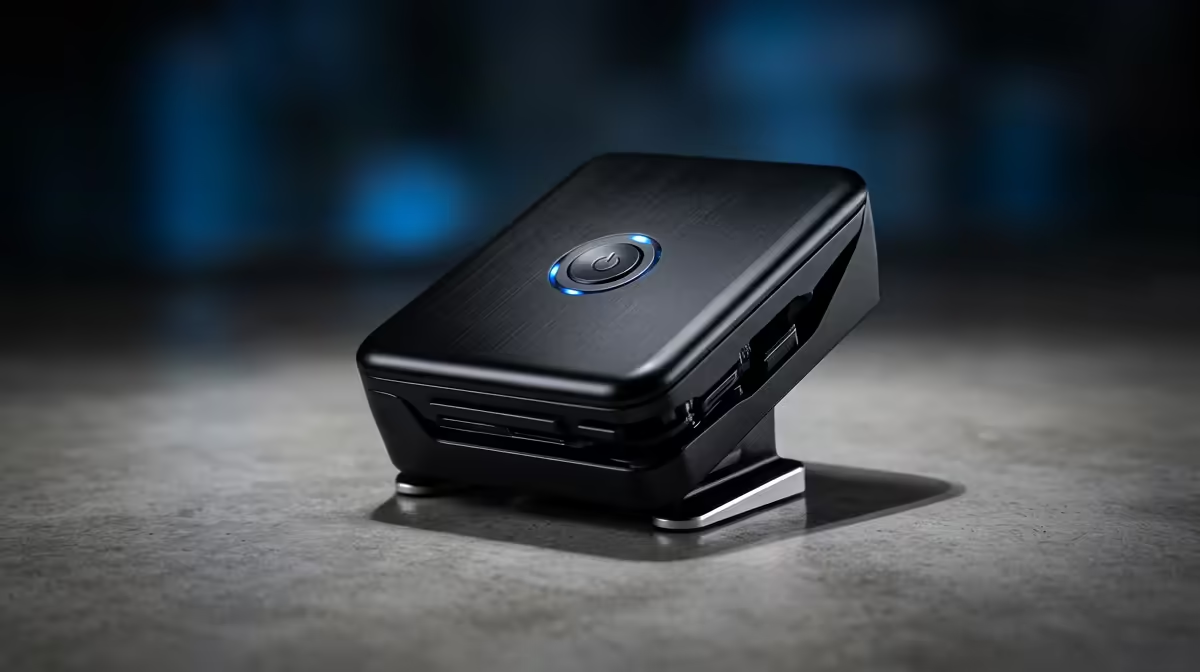
A docking station is only as capable as the laptop feeding it, so the whole decision is about matching the dock's display, charging and port standard to your machine.
Quick Answer
The biggest docking-station mistakes in SA homes are buying a dock with less PD than your laptop's charger, assuming USB-C means Thunderbolt, and ignoring display limits. Match PD (100W for most laptops), confirm the port standard, and check max resolution. A reliable dock runs R1,800-R4,500 depending on Thunderbolt support.
The checklist mistakes
Three errors trip people up. First, undersizing PD - a 60W dock won't keep a 100W laptop charged under load. Second, confusing USB-C with Thunderbolt - a USB-C-only laptop can't drive a TB4 dock's dual-4K output. Third, overlooking the dock's display cap - some only do 4K at 30Hz, which looks choppy. Check all three on the spec sheet before buying.
Buy for your laptop, not the box
The dock is only as capable as the laptop feeding it. Read your laptop's port (USB-C, USB4 or Thunderbolt 4), its max external display support, and its charger wattage. Then pick a dock that matches: a USB-C dock (R1,800-R2,800) for single-monitor work, a TB4 dock (R3,500-R4,500) for dual-4K on a Thunderbolt laptop. Matching these avoids the classic returns.
FAQ
What's the most common docking-station mistake?
Buying a dock with less PD wattage than the laptop's charger, so it can't keep the laptop charged under load. Always match or exceed your charger's rating.
Does USB-C mean Thunderbolt?
No - a USB-C port may or may not support Thunderbolt 4. A USB-C-only laptop can't unlock a TB4 dock's dual-4K bandwidth, so check your laptop's exact spec.
Why does my second monitor look choppy through a dock?
The dock or laptop may cap that output at 4K 30Hz. Confirm the dock supports 4K at 60Hz and that your laptop can drive two displays before buying.
write down your laptop's port standard, charger wattage and max display support - then match the dock to those three numbers to avoid a return.