


550W PSU Planning for RTX 5080 Super Builds in SA
550W for RTX 5080 Super needs a full-build check, not a simple yes. Review GPU guidance, CPU draw, transient load, connectors, PSU quality, and upgrade plans before deciding.
Read moreA 1.5m DisplayPort cable is short enough to hold stable signal quality at high refresh rates. The DP114 uses oxygen-free copper and dual shielding across its 1.5m length to keep that signal consistent.
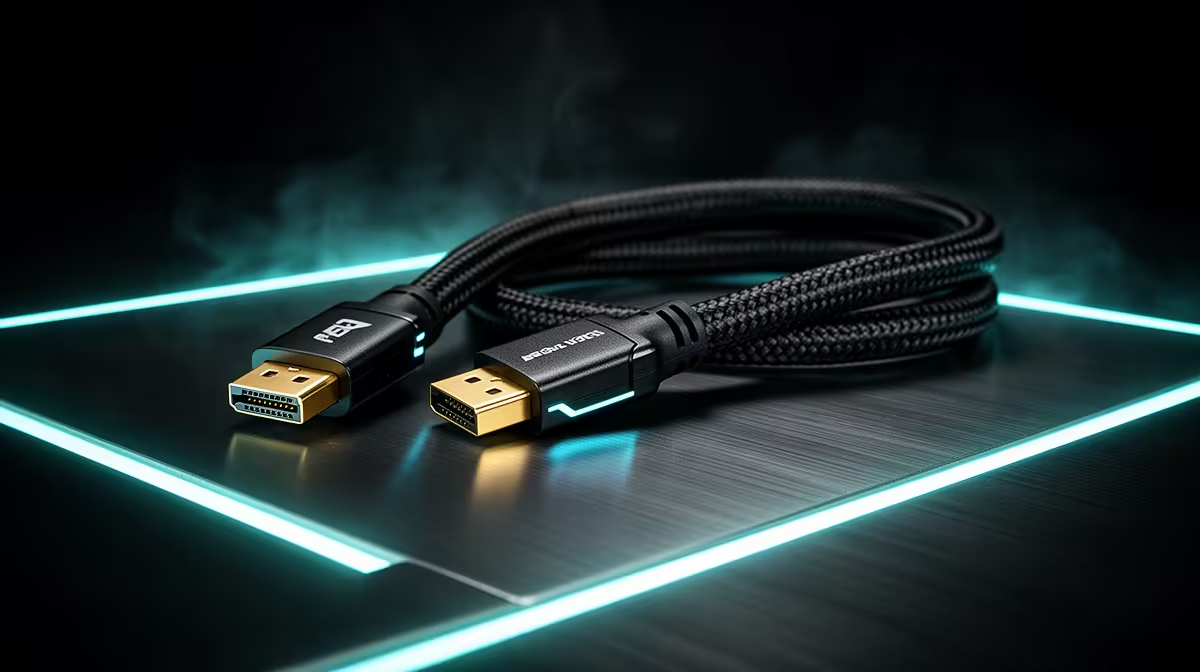
Signal degradation over cable length is a real concern for anyone chasing a high refresh rate without visible artifacts, and the instinct is often to assume shorter is automatically safer. That instinct is broadly correct, but only if the cable's internal build actually backs it up. An 8k displayport cable at a modest 1.5m length, like the UGreen DP114, gives itself less distance for signal loss to creep in, and its conductor and shielding choices are built to hold that stability across the full run.
At R299, the UGreen DP114 runs 1.5m, short enough that its low-resistance copper core and dual shielding layer keep the signal steady at high refresh rates, avoiding the flickering or dropped frames that longer, thinner cables can develop.
Every metre of cable adds a small amount of resistance and a slightly longer path for interference to affect the signal travelling through it. At high refresh rates, the signal is switching states more times per second, which leaves less margin for error before a dropped bit shows up as a visible flicker or a momentary black frame. A shorter cable simply gives less opportunity for that degradation to accumulate, which is one reason 1.5m tends to be a safer length choice than a longer run for a demanding high refresh setup.
Length alone is not the full picture, since a poorly built short cable can still underperform a well built longer one. The DP114 pairs its 1.5m length with oxygen-free copper conductors, which carry a cleaner signal thanks to lower resistance than standard copper, and foil-and-braid shielding, which blocks interference from nearby power cables and electronics. The UGreen DP114 listing states these details directly, rather than leaving the build quality to guesswork.
For a typical desk setup with a tower positioned near or under the desk and a monitor at eye level, 1.5m usually covers the distance comfortably. Larger desks, floor-standing towers placed further away, or monitor arms mounted at unusual angles may need more slack than this length provides, in which case stretching a 1.5m cable to its limit is worse than choosing a longer cable built to the same standard. It is worth measuring your actual desk distance before assuming a shorter cable will fit. Checking the cable solutions category gives a sense of what other lengths and builds are available if 1.5m falls short for your setup.
Once cabling is sorted, Evetech's gaming accessories section covers the rest of a desk build that depends on the same kind of stable, interference-resistant signal path.
A shorter cable generally has less opportunity for signal degradation, but build quality still matters more than length alone, since a poorly shielded short cable can underperform a well built longer one.
If the tower sits close to the desk and the monitor is at eye level, 1.5m is generally plenty, though a bigger desk or a tower kept on the floor further away may call for extra length.
Shielding stops outside electrical noise from reaching the conductors carrying the signal, and that job counts for more at high refresh rates, where there is barely any margin before that noise turns into visible flicker or a dropped frame.
Oxygen-free copper offers lower resistance than standard copper, supporting a cleaner signal, and its benefit is most consistent over shorter runs like 1.5m where resistance has less distance to accumulate.
Ready to trust your cable at the very top of your refresh range? Shielding and copper conductors keep the 1.5m UGreen DP114 stable even at the highest refresh rates. Evetech lists it at R299 under DisplayPort cables.
A shorter cable generally has less opportunity for signal degradation, but build quality still matters more than length alone, since a poorly shielded short cable can underperform a well built longer one.
If the tower sits close to the desk and the monitor is at eye level, 1.5m is generally plenty, though a bigger desk or a tower kept on the floor further away may call for extra length.
Shielding stops outside electrical noise from reaching the conductors carrying the signal, and that job counts for more at high refresh rates, where there is barely any margin before that noise turns into visible flicker or a dropped frame.
Oxygen-free copper offers lower resistance than standard copper, supporting a cleaner signal, and its benefit is most consistent over shorter runs like 1.5m where resistance has less distance to accumulate.
550W for RTX 5080 Super needs a full-build check, not a simple yes. Review GPU guidance, CPU draw, transient load, connectors, PSU quality, and upgrade plans before deciding.
Read more
8000Hz polling is overrated for most SA gamers because gains can be tiny next to battery drain and monitor limits. Mbombela players should weigh mouse feel, game support, and system stability before chasing the number.
Read more
Magnetic switches are taking over SA gaming keyboards because actuation can be tuned. For Sandton gamers, rapid trigger, reset control, and profile depth can help, but layout, key feel, and software quality still matter.
Read more
Polokwane oled monitor value questions need cautious SA context because pricing can move with availability, exchange rates, specs, and warranty support. Treat the trend as a planning signal, not a fixed price promise.
Read more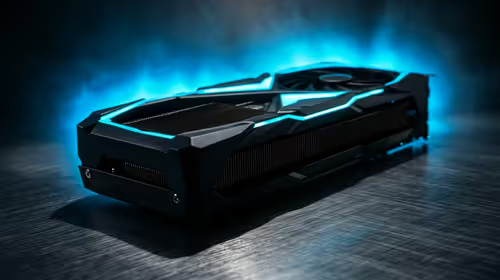
Arc B580 budget builds for Midrand gamers can shift with exchange rates, supply, specs, and model tier. Treat the title as a buying prompt, then compare SA warranty, timing, and build priorities.
Read more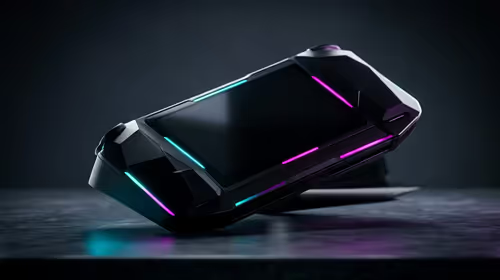
ROG Ally X may beat the LCD Steam Deck for SA gamers who value stronger handheld performance, more memory, and Windows flexibility. Compare battery life, controls, game libraries, and Polokwane support needs before deciding.
Read more
Minisforum's M2 Pro pairs Core Ultra X7, Arc B390 graphics and 32GB onboard memory in 1.8 litres. SA buyers should weigh its fixed memory and $1,439 launch offer against local mini PCs.

Lenovo says Legion Go failures linked to BIOS N3CN42WW are not user error. Affected SA owners should stop retrying the update, preserve proof and open a support case.

Smart monitors can add apps and convenience, but they also add privacy settings and unwanted-software risk. SA buyers should audit the operating system before paying for extras.

A fake 113GB GTA VI ISO reportedly used empty padding around a small malware payload. SA gamers should delete unofficial builds, keep Windows security active and wait for official channels.
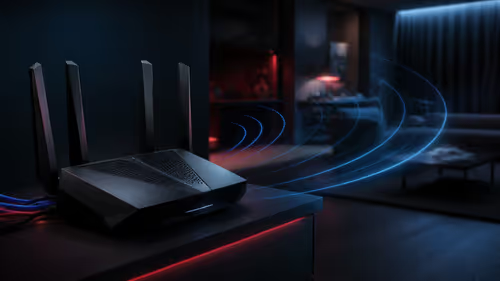
ASUS calls the ROG GT-BN98 the first Wi-Fi 8 gaming router. SA buyers should fix coverage and client limits before paying for a future wireless standard.
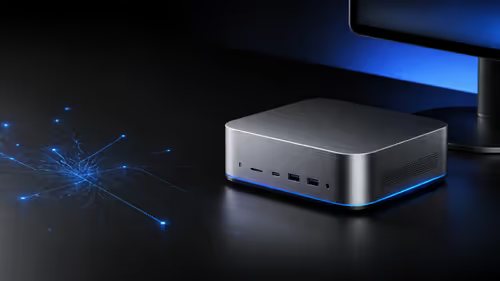
Apple's M6 Mac mini adds faster AI, graphics and networking in the same compact format. SA buyers should wait for a rand listing before comparing value.
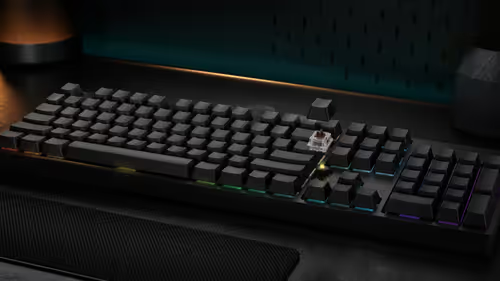
The Vulcan II XP adds hot-swappable switches, sound damping and gaming controls to a full-size wired board. SA buyers should compare feel before features.

Microsoft says Windows on Arm now has over 7,000 verified apps and games. SA buyers should still check each driver, game and work tool before switching.

Xbox Insiders can test disc-to-digital from 31 August 2026. Supported Xbox One and Series X discs gain a digital entitlement, but older discs, regions and title coverage still need exact checks.

ViewSonic's XG2738 pairs QHD QD-OLED with 240Hz and automatic panel care. SA buyers should compare warranty, brightness, ports and burn-in protection against today's R9,999-plus OLED shelf.

NVIDIA's final Windows 10 Game Ready driver is due in October 2026. SA gamers can keep using their GPU, but new game optimisations move on while critical security fixes continue quarterly.

JBL's new Quantum 520, 520X and 120 headsets cover wireless, Xbox-certified and wired use. SA buyers should compare connection, comfort and microphone needs before paying for a new badge.