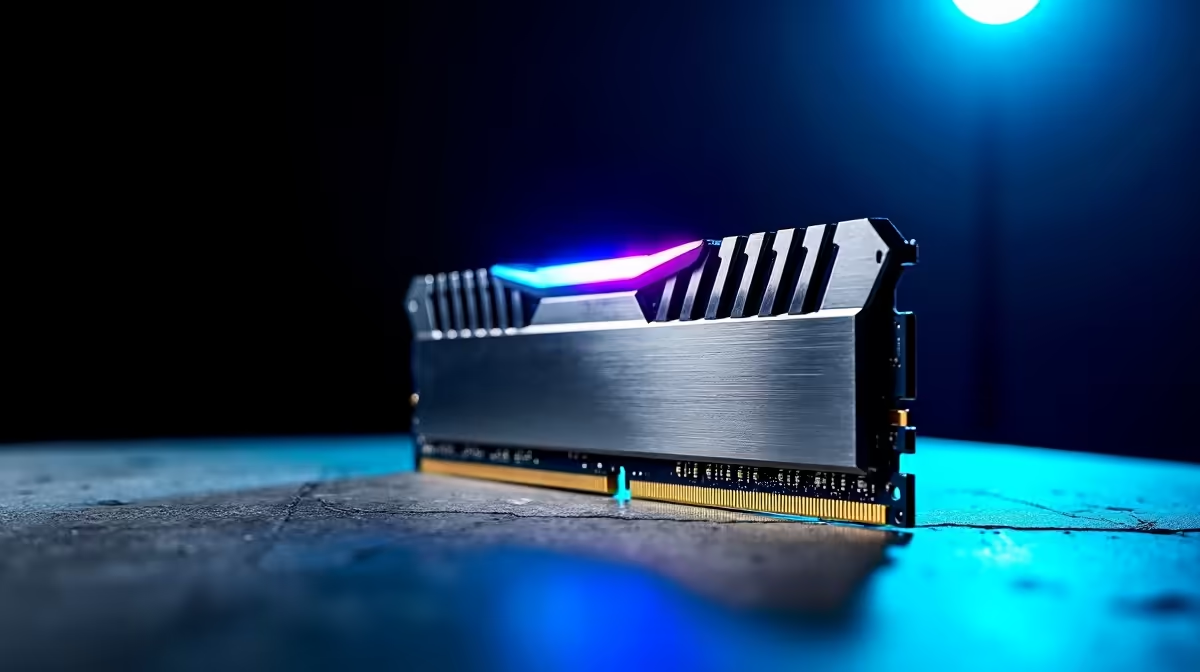
DDR5 memory is one of the easiest places to overspend on a build. The spec sheet pushes huge speeds and tight timings, but the real question is what your CPU and workload actually use day to day.
Quick Answer
For most premium buyers a 32GB DDR5 kit at DDR5-6000 CL30 is the sweet spot, typically R1,200 to R3,500 at Evetech. Buy capacity first, then speed, then tight timings - 16GB is too tight for modern multitasking and 64GB only pays off for heavy workloads.
Match The Kit To Your Platform And Slots
Confirm whether your board takes two or four DIMM slots and whether it is rated for higher speeds when all four are filled - many drop to DDR5-5200 with four sticks. For a future upgrade, buy the capacity you need as a 2-stick kit now rather than half-filling four slots, which makes a clean speed bump harder later.
Capacity Before Speed Every Time
Start at 32GB for any modern gaming or everyday machine. 16GB now leaves browser tabs, a game, and a Discord call fighting for headroom, while 64GB only earns its keep in heavy multitasking, virtual machines, or large project files. A 2x16GB kit also keeps dual-channel bandwidth intact, which matters more for frame pacing than a single large stick.
Speed And Timings That Actually Land
DDR5-6000 at CL30 is the practical sweet spot on AM5, and DDR5-6000 to 6400 suits modern Intel. Pushing past that costs more for single-digit gains in most titles. Look up your CPU's supported speed first - paying for DDR5-7200 that your platform downclocks to 6000 is money on the floor.
FAQ
How much DDR5 RAM do I actually need?
For gaming and study, 32GB is the comfortable target and avoids the headroom problems 16GB now causes. Move to 64GB only for heavy video, virtual machines, or large datasets. A 2x16GB kit keeps dual-channel speed intact.
Does DDR5 speed make a big difference?
DDR5-6000 CL30 is the practical sweet spot and the gains above it are usually single-digit in games. Memory-sensitive work and some titles benefit a little more. Check your CPU's supported speed before paying for a faster kit.
Do I need to enable EXPO or XMP?
Yes - kits run at a safe default until you switch on EXPO (AMD) or XMP (Intel) in the BIOS to reach the rated speed. It is one toggle but easy to forget. Update your BIOS first so the profile loads reliably.
Compare currently stocked DDR5 kits at Evetech, filter by your budget and the specs above, and shortlist two or three before you order.