Quick Answer
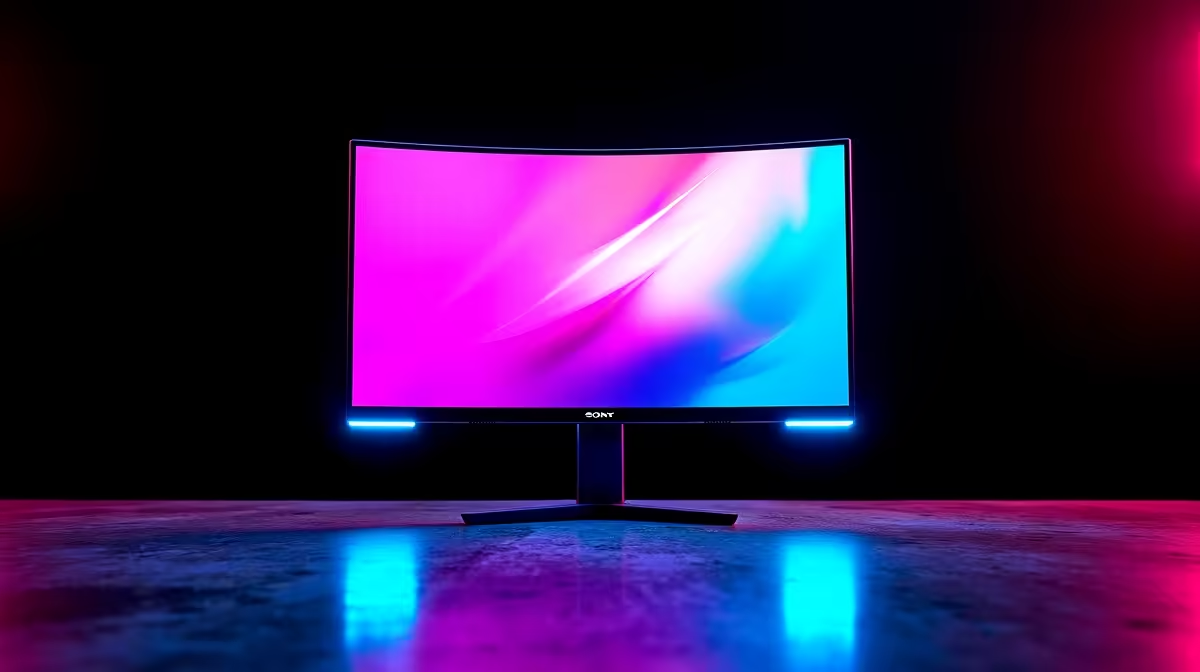
QD-OLED monitors stocked through SA channels range from a 27-inch 1440p 360Hz around R17,999 to a 32-inch 4K 240Hz around R26,999, a 32-inch 4K 240Hz curved around R29,999, and a 49-inch 5120x1440 ultrawide around R45,999. Every one offers true blacks, 0.03ms response and vivid quantum-dot HDR, so resolution, size and GPU decide the pick.
The QD-OLED Table
The lineup forms a tidy ladder. The 27-inch 1440p 360Hz (around R17,999) leads on refresh for competitive play. The 32-inch 4K 240Hz flat and curved (R26,999-R29,999) balance detail and speed for creators and AAA gamers. The 49-inch ultrawide (around R45,999) is the immersion king for sim racing and strategy. HDR True Black certification and 240Hz-plus refresh are common across the range.
QD-OLED Versus Other Panels
QD-OLED's quantum-dot layer gives richer colour and higher brightness than WOLED, with a slight magenta tint in very bright rooms. Both OLED types crush IPS on contrast and response. For HDR films and games in controlled light, a QD-OLED is the standout, provided the GPU can drive the resolution at high frame rates.
Matching The GPU
A 1440p QD-OLED runs beautifully on an RTX 4070 Super. The 4K 240Hz panels want an RTX 4080 Super or higher, and the 49-inch 5120x1440 ultrawide pushes a heavy pixel load best fed by an RTX 4080 Super class card for high frame rates.
FAQ
Which QD-OLED suits competitive gaming?
The 27-inch 1440p 360Hz QD-OLED around R17,999 is the speed pick, letting an RTX 4070 Super drive very high frame rates in esports titles.
Is a 4K 240Hz QD-OLED worth it?
For creators and AAA gamers with an RTX 4080 Super or higher, yes. The 4K detail plus 240Hz refresh is superb, but a weaker GPU cannot sustain those frame rates.
How big is the ultrawide QD-OLED?
The 49-inch super-ultrawide runs 5120x1440, the equivalent of two 27-inch 1440p panels side by side, ideal for sim racing and multitasking.
QD-OLED resolution to your GPU first; a 4K 240Hz panel needs an RTX 4080 Super class card to actually reach those frame rates.