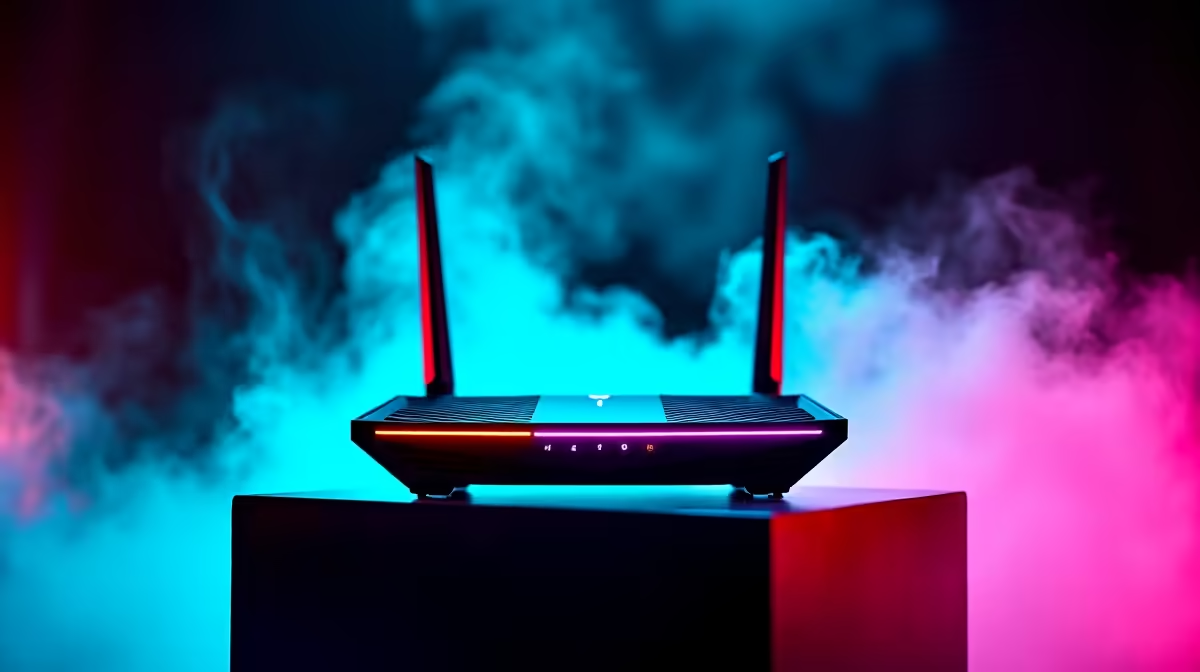
For value-focused 1080p gamers, a Wi-Fi 7 router is about steady low latency and clean throughput rather than chasing the highest headline speed a flagship advertises.
Quick Answer
For a 1080p gaming setup, a mid-tier tri-band Wi-Fi 7 router with a 6GHz band and a 2.5GbE port delivers the steady latency that matters, without paying for 10GbE flagship features. Expect SA pricing from roughly R3,500 to R6,000 for units that suit this use well.
What 1080p Gamers Actually Need
At 1080p the demand is online responsiveness, not local bandwidth, so latency stability beats peak speed. A tri-band router with a clean 6GHz lane keeps your gaming traffic away from neighbour congestion, while a 2.5GbE port future-proofs a wired link to your desktop.
You do not need a 10GbE flagship for 1080p play. The money saved over a top-tier model is better kept for the rest of your setup, since the gaming benefit of the most expensive routers is marginal at this resolution.
Setting It Up For Low Latency
Place the router centrally and connect your gaming PC by cable where possible for the steadiest latency. Reserve the 6GHz band for nearby devices that benefit from its clean, wide channel. Enabling quality-of-service for gaming traffic helps on a busy household network.
FAQ
Do 1080p gamers need a flagship Wi-Fi 7 router?
No. A mid-tier tri-band unit with 6GHz and a 2.5GbE port covers 1080p gaming well. Flagship 10GbE features bring little benefit at this resolution.
Is wired better than wireless for gaming latency?
Yes, a wired link gives the steadiest latency. Use the router's 2.5GbE port for your gaming PC where you can run a cable.
Does the 6GHz band help with gaming?
It offers a clean, wide channel away from congested 2.4GHz and 5GHz traffic, which helps keep latency stable for nearby gaming devices.
Pick a mid-tier tri-band Wi-Fi 7 router with 6GHz and 2.5GbE, wire your PC where possible, and enable gaming quality-of-service.