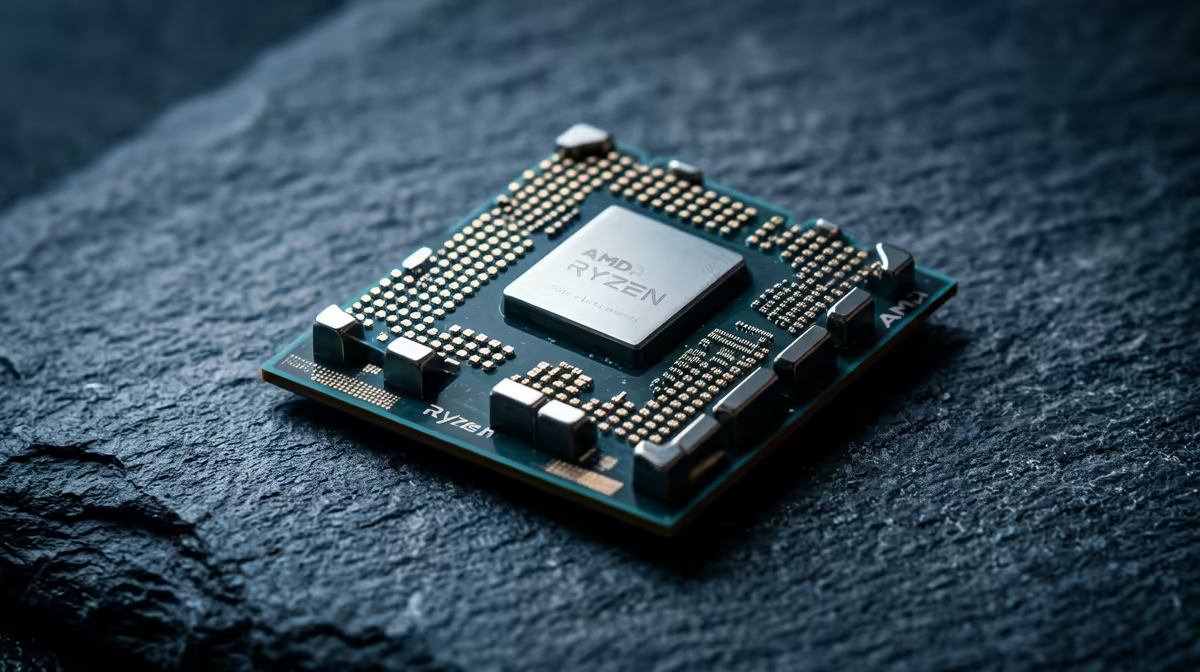
X3D Ryzen chips stack extra cache that boosts gaming frame rates, but the value gap between models is real, so a clear comparison on fps-per-rand is worth the read.
Quick Answer
Across the X3D Ryzen range, the mid-tier 8-core X3D parts deliver the best gaming value, often matching pricier chips in frame rate per rand. The flagship multi-core X3D models add productivity muscle but a smaller gaming gain. Expect SA pricing from roughly R6,500 for older 8-core X3D chips to R13,000 for current flagships.
How To Compare The X3D Family
For pure gaming, the single-die 8-core X3D parts shine because games love the large cache and tight latency. Stepping up to higher core counts adds little gaming frame rate while costing considerably more, so those chips suit creators and heavy multitaskers rather than pure gamers.
Compare on the resolution you actually play. At 1440p and 4K the GPU often becomes the limit, narrowing the gap between X3D models, while at 1080p the cache advantage shows most clearly.
Matching The Chip To Your Use
A 1080p or 1440p gamer is best served by a current 8-core X3D part, which delivers flagship-class gaming for less. Only buy a higher-core X3D chip if you also do heavy rendering or compilation, where the extra cores pay off alongside the gaming cache.
FAQ
Which X3D chip is the best gaming value?
A current 8-core X3D part. It captures nearly all the gaming benefit of the lineup at a much lower price than the multi-core flagships.
Do higher-core X3D chips game noticeably better?
Not for gaming alone. They add productivity performance but offer little extra frame rate, so they suit creators more than pure gamers.
Does my resolution change which X3D to buy?
Yes. At 4K the GPU often limits frame rates, shrinking differences between X3D chips. At 1080p the cache advantage is most visible.
gaming, an 8-core X3D part delivers the strongest fps per rand; reserve the multi-core flagships for serious creator workloads.