


550W PSU Planning for RTX 5080 Super Builds in SA
550W for RTX 5080 Super needs a full-build check, not a simple yes. Review GPU guidance, CPU draw, transient load, connectors, PSU quality, and upgrade plans before deciding.
Read moreA rotating stand offers orientation changes, while a fixed design keeps a set position. The UStand provides 360-degree rotation plus a 135-degree folding arm, so buyers can compare that movement with the simpler layout of a fixed stand and their own adjustment needs.
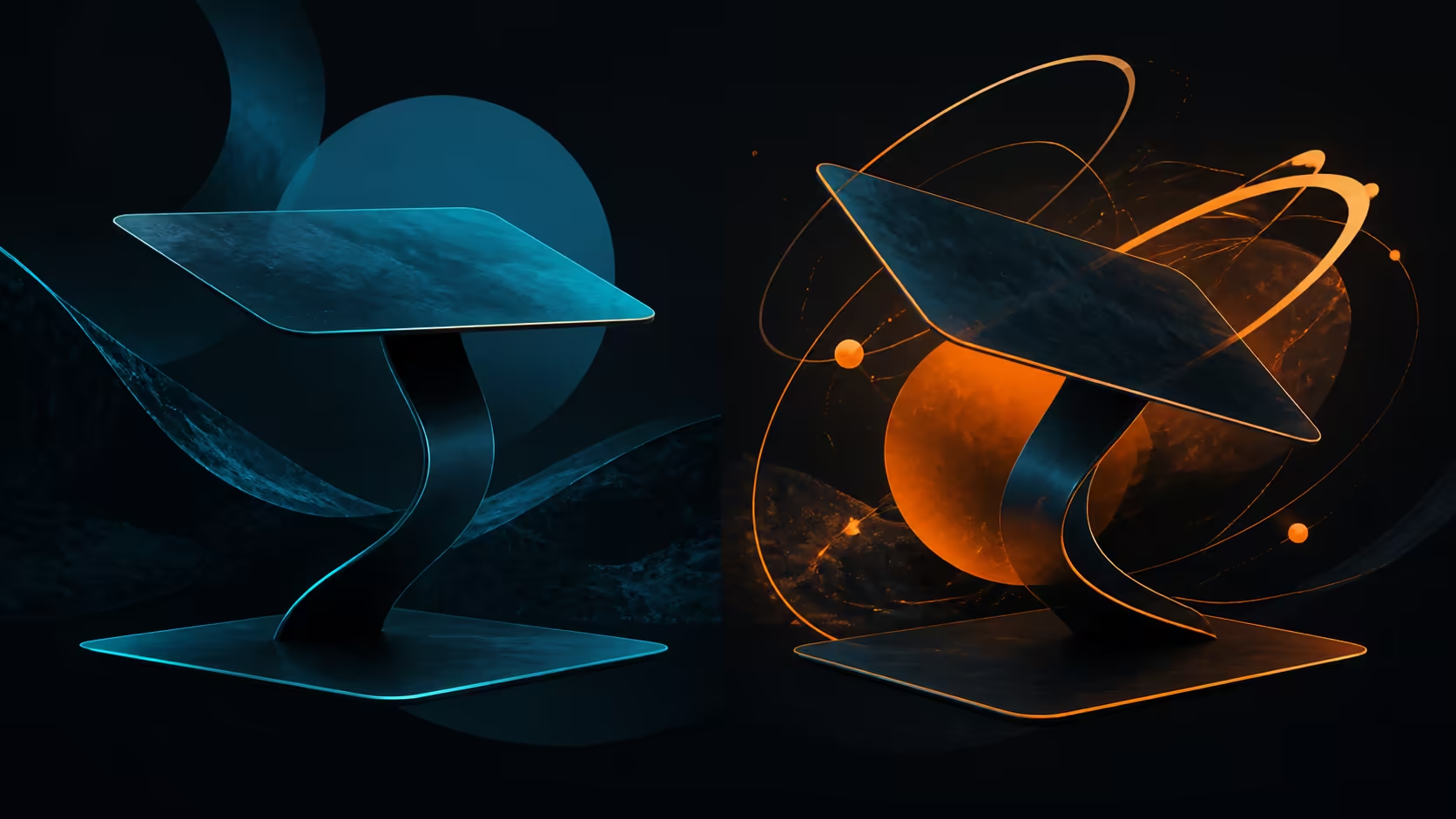
A fixed vs rotating monitor stand decision is really a choice between an unchanged arrangement and one that can be reoriented. The better approach depends on how often the screen moves, the space around it and whether cable routing can accommodate those changes.
The rotating UStand offers more positioning than a fixed holder through 360-degree orientation change and a separate 135-degree folding arm.
For R399, the UPERFECT UStand provides 360-degree rotation and a 135-degree folding arm for compatible 7-15.6-inch displays. Choose it when controlled orientation and position changes solve real tasks; a fixed stand can remain sensible for a screen that never needs rearranging.
Write down why the secondary display moves. Portrait reading, landscape video, face-to-face sharing and storage can call for different orientations. If the screen stays in one layout throughout the day, rotation may add little practical benefit.
A fixed design reduces the number of adjustments available. That simplicity can suit a dedicated desk position, provided its angle and fit are correct. A rotating design adds choices, but each chosen position must still be checked for clearance and contact.
The UStand divides movement between a full rotating section and an arm spanning 135 degrees. One affects orientation, while the other changes the supported relationship to the base.
Set up each candidate with the same screen and work surface. For the UStand, seat the display on its all-around anti-slip rubber and turn it only through the orientations you expect to use. Do not award value for unused range merely because the maximum figure is larger.
After rotation, observe whether the screen remains centred and whether nearby objects obstruct it. Then change the folding arm independently. This approach reveals which mechanism is helping instead of combining two movements and guessing at the cause.
Potential displays can be reviewed in Evetech's portable monitor range, with body dimensions and connector locations checked against the intended stand position.
The UStand supports charging while a compatible device is mounted. That does not mean every cable route works at every orientation. Attach the lead with slack, move the screen slowly and stop before tension reaches the connector.
A fixed setup may allow one cable route to remain undisturbed. With a rotating screen, plan where excess cable rests and keep it away from the arm and rubber contact areas. Recheck power access whenever the display switches between portrait and landscape.
Look through monitor accessories sold by Evetech for the wider arrangement, confirming connection details for the chosen screen rather than assuming universal support.
Movement also matters away from the active desk. The aluminium UStand folds flat and can change into tripod or selfie-stick formats. A non-folding fixed stand may occupy its working form in storage; exact differences depend on the specific alternative.
Choose from confirmed needs: screen size, required orientation, working position, packing method and connector access. Avoid attaching claims about greater stability or durability to either category without product-specific evidence.
The result should be a setup that moves only when movement adds value. More adjustment is useful when it directly supports the work, not simply because it appears on a feature list.
That flexibility moves a portable display between landscape work, portrait documents and a lower desk angle without remounting it. A fixed stand may remain simpler when the screen never changes role, but the UStand also converts to a tripod or selfie stick. Cable holes support charging in each mounted position, so adjustment does not require dismantling the connection path.
Frequent orientation changes are the deciding use case. If the screen remains landscape for months, rotation may add complexity without producing a practical gain.

It offers a 360-degree rotating section plus a folding arm with 135 degrees of travel, separating orientation from supported position.
A fixed model can suit one established screen arrangement when its verified fit and working angle already meet the user's needs.
Turning the screen changes the connector's location and cable path, so slack and clearance should be reviewed in every intended orientation.
The UStand range extends from 7 to 15.6 inches. Actual seating remains a device-specific check despite that broad span.
All-around rubber supports contact at the device and base areas, alongside a suitable surface and properly centred placement.
Yes. Its aluminium form folds flat after the screen and cable are removed, helping reduce the shape taken into storage.
Deciding whether your screen really needs to rotate? Compare monitor stand formats at Evetech using the orientations, desk clearance and cable paths your routine requires.
It offers a 360-degree rotating section plus a folding arm with 135 degrees of travel, separating orientation from supported position.
A fixed model can suit one established screen arrangement when its verified fit and working angle already meet the user's needs.
Turning the screen changes the connector's location and cable path, so slack and clearance should be reviewed in every intended orientation.
The UStand range extends from 7 to 15.6 inches. Actual seating remains a device-specific check despite that broad span.
All-around rubber supports contact at the device and base areas, alongside a suitable surface and properly centred placement.
Yes. Its aluminium form folds flat after the screen and cable are removed, helping reduce the shape taken into storage.
550W for RTX 5080 Super needs a full-build check, not a simple yes. Review GPU guidance, CPU draw, transient load, connectors, PSU quality, and upgrade plans before deciding.
Read more
8000Hz polling is overrated for most SA gamers because gains can be tiny next to battery drain and monitor limits. Mbombela players should weigh mouse feel, game support, and system stability before chasing the number.
Read more
Magnetic switches are taking over SA gaming keyboards because actuation can be tuned. For Sandton gamers, rapid trigger, reset control, and profile depth can help, but layout, key feel, and software quality still matter.
Read more
Polokwane oled monitor value questions need cautious SA context because pricing can move with availability, exchange rates, specs, and warranty support. Treat the trend as a planning signal, not a fixed price promise.
Read more
Arc B580 budget builds for Midrand gamers can shift with exchange rates, supply, specs, and model tier. Treat the title as a buying prompt, then compare SA warranty, timing, and build priorities.
Read more
ROG Ally X may beat the LCD Steam Deck for SA gamers who value stronger handheld performance, more memory, and Windows flexibility. Compare battery life, controls, game libraries, and Polokwane support needs before deciding.
Read more
Minisforum's M2 Pro pairs Core Ultra X7, Arc B390 graphics and 32GB onboard memory in 1.8 litres. SA buyers should weigh its fixed memory and $1,439 launch offer against local mini PCs.

Lenovo says Legion Go failures linked to BIOS N3CN42WW are not user error. Affected SA owners should stop retrying the update, preserve proof and open a support case.

Smart monitors can add apps and convenience, but they also add privacy settings and unwanted-software risk. SA buyers should audit the operating system before paying for extras.

A fake 113GB GTA VI ISO reportedly used empty padding around a small malware payload. SA gamers should delete unofficial builds, keep Windows security active and wait for official channels.
ASUS calls the ROG GT-BN98 the first Wi-Fi 8 gaming router. SA buyers should fix coverage and client limits before paying for a future wireless standard.
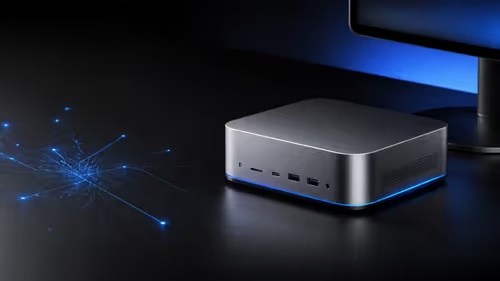
Apple's M6 Mac mini adds faster AI, graphics and networking in the same compact format. SA buyers should wait for a rand listing before comparing value.
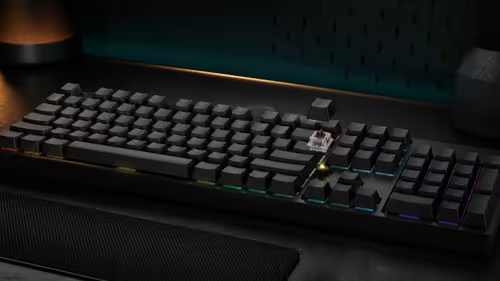
The Vulcan II XP adds hot-swappable switches, sound damping and gaming controls to a full-size wired board. SA buyers should compare feel before features.

Microsoft says Windows on Arm now has over 7,000 verified apps and games. SA buyers should still check each driver, game and work tool before switching.

Xbox Insiders can test disc-to-digital from 31 August 2026. Supported Xbox One and Series X discs gain a digital entitlement, but older discs, regions and title coverage still need exact checks.
ViewSonic's XG2738 pairs QHD QD-OLED with 240Hz and automatic panel care. SA buyers should compare warranty, brightness, ports and burn-in protection against today's R9,999-plus OLED shelf.

NVIDIA's final Windows 10 Game Ready driver is due in October 2026. SA gamers can keep using their GPU, but new game optimisations move on while critical security fixes continue quarterly.

JBL's new Quantum 520, 520X and 120 headsets cover wireless, Xbox-certified and wired use. SA buyers should compare connection, comfort and microphone needs before paying for a new badge.