The ache between your shoulders by 3pm is not just tiredness, it is your desk telling you something is set wrong. The fix is faster than most people expect. Fixing neck and back pain at your desk is mostly about screen height, chair height, and breaking up long sitting stretches, and the research shows the relief lands within weeks, not months.
Quick Answer
Get the top third of your monitor level with your resting eye line, set your chair so elbows sit at roughly 90 degrees, and break up sitting with short standing or walking breaks. A well-known workplace project found that cutting sitting time by about an hour a day reduced upper-back and neck pain by 54 percent in four weeks. The gear costs less than ongoing physio.
The 2026 desk checklist
Work through these in order, each one removes a common cause of strain:
- Monitor height. The top third of the screen should sit at your resting eye level so you look slightly down, not up or hunched forward. A few inches too low is the single most common cause of neck pain, and a riser or an adjustable arm fixes it instantly.
- Screen distance. Position the monitor roughly an arm's length away, in the region of 50 to 75 cm. Too close forces your eyes and neck to work; too far makes you crane in.
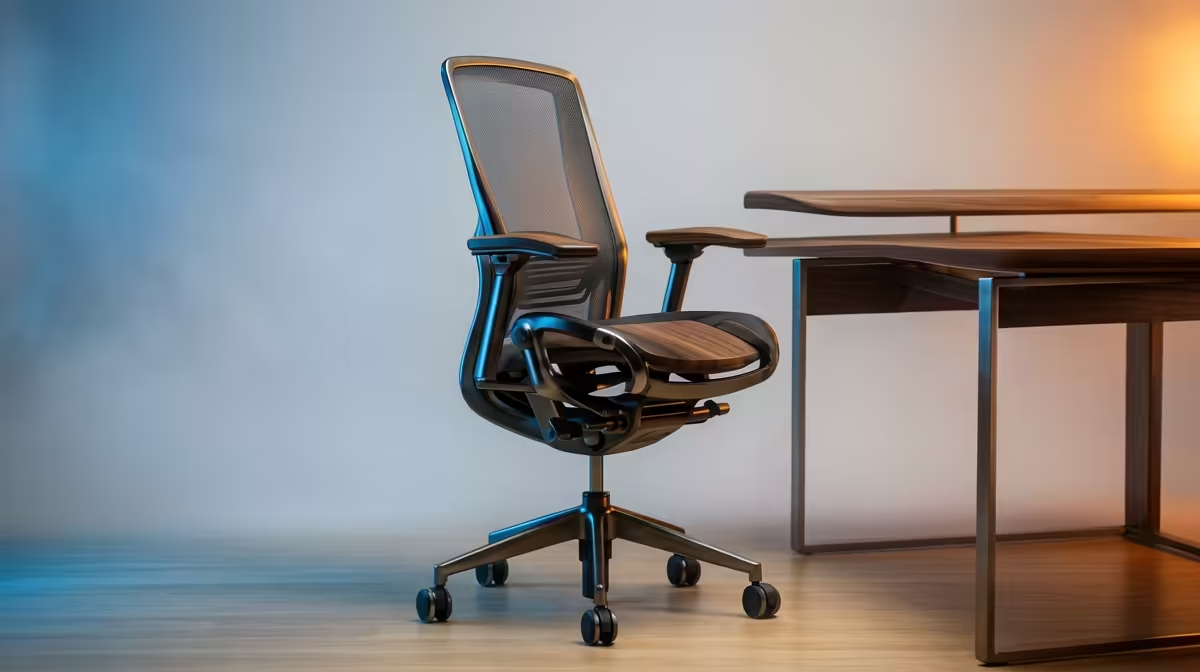
- Chair and elbow height. Set the seat so your forearms rest level with the desk and your elbows bend around 90 degrees. Feet should sit flat on the floor or a footrest, with thighs roughly parallel to the ground.
- Lower-back support. Your chair should support the natural inward curve of your lower back. A chair without lumbar support pushes you into a slouch within minutes, and that slouch is what loads the discs.
- Move on a rhythm. Sustained stillness is the real enemy. A widely cited pattern suggests, for every half hour, roughly 20 minutes sitting, 8 minutes standing, and a couple of minutes walking or stretching. Standing relieves disc pressure that builds up while seated.
Why it works so fast
Sitting loads the spinal discs noticeably more than standing does, especially in a slouched posture, so the discs in your lower back stay compressed for hours at a stretch. Lifting the screen to eye level stops the forward head tilt that overworks the muscles along the back of your neck. Adding short standing breaks releases that disc pressure on a regular cycle. Because the cause is mechanical, removing it produces relief quickly, which is why clinical and workplace studies report meaningful improvement inside three to four weeks rather than over months.
For South African remote and hybrid workers, the practical lever is usually the chair. A supportive chair with proper lumbar shaping does more for daily comfort than any single accessory, and you can compare options across the ergonomic desk and workspace furniture range at Evetech. If you want a quick read on what is working for other local buyers, the desk accessories best sellers at Evetech is a useful shortlist.
Frequently Asked Questions
How long until the pain improves?
Workplace and clinical research points to noticeable relief within three to four weeks of consistent correct posture and regular movement breaks. The change is mechanical, so once the bad load is removed the muscles and discs recover steadily.
Do I need a standing desk?
Not necessarily. The benefit comes from breaking up long sitting stretches, which you can do by standing up and walking on a timer. A sit-stand desk makes it effortless, but a supportive chair plus disciplined breaks delivers most of the gain.
What is the most important single fix?
Monitor height. A screen set too low forces a forward head tilt that strains the neck all day, and raising the top third of the screen to eye level is a free or low-cost change that removes the most common cause of desk neck pain.
Is an expensive chair worth it?
A chair with genuine lumbar support and adjustable height is worth prioritising, since it is what you sit in for hours. You do not need the most expensive model, you need one that holds your lower back in its natural curve and lets your elbows reach the desk at 90 degrees.