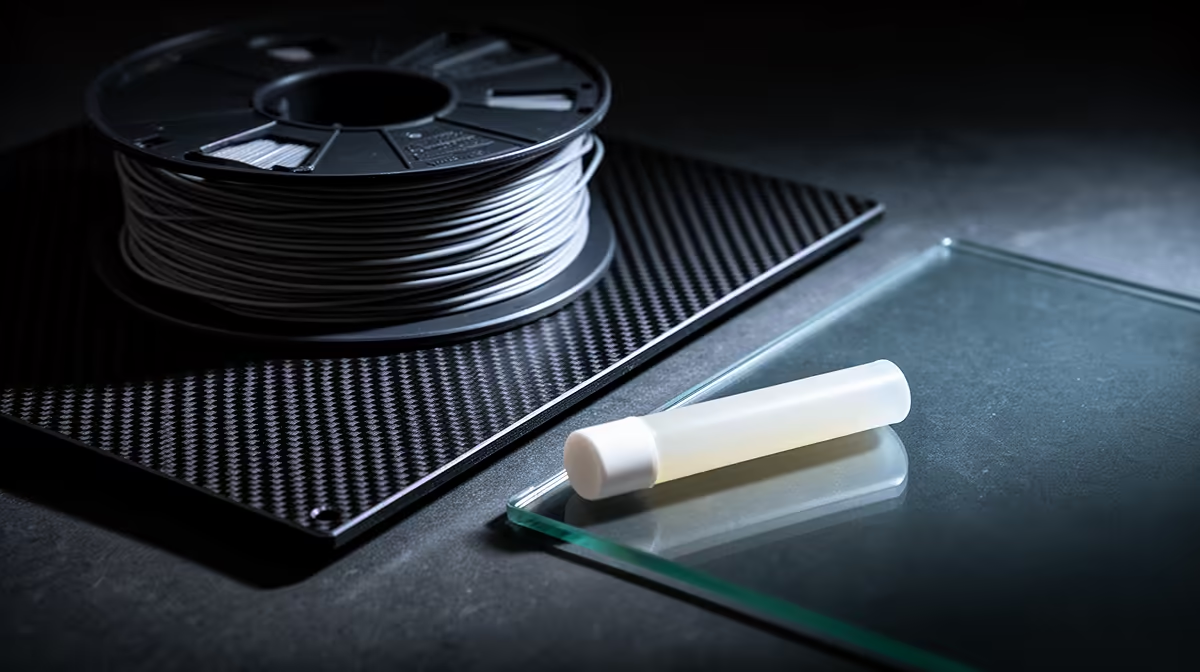
The honest answer to the glue stick question is that adhesion aids are not about always-on or never, they are about matching the filament to the bed surface you actually own. PLA on a clean PEI sheet wants nothing extra, while PETG on that same smooth sheet can weld itself so hard that lifting the part chips the coating. A glue stick is sometimes a grip and sometimes a release layer, and which job it does flips depending on the pairing.
Quick Answer
PLA on clean PEI needs no glue. PETG on smooth PEI needs a thin glue layer as a release barrier so it does not fuse to the sheet. ABS, ASA and nylon usually need glue stick (or a dedicated surface) to hold at all. Wiping the bed with isopropyl alcohol before printing fixes most adhesion failures before any glue is involved.
How the same glue stick does two opposite jobs
A simple PVP or PVA glue stick can either add grip or take it away, and PETG is the clearest example. On bare smooth PEI, hot PETG bonds chemically to the surface and can tear the coating off when you remove the part. A thin, even glue-stick coat sits between the plastic and the PEI as a sacrificial release layer, so the part pops free and the sheet survives. On ABS, ASA and nylon the glue does the opposite, giving the first layer something to key into on a surface those materials would otherwise skate across.
Filament by surface, the pairings that matter
On a textured PEI plate, PLA and PETG both behave well with no glue, because the texture mechanically grips without the chemical welding you get on the smooth variant. On smooth PEI, PLA is fine bare but PETG wants that release barrier. Glass beds are the demanding case: ABS and ASA hold far better with a glue-stick base, and nylon is fussy enough that many printers reach for a dedicated engineering surface rather than relying on glue alone. Bed temperature still does heavy lifting here, with PLA around 55 to 60C, PETG around 70 to 80C and ABS up near 100 to 110C. If you are kitting out a workshop, the range of 3D printers and consumables Evetech keeps in stock covers most of these surface types out of the box.
When the problem is not glue at all
Before reaching for any stick, clean the sheet. Finger oils are the most common cause of a first layer that will not stick, and a quick wipe with isopropyl alcohol resets the surface. A first-layer Z height that is slightly too high mimics an adhesion problem too. Keep a roll of IPA wipes and a spare glue stick on the bench, both of which sit alongside the printer add-ons in the accessories that move fastest at Evetech, and you will solve most bed issues without guessing.
Frequently Asked Questions
Does PLA ever need a glue stick?
Rarely. On clean PEI, whether smooth or textured, PLA grips well with no extra aid. Reach for glue only on bare glass or if the bed is worn smooth and parts start lifting at the corners.
Why does PETG stick too well without glue?
Hot PETG bonds chemically to smooth PEI rather than just resting on it. That bond can be strong enough to pull flakes of PEI off with the part, which is why a glue-stick release layer protects the sheet.
What surface does nylon actually need?
Nylon is one of the hardest filaments to hold down. Glue stick on glass can work, but many people move to a dedicated engineering print surface designed for nylon, because reliability matters more than improvising.
How often should I reapply glue stick?
A thin coat lasts several prints. Reapply when adhesion starts dropping or when you clean the bed. Build-up makes the first layer rough, so wipe and recoat rather than layering glue endlessly.
Is isopropyl alcohol enough on its own?
For PLA and most PETG on PEI, yes. A clean, oil-free sheet handles the majority of prints. Save glue for the high-temperature materials and the smooth-PEI-plus-PETG release case.
Sorting out a finicky bed is far easier with the right surface and the right supplies on hand. Browse the 3D printer range at Evetech to match a machine and bed type to the filaments you print most.