


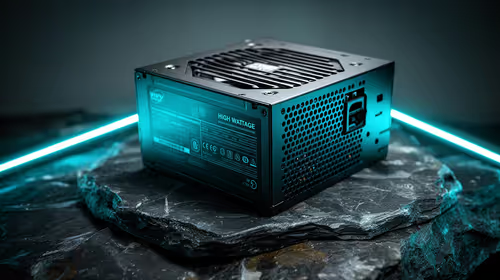
550W PSU Planning for RTX 5080 Super Builds in SA
550W for RTX 5080 Super needs a full-build check, not a simple yes. Review GPU guidance, CPU draw, transient load, connectors, PSU quality, and upgrade plans before deciding.
Read moreMore VRAM keeps footage, cached previews and effects resident in fast memory, cutting timeline stutter. This 24GB GDDR6 card, priced at R14,399, extends that same headroom to 4K and 6K timelines.
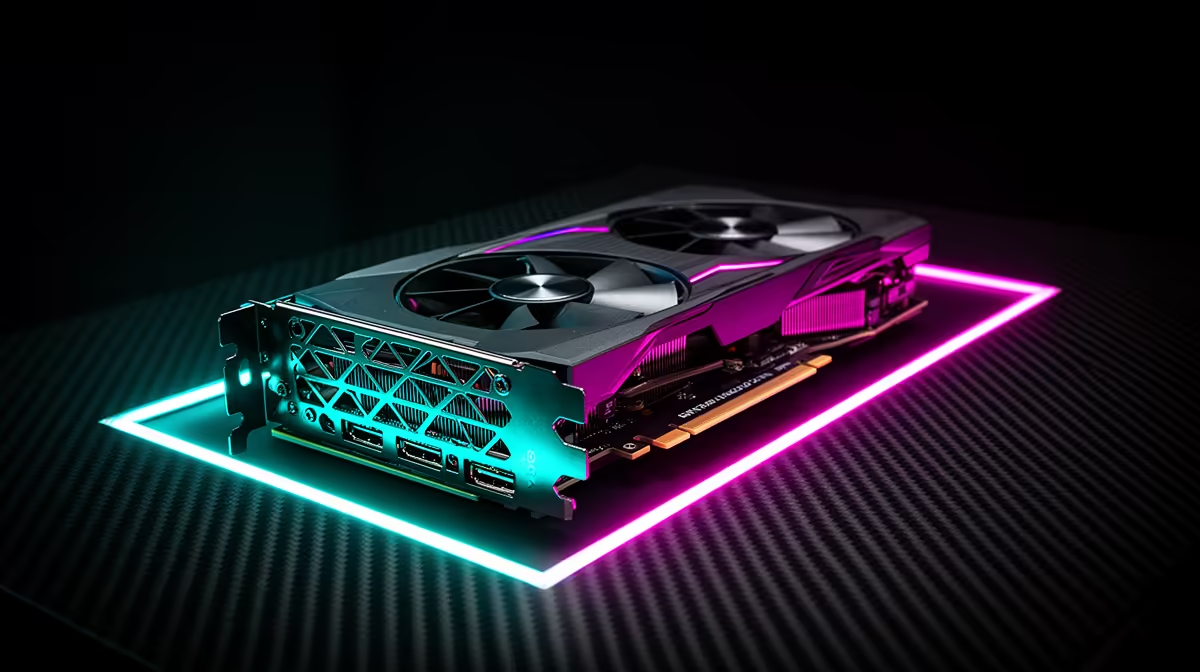
Scrubbing through a 4K timeline and watching playback drop to a slideshow is rarely a processor problem. It is usually the graphics memory pool filling up with cached frames, proxies and effects previews until nothing new can load smoothly. Editors chasing that fix keep landing on the same answer: a 24gb creator graphics card built to keep a full timeline resident instead of constantly re-fetching footage.
Timeline stutter comes from an editor having to discard and reload cached frames because the graphics memory pool is too small to hold the active sequence. The ASRock Pro B60 Creator offers 24GB of GDDR6 for R14,399, giving 4K and 6K timelines enough room to stay cached without constant reloading. Its 2400 MHz Xe2-HPG core keeps that cache moving rather than sitting static.
Non-linear editors do not just decode footage on the fly; they cache decoded frames, generate proxy previews, and hold effect and colour-grade previews in memory simultaneously. On a long multi-layer timeline, all of that competes for the same pool, and once it is full the software has to drop older frames to make room for new ones.
That drop-and-reload cycle is what shows up on screen as stutter, dropped frames or a spinning cache indicator, even on a machine with a fast processor and plenty of system RAM.
With 24GB of dedicated GDDR6 on tap, an editor can keep far more of a sequence cached at once, which is why timeline scrubbing feels smoother and effect previews render without the usual lag. The card's 192-bit memory bus moves that cached data quickly enough that the extra capacity actually gets used rather than sitting unread.
Editors working in 6K or stacking several 4K layers with colour grading and effects will notice this most, since those are exactly the projects that overwhelm smaller memory pools first.
Intel's Xe2-HPG architecture drives the core rendering pipeline, while onboard XMX engines take on AI-assisted tasks like noise reduction and frame interpolation without pulling resources from the main editing cache. DirectX 12 Ultimate support keeps compatibility broad across current editing suites.
Anyone weighing this card against timeline-heavy alternatives can review the full listing here for the complete spec sheet. It sits within Evetech's workstation GPU lineup, alongside other cards built for sustained creative workloads, and other ASRock cards in stock are worth a look for anyone comparing across the brand.
Editing software leans heavily on graphics memory for caching frames and previews, so a small memory pool causes stutter regardless of how capable the processor is.
Most 4K timelines with moderate effects work comfortably within 12 to 16GB, though heavier grading and multi-layer projects push closer to 20GB or more.
Yes, its memory capacity and Xe2-HPG core support real-time colour grading previews alongside standard cutting and effects work.
Not overkill so much as future headroom; it means longer, more complex timelines will not force a hardware upgrade partway through a project.
Yes, they are built to accelerate AI-assisted tasks like denoising and interpolation separately from the main render pipeline, reducing load on the rest of the card.
Ready to scrub your timeline without the stutter? Check out this 24GB Pro B60 Creator found in Evetech's creator-focused graphics cards, selling at R14,399 that will keep editing timelines scrubbing smoothly instead of stuttering.
Editing software leans heavily on graphics memory for caching frames and previews, so a small memory pool causes stutter regardless of how capable the processor is.
Most 4K timelines with moderate effects work comfortably within 12 to 16GB, though heavier grading and multi-layer projects push closer to 20GB or more.
Yes, its memory capacity and Xe2-HPG core support real-time colour grading previews alongside standard cutting and effects work.
Not overkill so much as future headroom; it means longer, more complex timelines will not force a hardware upgrade partway through a project.
Yes, they are built to accelerate AI-assisted tasks like denoising and interpolation separately from the main render pipeline, reducing load on the rest of the card.
550W for RTX 5080 Super needs a full-build check, not a simple yes. Review GPU guidance, CPU draw, transient load, connectors, PSU quality, and upgrade plans before deciding.
Read more
8000Hz polling is overrated for most SA gamers because gains can be tiny next to battery drain and monitor limits. Mbombela players should weigh mouse feel, game support, and system stability before chasing the number.
Read more
Magnetic switches are taking over SA gaming keyboards because actuation can be tuned. For Sandton gamers, rapid trigger, reset control, and profile depth can help, but layout, key feel, and software quality still matter.
Read more
Polokwane oled monitor value questions need cautious SA context because pricing can move with availability, exchange rates, specs, and warranty support. Treat the trend as a planning signal, not a fixed price promise.
Read more
Arc B580 budget builds for Midrand gamers can shift with exchange rates, supply, specs, and model tier. Treat the title as a buying prompt, then compare SA warranty, timing, and build priorities.
Read more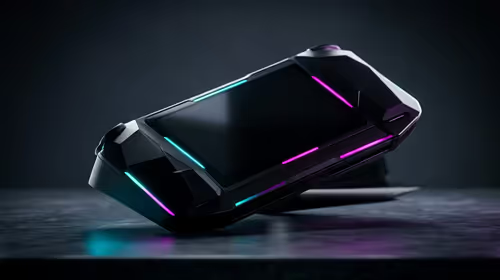
ROG Ally X may beat the LCD Steam Deck for SA gamers who value stronger handheld performance, more memory, and Windows flexibility. Compare battery life, controls, game libraries, and Polokwane support needs before deciding.
Read more
Minisforum's M2 Pro pairs Core Ultra X7, Arc B390 graphics and 32GB onboard memory in 1.8 litres. SA buyers should weigh its fixed memory and $1,439 launch offer against local mini PCs.

Lenovo says Legion Go failures linked to BIOS N3CN42WW are not user error. Affected SA owners should stop retrying the update, preserve proof and open a support case.

Smart monitors can add apps and convenience, but they also add privacy settings and unwanted-software risk. SA buyers should audit the operating system before paying for extras.

A fake 113GB GTA VI ISO reportedly used empty padding around a small malware payload. SA gamers should delete unofficial builds, keep Windows security active and wait for official channels.
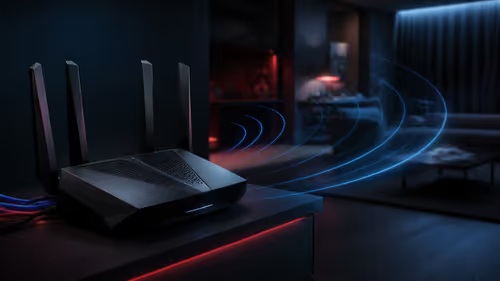
ASUS calls the ROG GT-BN98 the first Wi-Fi 8 gaming router. SA buyers should fix coverage and client limits before paying for a future wireless standard.
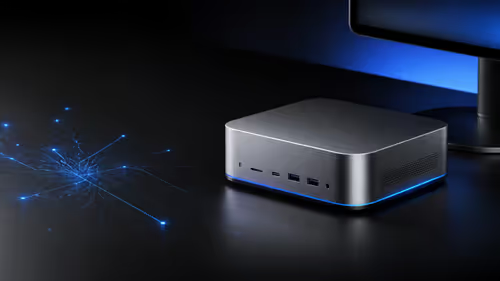
Apple's M6 Mac mini adds faster AI, graphics and networking in the same compact format. SA buyers should wait for a rand listing before comparing value.
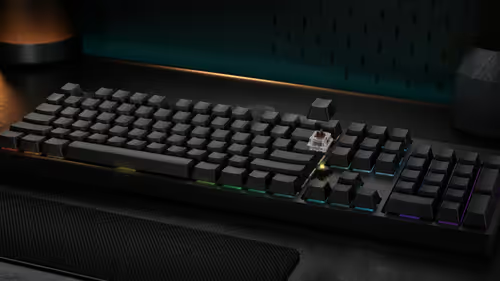
The Vulcan II XP adds hot-swappable switches, sound damping and gaming controls to a full-size wired board. SA buyers should compare feel before features.

Microsoft says Windows on Arm now has over 7,000 verified apps and games. SA buyers should still check each driver, game and work tool before switching.

Xbox Insiders can test disc-to-digital from 31 August 2026. Supported Xbox One and Series X discs gain a digital entitlement, but older discs, regions and title coverage still need exact checks.

ViewSonic's XG2738 pairs QHD QD-OLED with 240Hz and automatic panel care. SA buyers should compare warranty, brightness, ports and burn-in protection against today's R9,999-plus OLED shelf.

NVIDIA's final Windows 10 Game Ready driver is due in October 2026. SA gamers can keep using their GPU, but new game optimisations move on while critical security fixes continue quarterly.

JBL's new Quantum 520, 520X and 120 headsets cover wireless, Xbox-certified and wired use. SA buyers should compare connection, comfort and microphone needs before paying for a new badge.