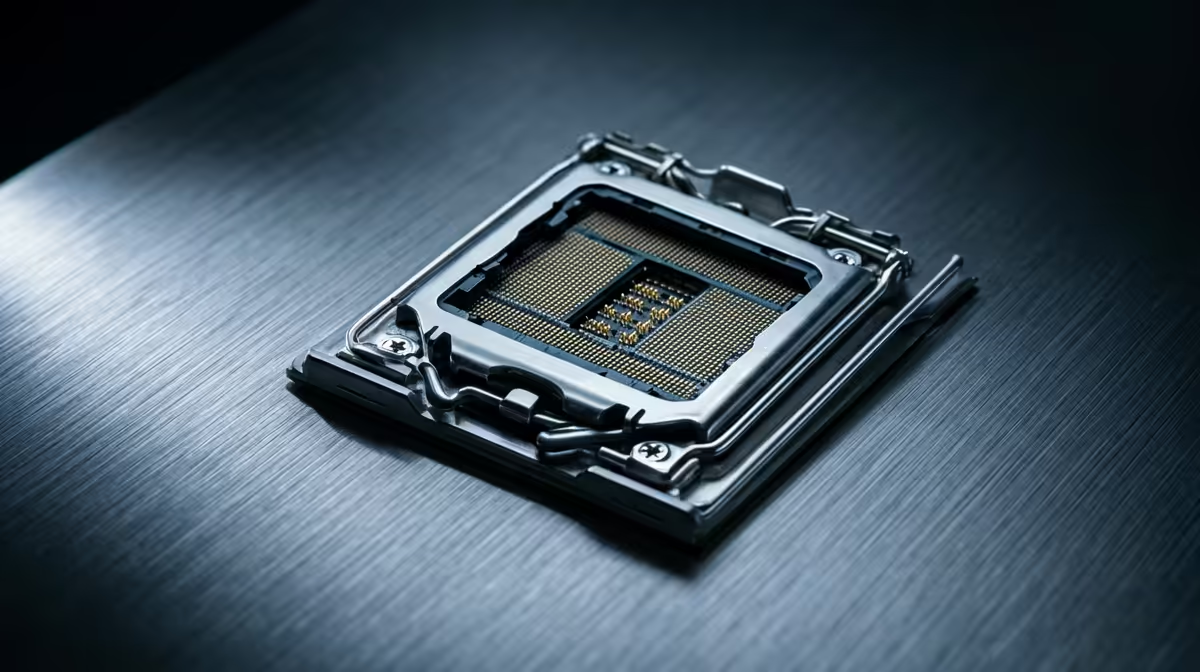
If you are eyeing an Intel CPU upgrade right now, the socket roadmap deserves a hard look before you spend. Intel's next architecture, Nova Lake, moves to a brand new socket called LGA1954, and it does not play nicely with what came before. That single fact reshapes whether buying a current Arrow Lake chip is a smart platform investment or a dead end.
Quick Answer
LGA1954 is the new socket for Nova Lake, and it is incompatible with both LGA1851 (Arrow Lake) and the older LGA1700. That means a current Intel upgrade to an Arrow Lake CPU is the end of that platform's line, since the next generation will not drop into the same board. Plan your purchase knowing there is no future chip upgrade on LGA1851.
Why the socket change matters
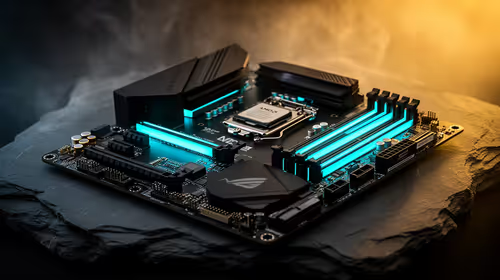
Every processor slot on a motherboard defines which chips can sit in it by locking down the pin layout and signalling standard. When Intel moves to a new socket generation, no chip crossing that boundary fits the old board. LGA1700 spanned several generations. LGA1851 came in with Arrow Lake. LGA1954 arrives for Nova Lake, and it cuts compatibility with both those earlier platforms.
The practical consequence is straightforward. If you buy an LGA1851 motherboard and an Arrow Lake CPU today, you are buying a platform that ends with that chip. There is no later Intel processor you can slot in without replacing the board, because Nova Lake needs LGA1954.
What this means for your upgrade plan
This does not make Arrow Lake a bad buy. It makes it a known-endpoint buy. There are two sensible ways to read it:
- Buy Arrow Lake now and plan to keep it. If you want a strong CPU today and intend to run it for years, the lack of a future upgrade path is irrelevant, because you were not going to swap the chip anyway. Get the performance you need and enjoy it.
- Wait for Nova Lake and LGA1954 if upgrade headroom matters. If your habit is to buy a board and drop in a faster chip a generation or two later, then putting money into LGA1851 today gives you none of that. Waiting for the new socket gives you a fresh platform to grow on.
The mistake to avoid is buying an LGA1851 board expecting a Nova Lake upgrade down the line. That upgrade will not exist on that socket. The Intel CPU range at Evetech lays out current Arrow Lake and other Intel options alongside pricing, so you can match a platform to your plan.
Where AMD fits the decision
It is worth noting the contrast without naming a winner: AMD has historically kept a single socket alive across several generations, which favours drop-in upgrades. Intel's pattern of shorter socket lifespans means Intel platforms tend to be a buy-for-now decision rather than a buy-to-upgrade one. Factor that into which side you build on, especially if long-term upgradability is part of your reasoning. To see which way other South African builders are leaning, the PC best sellers at Evetech show which current-platform builds South African buyers are actually picking up.
Frequently Asked Questions
Is LGA1954 compatible with LGA1851 motherboards?
No. LGA1954 is a new socket for Nova Lake and is not compatible with LGA1851 (Arrow Lake) or LGA1700. A Nova Lake CPU will need a new LGA1954 motherboard, so current boards cannot take it.
Can I upgrade my Arrow Lake CPU to Nova Lake later?
Not on the same board. Nova Lake uses LGA1954, while Arrow Lake uses LGA1851, so there is no drop-in upgrade path. Moving to Nova Lake means a new motherboard as well as a new CPU.
Does this make Arrow Lake a bad purchase?
No, it just makes it an endpoint platform. If you plan to keep the chip for years rather than upgrade it later, the lack of a future path does not affect you. If you rely on dropping in newer chips, waiting for LGA1954 makes more sense.
Which Intel socket should I buy for upgrade headroom?
For future upgradability on the Intel side, the upcoming LGA1954 platform is the one with a path ahead of it. LGA1851 is the end of its line, so buy it only if you intend to keep the same CPU.