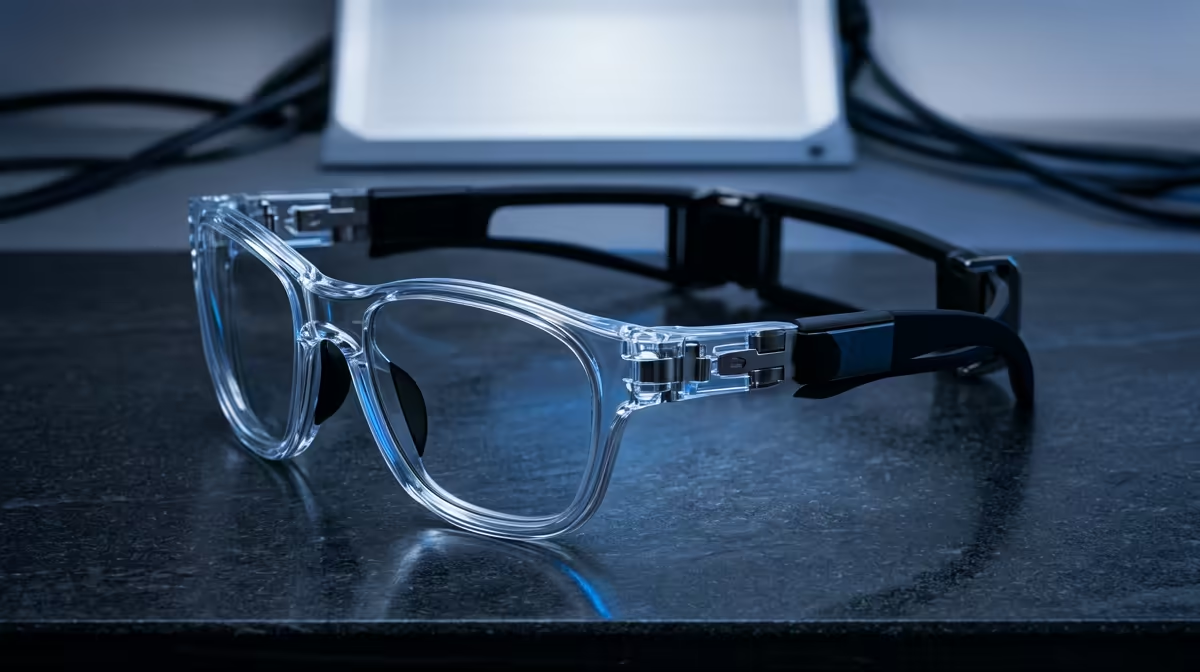
For people who want a clean, cable-managed desk, AR glasses are less about the headline display size and more about whether you actually reach for them on a normal night.
Quick Answer
Yes, comfort and fit are worth real money here: a pair you wear for two hours without nose pressure beats a sharper one you take off after twenty minutes. Expect to spend R8,500 to R15,000 for glasses under 80g with proper IPD and focus adjustment.
Treat fit as a performance spec
For people who want a clean, cable-managed desk, weight distribution decides everything. Under 80g sounds light until all of it sits on your nose bridge, so look for pairs that spread load across the brow. Built-in dioptre dials from roughly -0.5 to -5.0 save you the cost and hassle of clip-in prescription lenses, which often run an extra R1,200 to R2,500.
Check the source before the glasses
AR glasses need a DisplayPort-Alt-Mode USB-C output. Most modern handhelds and many laptops have it, but plenty of consoles and budget laptops do not, which means an extra adapter box at R1,500 to R3,000. Confirm a clean 1080p 60Hz signal per eye, since a 90Hz pair fed a 60Hz source still shows 60Hz.
When the premium tier is justified
Spend more only where it removes daily friction for people who want a clean, cable-managed desk: stable image positioning, electrochromic dimming for bright SA afternoons, and a tidy single-cable route. A larger virtual screen you rarely use is not worth R3,000 over a pair that simply fits and stays put.
FAQ
Do AR glasses work with my console or handheld?
Only if the device outputs DisplayPort over USB-C. Most handhelds and many laptops do; several consoles need a separate adapter box around R1,500 to R3,000, so confirm before buying.
Are AR glasses a real second-monitor replacement?
For a cramped desk or travel, yes, a 1080p-per-eye pair stands in for a monitor well. For colour-critical work or all-day office use, a real screen still wins on comfort and clarity.
Will AR glasses cause eye strain?
Less than you might expect if the focus is set right and you take normal screen breaks. Pairs with proper IPD and dioptre adjustment reduce strain noticeably over fixed-focus budget models.
commit, confirm your handheld or laptop outputs DisplayPort over USB-C, then wear any pair for a full hour, not a five-minute demo, to catch nose-bridge pressure.