


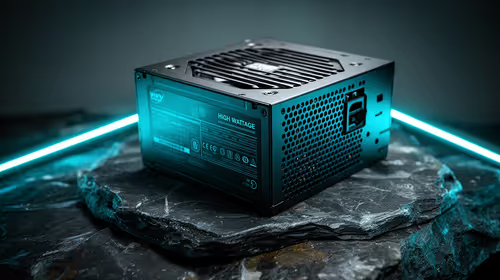
550W PSU Planning for RTX 5080 Super Builds in SA
550W for RTX 5080 Super needs a full-build check, not a simple yes. Review GPU guidance, CPU draw, transient load, connectors, PSU quality, and upgrade plans before deciding.
Read morePlan a high-temperature printing space around equipment instructions, material guidance, stability and suitable airflow. The Neptune 4 Max has a 300C nozzle; ventilation needs depend on the actual process rather than that figure alone.

A high-temperature printer workspace should be designed from equipment instructions and the exact material process, not from a nozzle number alone. Creating a safe ventilated workspace for a 3D printer begins with controlled access, stable placement and relevant airflow guidance.
The Neptune 4 Max can heat its nozzle to 300C for PLA, PETG, ABS and nylon, so ventilation should be planned around the actual material and long print duration.
Place the printer on a stable surface with confirmed chassis and motion clearance, keep hot and moving areas controlled, and follow the ventilation and handling guidance for the selected filament. The R9,399 Neptune 4 Max has a 300C nozzle and a 420 x 420 x 480mm build volume. Neither figure defines exterior footprint, emissions or a universal ventilation requirement.
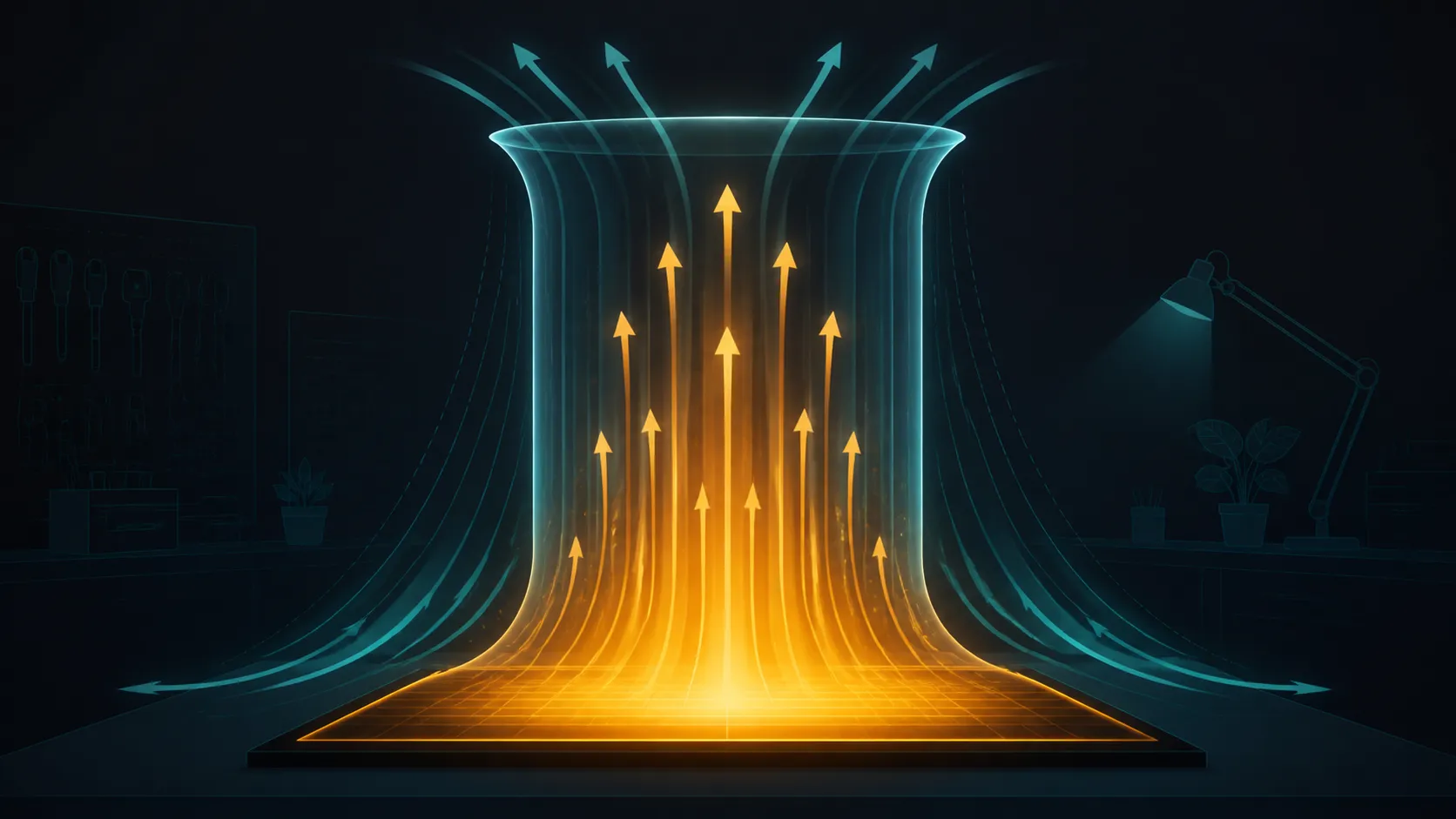
Read the printer operating guidance and the material's current handling and safety information before arranging the room. Identify heat, movement, access, storage, cleanup and any airflow requirements that apply to the chosen process.
Do not turn 300C into a claim that every job operates at that temperature or needs identical ventilation. The large 3D printer range on Evetech can be compared after room requirements are written as questions for each exact machine.
Obtain exterior dimensions for the Neptune 4 Max rather than substituting its printable envelope. Allow for moving elements, spool path, cables, plate removal, maintenance and the operator's approach. Mark the boundary on the intended floor or bench before purchase.
Keep the surface stable and free of items that can enter a movement path or contact hot components. The 420mm dual-sided plate also needs a clear landing area during cleaning and model removal. Confirm the plate's construction before selecting care products.
Ventilation decisions depend on the exact material, process, room and applicable guidance. Follow those requirements directly and seek qualified advice when the information is unclear. Avoid generic distance, airflow or enclosure prescriptions that may not fit the installation.
Select candidates through Evetech's filament range, then keep storage, preparation, printing and waste handling in one written route. A nozzle's thermal capacity cannot replace that assessment.
Consider how airflow changes across an open door, window or mechanical system, but do not improvise a solution that conflicts with equipment instructions. The objective is a controlled process that can be repeated by every authorised user.
Define who may enter the operating area and who can start, supervise or stop a job. Shared rooms need clear responsibility, particularly around hot surfaces, moving equipment and model removal. Keep emergency and shutdown information accessible to trained users.
Compare the broader Evetech 3D printer category with access control and maintenance space on the checklist. Klipper operation up to 500mm/s does not change the need for a stable, monitored process.
Rehearse ordinary loading, plate handling and shutdown without a print running. If the operator cannot reach a required control or remove the plate safely in the planned space, revise the layout before production begins.
Write a room card for the exact approved material route. It should identify preparation, storage, permitted users, monitoring and cleanup without pretending those steps apply to every filament. Review the card whenever the spool or process changes. A general-purpose room becomes safer through named procedures, not through one permanent assumption tied to the printer's maximum temperature.
The large 420x420x480mm build area also needs stable clearance around moving parts, the bed and cable paths. Keep the 60W ceramic hotend away from accidental contact, store filament appropriately and follow the chosen material's safety guidance. A high-temperature workspace must solve airflow and safe access in the user's room rather than assume the printer itself handles every environmental requirement.
Use the exact equipment instructions, selected material guidance, room conditions and local safety responsibilities as the planning basis.
No. It states a hot-end temperature limit. Material and process guidance determine the applicable airflow and handling approach.
Use a stable location with confirmed exterior, motion, cable, spool, maintenance and operator clearance around the exact machine.
Materials can differ in storage, handling, temperature and environmental guidance, so the complete workflow must follow the named spool.
It should not. The 420 x 420 x 480mm envelope describes printable space, not chassis size or movement clearance.
Assign trained operators, mark the operating zone and document starting, monitoring, unloading and shutdown responsibilities.
Ready to map a controlled printing workspace? Compare 3D printers and filament at Evetech after confirming room clearance, authorised access and the exact material guidance.
Use the exact equipment instructions, selected material guidance, room conditions and local safety responsibilities as the planning basis.
No. It states a hot-end temperature limit. Material and process guidance determine the applicable airflow and handling approach.
Use a stable location with confirmed exterior, motion, cable, spool, maintenance and operator clearance around the exact machine.
Materials can differ in storage, handling, temperature and environmental guidance, so the complete workflow must follow the named spool.
It should not. The 420 x 420 x 480mm envelope describes printable space, not chassis size or movement clearance.
Assign trained operators, mark the operating zone and document starting, monitoring, unloading and shutdown responsibilities.
550W for RTX 5080 Super needs a full-build check, not a simple yes. Review GPU guidance, CPU draw, transient load, connectors, PSU quality, and upgrade plans before deciding.
Read more
8000Hz polling is overrated for most SA gamers because gains can be tiny next to battery drain and monitor limits. Mbombela players should weigh mouse feel, game support, and system stability before chasing the number.
Read more
Magnetic switches are taking over SA gaming keyboards because actuation can be tuned. For Sandton gamers, rapid trigger, reset control, and profile depth can help, but layout, key feel, and software quality still matter.
Read more
Polokwane oled monitor value questions need cautious SA context because pricing can move with availability, exchange rates, specs, and warranty support. Treat the trend as a planning signal, not a fixed price promise.
Read more
Arc B580 budget builds for Midrand gamers can shift with exchange rates, supply, specs, and model tier. Treat the title as a buying prompt, then compare SA warranty, timing, and build priorities.
Read more
ROG Ally X may beat the LCD Steam Deck for SA gamers who value stronger handheld performance, more memory, and Windows flexibility. Compare battery life, controls, game libraries, and Polokwane support needs before deciding.
Read more
Minisforum's M2 Pro pairs Core Ultra X7, Arc B390 graphics and 32GB onboard memory in 1.8 litres. SA buyers should weigh its fixed memory and $1,439 launch offer against local mini PCs.

Lenovo says Legion Go failures linked to BIOS N3CN42WW are not user error. Affected SA owners should stop retrying the update, preserve proof and open a support case.

Smart monitors can add apps and convenience, but they also add privacy settings and unwanted-software risk. SA buyers should audit the operating system before paying for extras.

A fake 113GB GTA VI ISO reportedly used empty padding around a small malware payload. SA gamers should delete unofficial builds, keep Windows security active and wait for official channels.
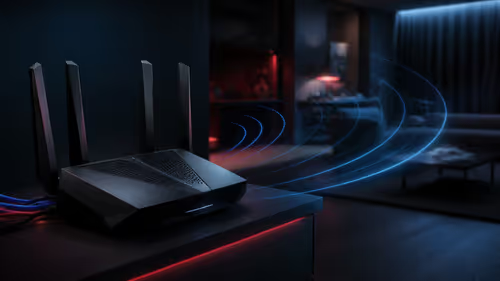
ASUS calls the ROG GT-BN98 the first Wi-Fi 8 gaming router. SA buyers should fix coverage and client limits before paying for a future wireless standard.

Apple's M6 Mac mini adds faster AI, graphics and networking in the same compact format. SA buyers should wait for a rand listing before comparing value.
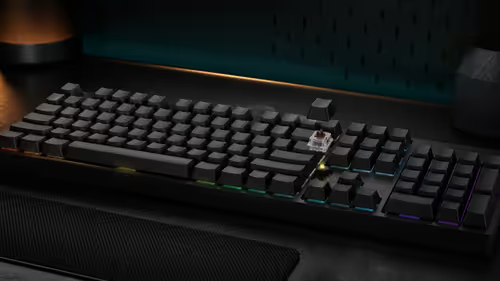
The Vulcan II XP adds hot-swappable switches, sound damping and gaming controls to a full-size wired board. SA buyers should compare feel before features.

Microsoft says Windows on Arm now has over 7,000 verified apps and games. SA buyers should still check each driver, game and work tool before switching.

Xbox Insiders can test disc-to-digital from 31 August 2026. Supported Xbox One and Series X discs gain a digital entitlement, but older discs, regions and title coverage still need exact checks.

ViewSonic's XG2738 pairs QHD QD-OLED with 240Hz and automatic panel care. SA buyers should compare warranty, brightness, ports and burn-in protection against today's R9,999-plus OLED shelf.

NVIDIA's final Windows 10 Game Ready driver is due in October 2026. SA gamers can keep using their GPU, but new game optimisations move on while critical security fixes continue quarterly.

JBL's new Quantum 520, 520X and 120 headsets cover wireless, Xbox-certified and wired use. SA buyers should compare connection, comfort and microphone needs before paying for a new badge.