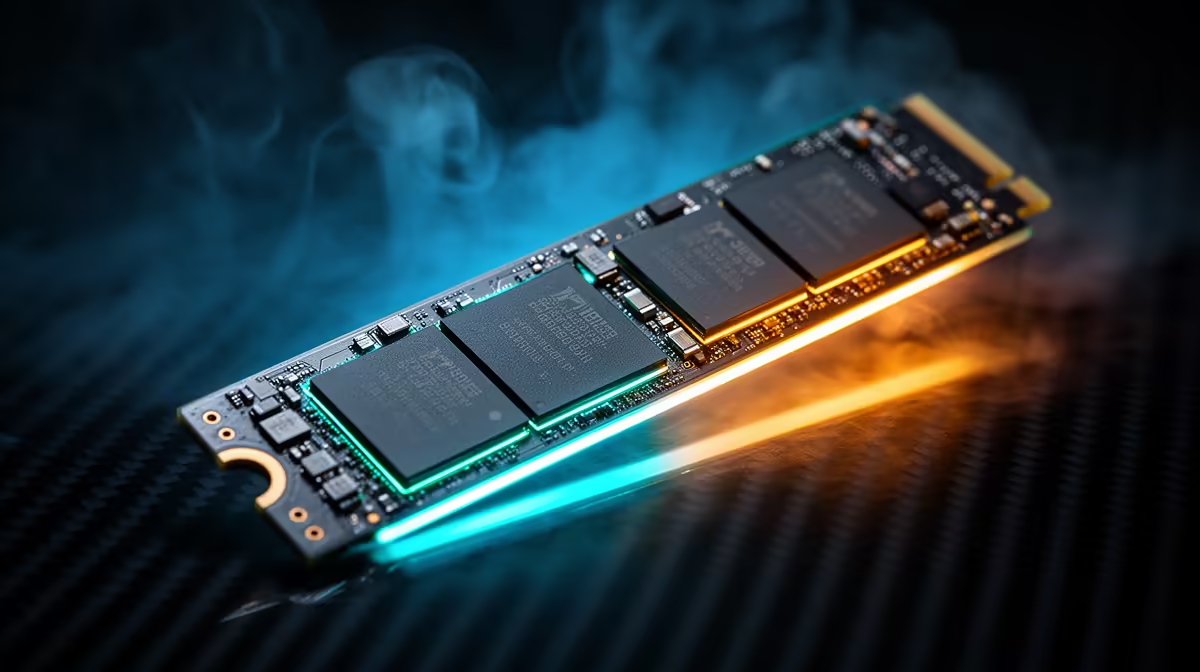
Players on a Gen 5 NVMe SSD hit FPS drops most often after an update shifts how the system schedules work.
Quick Answer
Start by locking your Gen 5 NVMe SSD to one test scene, then confirm refresh rate, frame cap, and the latest stable drivers. A 1TB Gen5 NVMe drive costs about R2,600, with 2TB models near R4,400. Measure frame rate before and after each change so the fix is evidence-based.
Verify Cables, Ports And Connections
Swap to a known-good certified cable and a different port, since a marginal link can cause FPS drops that looks like a deeper fault. On a Gen 5 NVMe SSD this is a two-minute check that rules out a whole class of problems. Reseat the connection, retest the same scene, and record the result before moving on.
Set Realistic Targets For Your Panel
Decide what frame rate you actually need for your panel and game type, then tune toward it rather than chasing a number the Gen 5 NVMe SSD was never meant to hit. A 1TB Gen5 NVMe drive costs about R2,600, with 2TB models near R4,400. Setting a sensible target stops endless tweaking and makes any remaining FPS drops easy to judge against a clear goal.
Test Smart
a short log: setting changed, before value, after value. A 30-second repeatable run is worth more than testing three different games.
Clear Background Load And Contention
Close capture tools, browser tabs, launchers, RGB utilities, and update services for one clean pass. Background processes quietly steal cycles and bandwidth, and on a Gen 5 NVMe SSD they are a common hidden cause of FPS drops. Re-run your scene with a quiet system to see how much frame rate recovers without spending anything.
FAQ
Should I lower resolution or settings first on a Gen 5 NVMe SSD?
Test the load pattern first. If the GPU is pinned, drop resolution scale or heavy effects; if the CPU is pinned, settings changes help less. Targeting 14,000 MB/s read as a reference keeps tuning realistic.
Will updating drivers actually reduce FPS drops?
Often yes, because a clean, current driver fixes scheduling and compatibility quirks behind FPS drops. Install the latest stable release, reboot once, and retest the same scene. If a new driver caused it, roll back to the prior version.
Why does FPS drops only appear after the Gen 5 NVMe SSD warms up?
That pattern points to thermals or power limits. Log temperatures through your scene, improve airflow, and confirm no part is throttling. frame rate that recovers when cool confirms heat as the cause.
Let the data choose your next SSD.
After your test scene reveals the real bottleneck behind FPS drops, compare the relevant Evetech SSD options instead of guessing.