


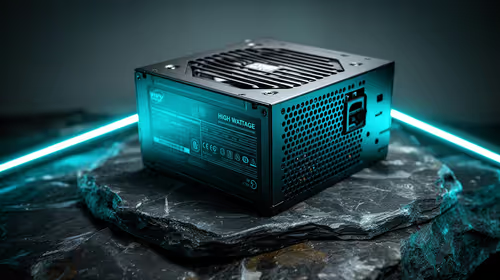
550W PSU Planning for RTX 5080 Super Builds in SA
550W for RTX 5080 Super needs a full-build check, not a simple yes. Review GPU guidance, CPU draw, transient load, connectors, PSU quality, and upgrade plans before deciding.
Read moreSet up a 4D headrest by aligning it with the user's head and neck across the main desk positions. The E3 Ultra includes a 4D biaxial adjustable headrest with 70-degree rotation and tilt.
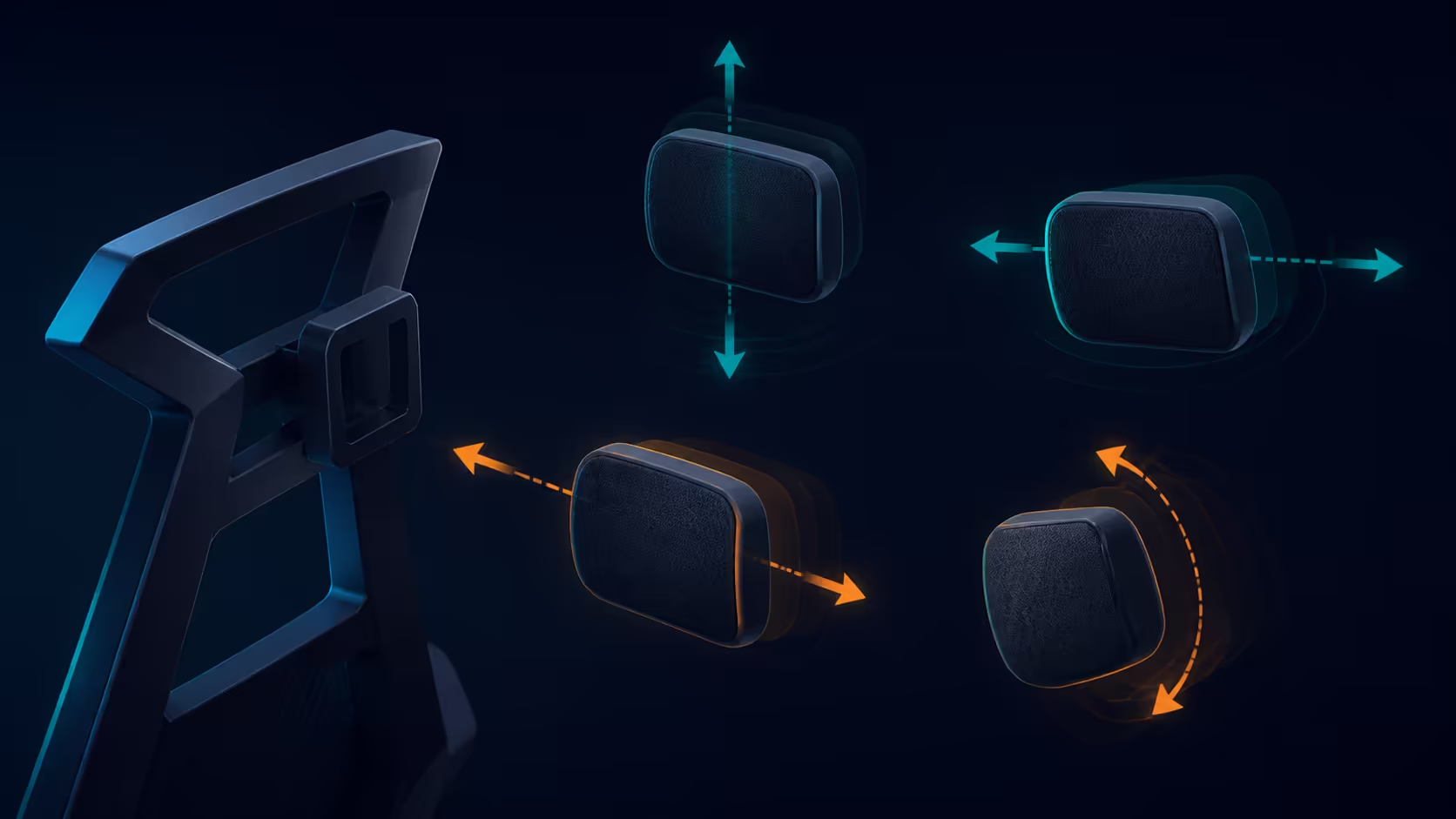
Good 4D headrest setup begins after the seat, backrest and desk are aligned. Otherwise the head support is being tuned around a posture created by another mismatch, and its contact can feel right only until you start working.
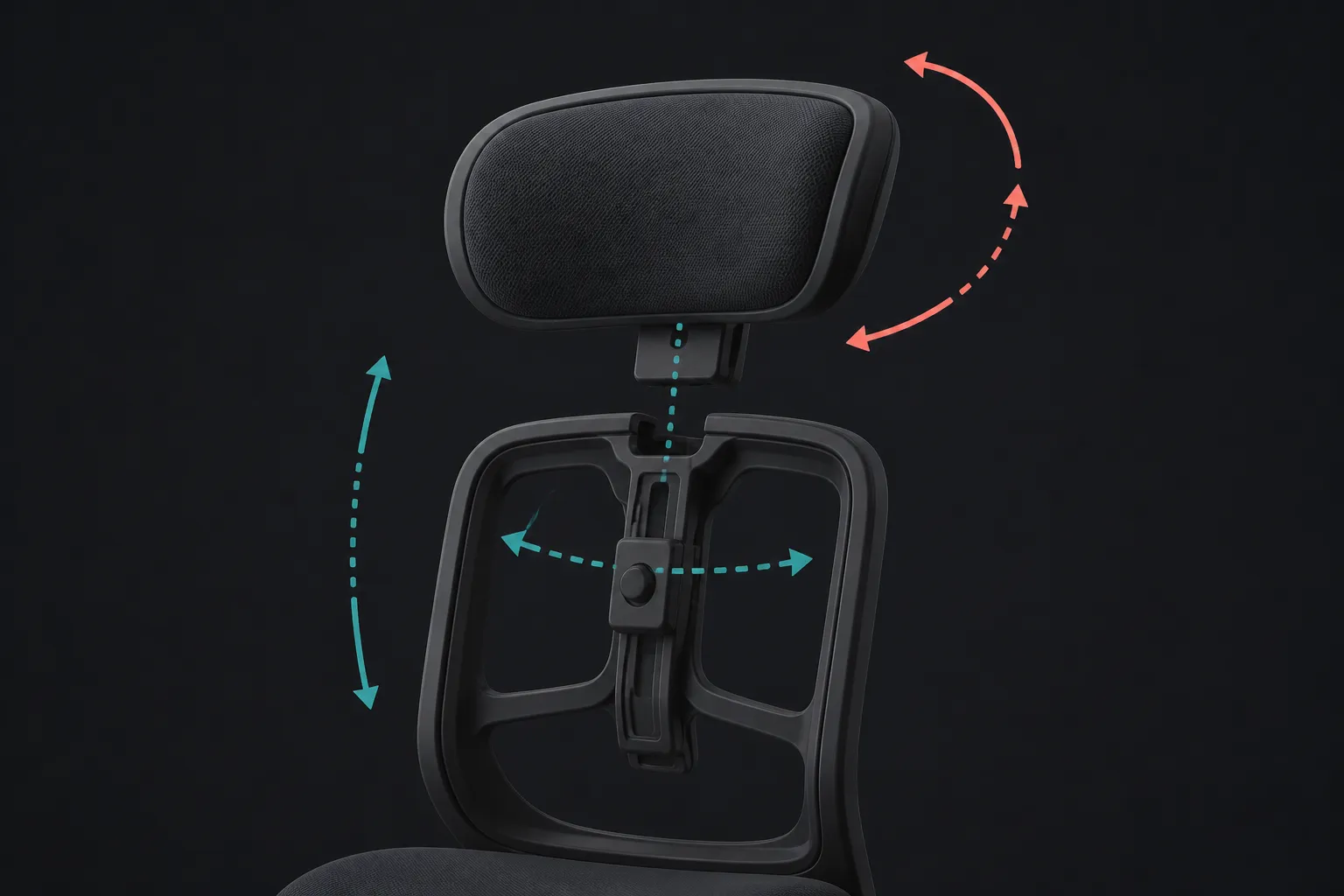
The E3 Ultra headrest provides 1.8 inches of height, 2.2 inches of depth and dual-axis rotation through 70 degrees.
Set your seated position first, then bring the headrest toward the back of the head without pushing the chin down or forward. Recheck it in both upright and reclined work. At R9,599, the HBADA E3 Ultra includes a 4D biaxial adjustable headrest with 70-degree rotation and tilt.
Sit fully back with feet supported and shoulders quiet. Align the screen so reading does not require a repeated forward reach, then place the keyboard and mouse within easy reach. Only now does headrest contact become meaningful.
The aim is support rather than constant pressure. A user who keeps lifting the chin or moving the torso to find the pad should revisit the rest of the workstation before adding another headrest change.
The E3 Ultra's head support is biaxial and carries a 4D adjustment description. Its rotation-and-tilt range is 70 degrees. Work through that movement gradually, observing where the support meets the head in a natural gaze.
Do not infer extra directions, locking steps or resistance behaviour from the 4D label. Compare the physical control with models in Evetech's HBADA chair category, and operate each design according to its own mechanism.
Typing, reading and video calls may place the head differently. Test the support while looking at the central screen area, then while leaning back. The E3 Ultra reclines to 140 degrees, so one upright position should not be assumed ideal across that travel.
Judge whether contact is gentle and easy to leave. If you must hold the neck rigidly to remain on the pad, reduce the intervention and review monitor height. Useful support should not become a new task.
Once a comfortable relationship is found, note a visible reference point or take a private setup photo. That makes it easier to restore after cleaning or after another user changes the chair.
For broader comparisons, Evetech's office seating range lets you weigh headrest control against lumbar, arm and recline needs. Greater movement earns value only when its useful position is simple to recover.
A shared workstation benefits from a quick reset routine: sit against the backrest, align the screen, select the normal work recline, and only then restore headrest contact. This order prevents one user's saved pad position from becoming the next user's forced neck posture.
Include control access in the purchase decision. A wide movement range is less valuable if the intended user cannot understand or reach the adjustment points. At R9,599, the E3 Ultra should be compared with chairs that meet the same fit, task and reset requirements.
Run the check with ordinary eyewear and the applications normally used. Different viewing distances can alter natural head position, so a saved contact should belong to the real visual task rather than a neutral blank screen.
Adjust height to meet the back of the head, bring depth forward without pushing the chin and rotate last for upright or reclined viewing. Those numeric ranges answer the setup map directly, while the desk and screen still determine the useful final position.
Save one upright and one reclined headrest position in a short note for easier return.
Arrange seat position, foot support, desk reach and monitor height first. These elements determine whether your head meets the support without a compensating neck posture.
It uses a 4D biaxial adjustable headrest. The available rotation-and-tilt movement spans 70 degrees, giving the setup a broad tuning range.
Look straight ahead and allow the head to settle naturally. Contact should feel supportive rather than forceful, and it should not push your gaze away from the screen.
No. Treat 4D as a capability label and learn the controls on the actual chair; do not assume undocumented movement or a particular locking method.
No single component guarantees comfort or a health outcome. Monitor position, vision needs, task duration and movement breaks still affect how the neck feels.
Recheck it after changing seat position, recline, screen height or primary task. Each change can alter where the head reaches the support.
Ready to test head support as part of a complete workstation? Compare Evetech office chairs after setting the screen, desk reach and seated reference you want the headrest to complement.
Arrange seat position, foot support, desk reach and monitor height first. These elements determine whether your head meets the support without a compensating neck posture.
It uses a 4D biaxial adjustable headrest. The available rotation-and-tilt movement spans 70 degrees, giving the setup a broad tuning range.
Look straight ahead and allow the head to settle naturally. Contact should feel supportive rather than forceful, and it should not push your gaze away from the screen.
No. Treat 4D as a capability label and learn the controls on the actual chair; do not assume undocumented movement or a particular locking method.
No single component guarantees comfort or a health outcome. Monitor position, vision needs, task duration and movement breaks still affect how the neck feels.
Recheck it after changing seat position, recline, screen height or primary task. Each change can alter where the head reaches the support.
550W for RTX 5080 Super needs a full-build check, not a simple yes. Review GPU guidance, CPU draw, transient load, connectors, PSU quality, and upgrade plans before deciding.
Read more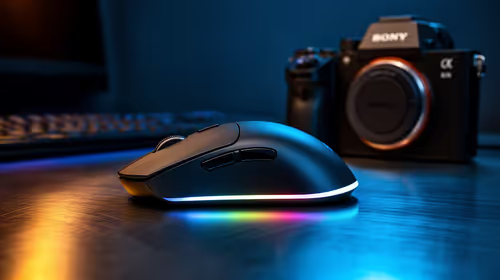
8000Hz polling is overrated for most SA gamers because gains can be tiny next to battery drain and monitor limits. Mbombela players should weigh mouse feel, game support, and system stability before chasing the number.
Read more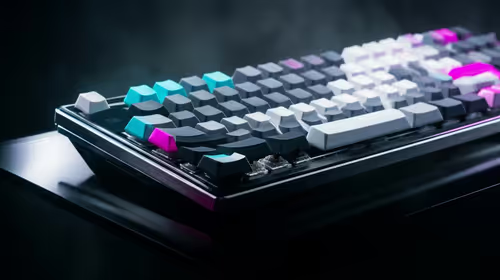
Magnetic switches are taking over SA gaming keyboards because actuation can be tuned. For Sandton gamers, rapid trigger, reset control, and profile depth can help, but layout, key feel, and software quality still matter.
Read more
Polokwane oled monitor value questions need cautious SA context because pricing can move with availability, exchange rates, specs, and warranty support. Treat the trend as a planning signal, not a fixed price promise.
Read more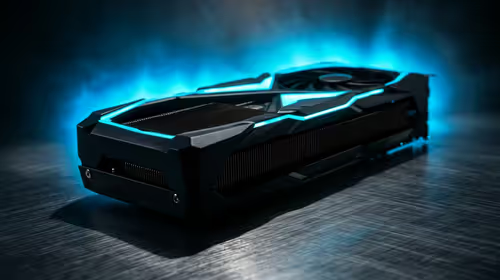
Arc B580 budget builds for Midrand gamers can shift with exchange rates, supply, specs, and model tier. Treat the title as a buying prompt, then compare SA warranty, timing, and build priorities.
Read more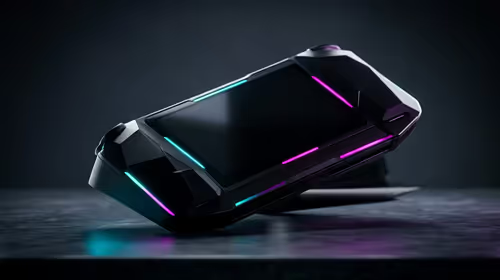
ROG Ally X may beat the LCD Steam Deck for SA gamers who value stronger handheld performance, more memory, and Windows flexibility. Compare battery life, controls, game libraries, and Polokwane support needs before deciding.
Read more
Minisforum's M2 Pro pairs Core Ultra X7, Arc B390 graphics and 32GB onboard memory in 1.8 litres. SA buyers should weigh its fixed memory and $1,439 launch offer against local mini PCs.

Lenovo says Legion Go failures linked to BIOS N3CN42WW are not user error. Affected SA owners should stop retrying the update, preserve proof and open a support case.

Smart monitors can add apps and convenience, but they also add privacy settings and unwanted-software risk. SA buyers should audit the operating system before paying for extras.

A fake 113GB GTA VI ISO reportedly used empty padding around a small malware payload. SA gamers should delete unofficial builds, keep Windows security active and wait for official channels.
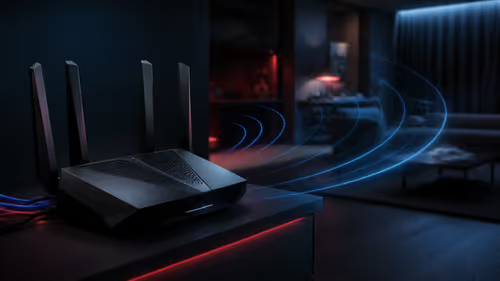
ASUS calls the ROG GT-BN98 the first Wi-Fi 8 gaming router. SA buyers should fix coverage and client limits before paying for a future wireless standard.
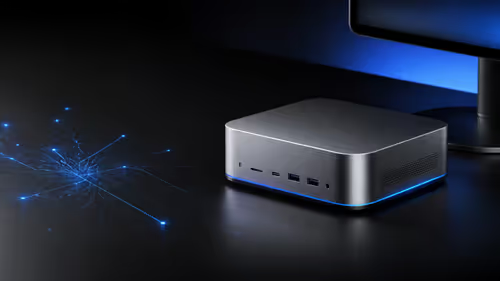
Apple's M6 Mac mini adds faster AI, graphics and networking in the same compact format. SA buyers should wait for a rand listing before comparing value.
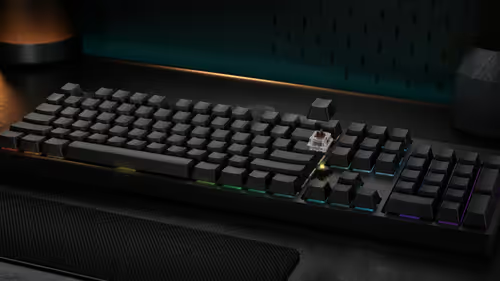
The Vulcan II XP adds hot-swappable switches, sound damping and gaming controls to a full-size wired board. SA buyers should compare feel before features.

Microsoft says Windows on Arm now has over 7,000 verified apps and games. SA buyers should still check each driver, game and work tool before switching.

Xbox Insiders can test disc-to-digital from 31 August 2026. Supported Xbox One and Series X discs gain a digital entitlement, but older discs, regions and title coverage still need exact checks.
ViewSonic's XG2738 pairs QHD QD-OLED with 240Hz and automatic panel care. SA buyers should compare warranty, brightness, ports and burn-in protection against today's R9,999-plus OLED shelf.

NVIDIA's final Windows 10 Game Ready driver is due in October 2026. SA gamers can keep using their GPU, but new game optimisations move on while critical security fixes continue quarterly.

JBL's new Quantum 520, 520X and 120 headsets cover wireless, Xbox-certified and wired use. SA buyers should compare connection, comfort and microphone needs before paying for a new badge.