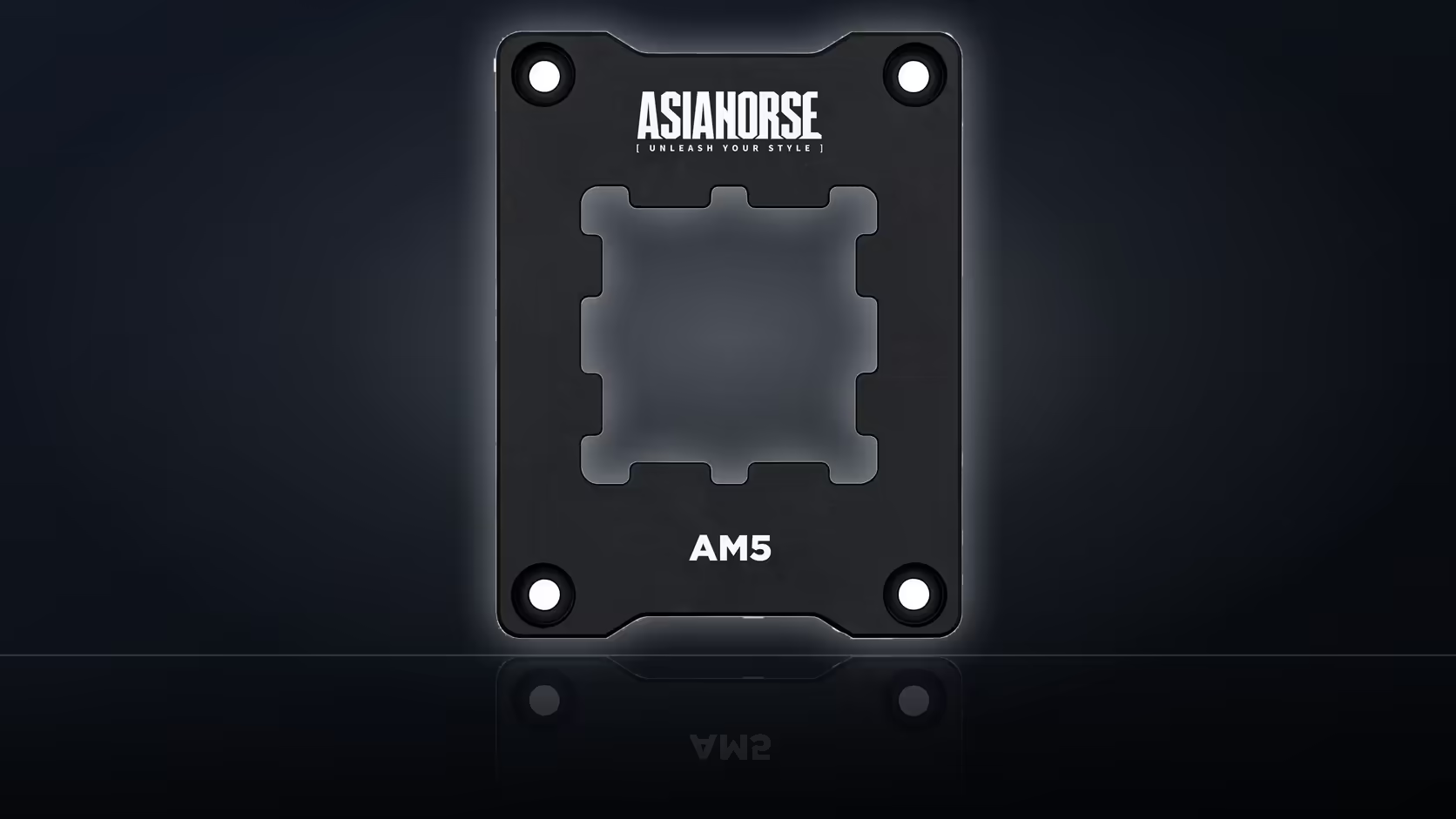
Crack open a CPU contact frame package and a small hex key sits waiting next to its four fasteners, which makes it tempting to assume the correct tightness has already been decided for you. That is not quite right. A supplied driver only tells you what shape to turn the screw with, never how far to turn it, and those two questions have entirely different answers.
Quick Answer
The AsiaHorse Pulsar sells for R299 and comes with its own fastening hardware plus a matching key, yet nowhere does the listing publish a tightening torque, so there is no figure to dial a driver to. The practical approach is even, moderate tightening across all four fasteners in stages rather than fully securing one before moving to the next - the same technique used for any AM5 mounting hardware without a stated spec.
🔩 A tool is not a torque figure
It is a reasonable assumption that a wrench in the box comes with instructions for how hard to use it, but that is not how this listing is written. The hex wrench matches the head of the four mounting screws - that is its only stated job. Nowhere does the description give a Newton-metre figure, a "turns past finger-tight" instruction, or any other quantified target.
That gap is not unusual for this category of hardware, but it does mean the responsibility for a sensible result sits with whoever is doing the fitting, working from general good practice rather than a number specific to this frame.
Why the omission is worth noticing
A tightening spec exists for a reason on hardware that clamps close to a processor - too little and contact is inconsistent, too much and something can be stressed that should not be. Without a figure, neither extreme is flagged for you, so the fitting itself has to carry more care than it would if a torque wrench setting were simply printed on the box.
🛠️ Tightening in stages, not in order
The practical method that avoids both extremes is to bring all four screws down evenly rather than sequentially. Give each one a partial turn, move to the next, and work around the pattern more than once rather than fully seating the first screw before touching the second.
Why sequence matters here
A frame tightened corner by corner, one screw fully driven before the next is started, tends to pull slightly out of alignment as it goes - the last screw ends up compensating for uneven pressure already set by the first three. Working evenly around the pattern, a little at a time, keeps the frame seated flat and square to the socket the whole way through.
🔍 Checking your work without a number to check against
With no torque figure supplied, there is nothing to verify tightness against directly - but there are still signs worth looking for. The frame should sit flush with no visible gap on any side, and the screws should feel firmly seated without excessive resistance that suggests you are fighting the threads rather than finishing the job.
A check after the machine has run through its first few thermal cycles is a sensible extra step, since fasteners near a heat source can settle slightly once everything has expanded and contracted a few times. If a torque driver happens to be available, there is still no figure to set it to here - even, careful hand-tightening remains the approach until AsiaHorse publish one.
Whatever cooler goes back on top, checking the cpu coolers range for compatible mounting hardware is worth doing before you start, and a fresh application from the thermal solutions shelf finishes the job properly once the frame itself is seated.
Frequently Asked Questions
Does the listing give a torque value?
No tightening torque is specified, so the wrench is supplied without a figure to work to.
How tight should the screws go?
Evenly and moderately, tightening in stages across the four rather than fully securing one before moving to the next.
Why tighten in stages?
Because an evenly seated frame is the point, and tightening one corner fully first can pull it out of alignment.
Is over-tightening a risk?
Excessive force on any fastener near a processor is worth avoiding, which is part of why a stated figure would help.
Would a torque driver help?
Without a published figure there is nothing to set it to, so careful even tightening is the practical approach.
Should they be checked later?
A check after the first thermal cycles is sensible, since fasteners can settle slightly after the machine has run.
Where would a figure come from?
AsiaHorse, since a tightening specification is theirs to publish rather than something to infer.
Fitting new mounting hardware?
Browse Evetech's cooler and thermal paste range so the rest of the job is sorted before the wrench comes out.