


550W PSU Planning for RTX 5080 Super Builds in SA
550W for RTX 5080 Super needs a full-build check, not a simple yes. Review GPU guidance, CPU draw, transient load, connectors, PSU quality, and upgrade plans before deciding.
Read moreInductive keyboard switches sense a coil's changing electromagnetic field as the stem moves, so there is no physical wear point and actuation can be adjusted in software. Evetech follows emerging keyboard tech like this closely for gamers chasing an early edge.
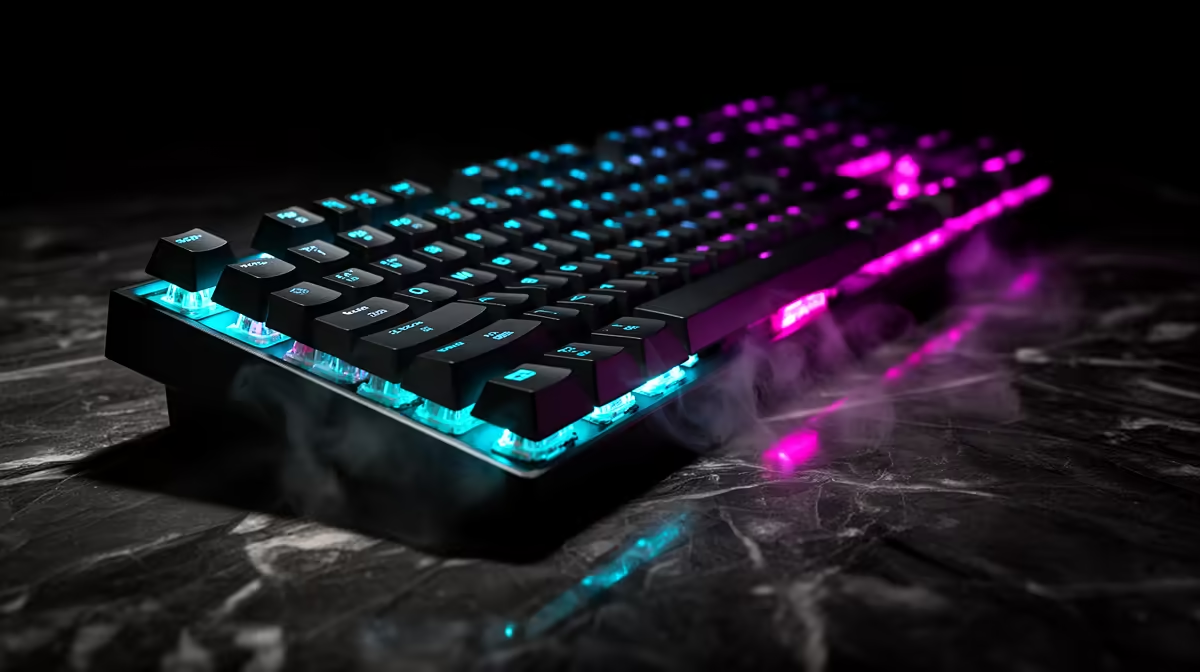
Magnetic keyboards are no longer the only contactless adjustable option on the horizon. Inductive keyboard switches track movement through changing electromagnetic behaviour, with real products still needing scrutiny for precision, software and compatibility.
An inductive keyboard can sense key movement through changes in an electromagnetic system rather than closing a conventional metal contact. The exact implementation belongs to the keyboard, sensor, switch and firmware. Adjustable actuation, rapid trigger and calibration are board features, not automatic benefits of every inductive switch. Compare released products and measured behaviour before calling the technology the successor to TMR.
Use the gaming keyboard deals page to compare current switch and layout options. The keyboard best-seller collection provides another view of released boards. An emerging technology should be judged against products you can identify and support.
An inductive design uses coils or related circuitry to detect a change caused by the moving key mechanism. The controller turns that signal into a position or actuation decision.
Hall effect uses magnetic field sensing, while TMR is another magnetic sensing approach. All can avoid the conventional electrical contact used by many mechanical switches, but their circuits and signal behaviour differ.
Removing an electrical contact can avoid contact bounce and one wear point. The stem, housing, spring, stabilisers, keycaps and board still move or age. Dust, spills and physical damage remain.
Do not accept "infinite lifespan" from a sensing diagram. Look for the maker's warranty, environmental testing and replaceability. A failed controller or proprietary switch can end the keyboard even when the sensing surface never touched.
Adjustable actuation needs position sensing plus firmware and a configuration tool. Rapid trigger needs the board to update release and actuation decisions from key movement. Check the supported range, calibration, per-key control and profile storage for the exact keyboard.
Test behaviour after power loss and on another PC. A profile stored only in desktop software may not travel to a competition machine.
Read game and tournament rules before using unusual input features. Contactless sensing does not make automated or prohibited behaviour acceptable.
Position-sensing keyboards can need calibration after transport, firmware updates or switch changes. Follow the board maker's process, then inspect the software position view for a stable rest and smooth full travel on every key.
An unstable key can come from switch fit, contamination, sensor behaviour or firmware. Swap one supported switch into the position and recalibrate before judging the whole technology.
Save a conservative profile with ordinary actuation for typing and recovery. Extremely shallow settings can trigger from resting fingers or desk vibration. Test a full page and one familiar game before reducing the distance.
Inductive keyboards are an emerging category. Check whether the exact model is released, supported in South Africa and backed by replacement switches or firmware. A prototype demonstration does not establish retail durability or feature support.
Keep the invoice, model and firmware version. Early hardware earns its place when the complete board remains usable after the launch excitement.
No. Both can sense without a conventional contact, while the underlying electromagnetic measurement and implementation differ.
No. The electrical contact may be absent, but mechanical parts, electronics and the board can still wear or fail.
No. It requires suitable position data, firmware and configuration. Verify the exact released keyboard.
Compare released inductive boards by measured actuation, firmware, calibration and support, and treat the sensing method as one part of the keyboard.
No. Both can sense without a conventional contact, while the underlying electromagnetic measurement and implementation differ.
No. The electrical contact may be absent, but mechanical parts, electronics and the board can still wear or fail.
No. It requires suitable position data, firmware and configuration. Verify the exact released keyboard.
550W for RTX 5080 Super needs a full-build check, not a simple yes. Review GPU guidance, CPU draw, transient load, connectors, PSU quality, and upgrade plans before deciding.
Read more
8000Hz polling is overrated for most SA gamers because gains can be tiny next to battery drain and monitor limits. Mbombela players should weigh mouse feel, game support, and system stability before chasing the number.
Read more
Magnetic switches are taking over SA gaming keyboards because actuation can be tuned. For Sandton gamers, rapid trigger, reset control, and profile depth can help, but layout, key feel, and software quality still matter.
Read more
Polokwane oled monitor value questions need cautious SA context because pricing can move with availability, exchange rates, specs, and warranty support. Treat the trend as a planning signal, not a fixed price promise.
Read more
Arc B580 budget builds for Midrand gamers can shift with exchange rates, supply, specs, and model tier. Treat the title as a buying prompt, then compare SA warranty, timing, and build priorities.
Read more
ROG Ally X may beat the LCD Steam Deck for SA gamers who value stronger handheld performance, more memory, and Windows flexibility. Compare battery life, controls, game libraries, and Polokwane support needs before deciding.
Read more
Minisforum's M2 Pro pairs Core Ultra X7, Arc B390 graphics and 32GB onboard memory in 1.8 litres. SA buyers should weigh its fixed memory and $1,439 launch offer against local mini PCs.

Lenovo says Legion Go failures linked to BIOS N3CN42WW are not user error. Affected SA owners should stop retrying the update, preserve proof and open a support case.

Smart monitors can add apps and convenience, but they also add privacy settings and unwanted-software risk. SA buyers should audit the operating system before paying for extras.

A fake 113GB GTA VI ISO reportedly used empty padding around a small malware payload. SA gamers should delete unofficial builds, keep Windows security active and wait for official channels.
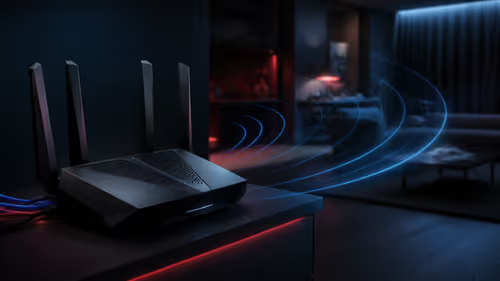
ASUS calls the ROG GT-BN98 the first Wi-Fi 8 gaming router. SA buyers should fix coverage and client limits before paying for a future wireless standard.
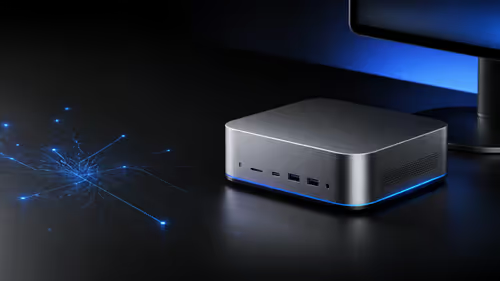
Apple's M6 Mac mini adds faster AI, graphics and networking in the same compact format. SA buyers should wait for a rand listing before comparing value.
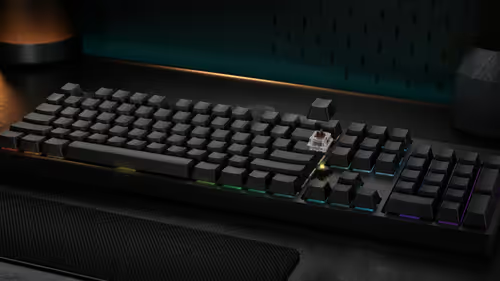
The Vulcan II XP adds hot-swappable switches, sound damping and gaming controls to a full-size wired board. SA buyers should compare feel before features.
Microsoft says Windows on Arm now has over 7,000 verified apps and games. SA buyers should still check each driver, game and work tool before switching.

Xbox Insiders can test disc-to-digital from 31 August 2026. Supported Xbox One and Series X discs gain a digital entitlement, but older discs, regions and title coverage still need exact checks.
ViewSonic's XG2738 pairs QHD QD-OLED with 240Hz and automatic panel care. SA buyers should compare warranty, brightness, ports and burn-in protection against today's R9,999-plus OLED shelf.
NVIDIA's final Windows 10 Game Ready driver is due in October 2026. SA gamers can keep using their GPU, but new game optimisations move on while critical security fixes continue quarterly.

JBL's new Quantum 520, 520X and 120 headsets cover wireless, Xbox-certified and wired use. SA buyers should compare connection, comfort and microphone needs before paying for a new badge.