Whether 8D adjustable lumbar support is worth it depends on useful range, not the sophistication of the label. It should help a real user find lower-back contact that stays workable across routine tasks and can be restored after changes.
Quick Answer
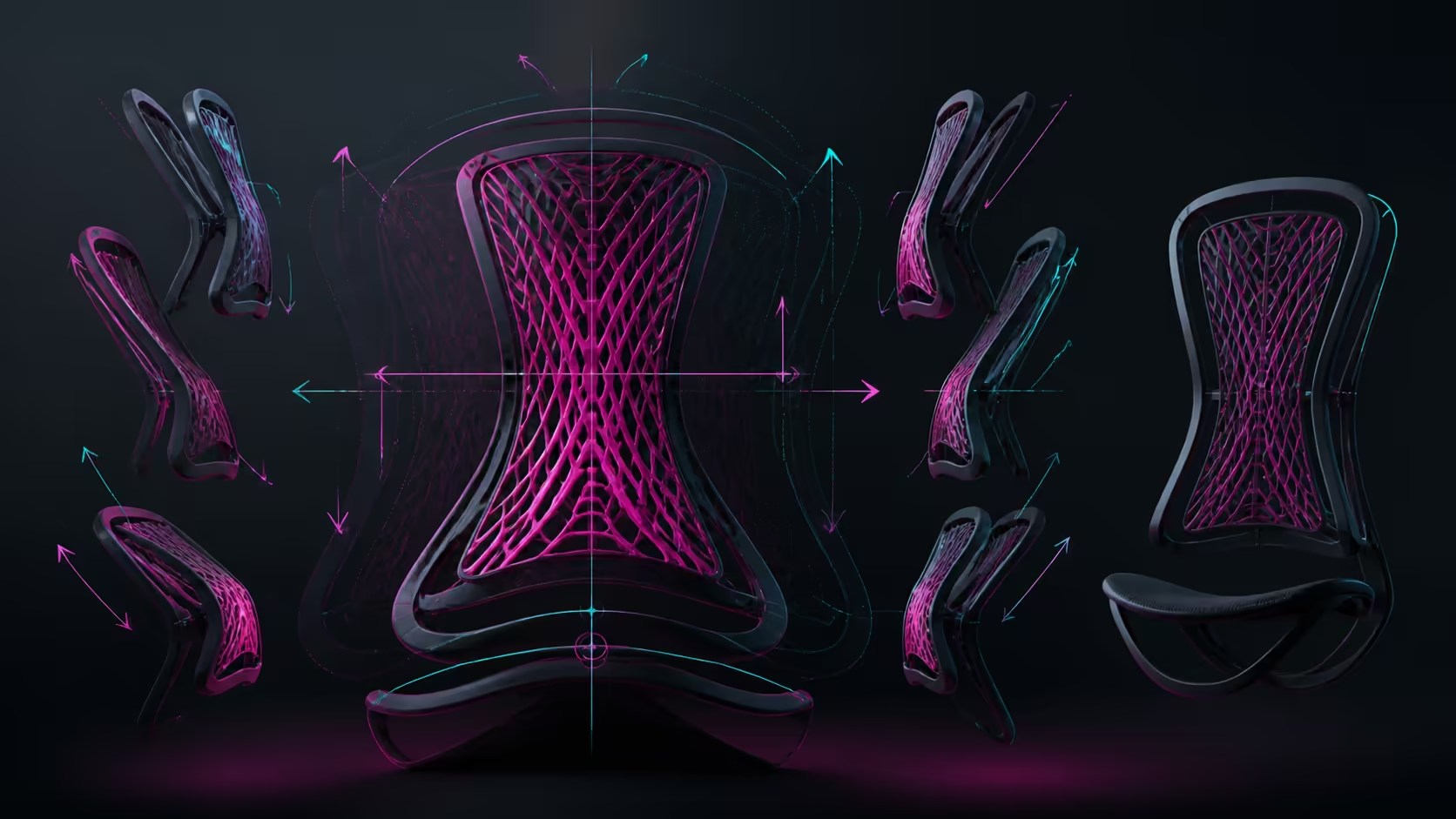
The E3 Ultra's 8D lumbar system is worth it when its three zones, wrapping wings, height, depth and dynamic tilt produce repeatable contact through changing postures.
8D adjustment can be worthwhile for shared chairs, changing postures or users poorly served by a fixed contour. Test small changes during real work and include the entire chair fit in the decision. The HBADA E3 Ultra costs R9,599 and makes 8D lumbar support a central part of its adjustment package.
👥 Identify who needs the range
One stable user may find a simple contour sufficient, while a shared household can benefit from flexible settings. People who alternate between focused typing and reclined reading may also value more control.
Define the desired outcome as a contact location and posture, not "maximum support." This turns the test into something observable.
🧪 Evaluate the 8D system gradually
Start near neutral with the user seated fully back. Alter a single control, note the result during an ordinary task, and wait before changing another. The 8D designation does not reveal a universal sequence or hidden mechanism.
Use Evetech's HBADA office-chair category for comparison. Look for control clarity and repeatability as well as range.
🔗 Check the complementary controls
The E3 Ultra adds omni-adjustment armrests spanning 720 degrees and a backrest that reaches 140 degrees. Poor arm position can pull the torso forward, while recline changes the relationship between the back and support.
Retest the lumbar setting after meaningful changes elsewhere. This avoids crediting the 8D system for a result produced by a different workstation component.
⚕️ Keep posture claims proportionate
An adjustment can help the chair match a preferred sitting position, but it cannot guarantee ideal posture, prevent injury or treat discomfort. Movement, task design and professional medical advice remain separate.
Compare the R9,599 E3 Ultra with Evetech's broader office seating range. It is worth the spend when the support range produces a clear practical fit advantage after all essential constraints are met.
Use a short written rating after each trial: contact location, ease of control, ability to stay against the backrest and confidence in restoring the setting. This creates a clearer value signal than asking whether the chair felt "premium" during the first few minutes.
Repeat the rating after several work blocks with normal breaks. Consistency across tasks deserves more weight than a dramatic first adjustment that later becomes distracting.
If the seat is shared, add reset time and independent operation to the score. An extensive range may be worthwhile when several people find distinct positions quickly; it may be excessive when everyone settles on the same simple reference.
Do not collapse all task results into one comfort number. A position may work for reading yet interfere with keyboard reach; score those activities separately and prioritise the routine performed most often.
The final decision should also preserve movement outside the chair. Even a well-matched lumbar setting belongs within a day that includes posture changes, standing and walking rather than one continuous seated test. Reassess after the user's typical break pattern. Note any task-specific difference.
One inch of forward-back movement and 1.6 inches vertically give measurable tuning room. The floating wings rotate internally and externally, helping broad support follow the waist rather than relying on one fixed centre pad.
Its value rises when different people can find, record and repeat their own contact pattern without adding separate cushions.
Small changes deserve a full-task trial.
Frequently Asked Questions
Which users are most likely to use lumbar range?
Shared users, changing task routines and people who cannot align with a fixed contour may gain the most from a broad, repeatable adjustment range.
How should the 8D range be tested?
Use a neutral reference, move one control modestly, and complete representative desk tasks. Return to the reference before comparing a substantially different setting.
Does 8D guarantee better posture?
No. The user's proportions, desk, habits and movement still matter, and a higher adjustment count cannot guarantee a specific posture.
What complementary controls are included?
The chair includes 720-degree omni armrests, a 4D biaxial headrest with 70-degree rotation and tilt, and 140-degree recline.
Can this feature prevent discomfort or injury?
It carries no prevention or treatment guarantee. Concerning or persistent symptoms deserve qualified assessment instead of stronger adjustment.
How does R9,599 affect the decision?
That price should be justified by the full chair's fit and controls, not lumbar range alone. Compare equally suitable alternatives before deciding.
Ready to test whether 8D support earns its place in your budget?
Browse Evetech chairs with a neutral reference, repeatable work test and clear definition of the fit improvement you need.