Spending on an HDMI 2.1 cable for a screen that only ever runs 4K at 60Hz feels like paying for a feature you cannot use, and today, that is exactly what it is. The case for buying one anyway is not about today's picture at all, it is about what the next console or panel upgrade will demand from the same wire.
Quick Answer
On a 4K 60Hz screen the picture looks the same as it does on an 18Gbps HDMI 2.0 wire, because the display itself sets the ceiling, not the cable. It becomes worth the R299 once a 120Hz panel or a newer console arrives, so the wiring behind the unit does not need to change again.
💡 Today, the extra bandwidth sits unused
A display fixed at 4K 60Hz will never ask for more than an 18Gbps HDMI 2.0 cable already provides, so a 48Gbps HDMI 2.1 lead carries the identical signal, pixel for pixel, at that resolution and refresh rate. There is no visible sharpness, colour, or smoothness gained by the higher-rated cable while the screen itself is the limiting factor, which is worth saying plainly rather than implying otherwise to sell a more expensive cable.
🔮 The case for buying ahead anyway
Cables tend to outlast the devices either side of them, routed behind a desk or through a wall and forgotten about for years at a time. If a 120Hz monitor or a newer games console is even a plausible purchase in the next couple of years, a 48Gbps-rated cable bought now means that upgrade does not also require fishing a new lead through the same gap in the wall or behind the same cabinet. At R299, the Anker 1.8m listed in the comprehensive cable range costs little more than a basic 4K60-only cable while removing that future step entirely.
💼 When the cheaper cable is the right call
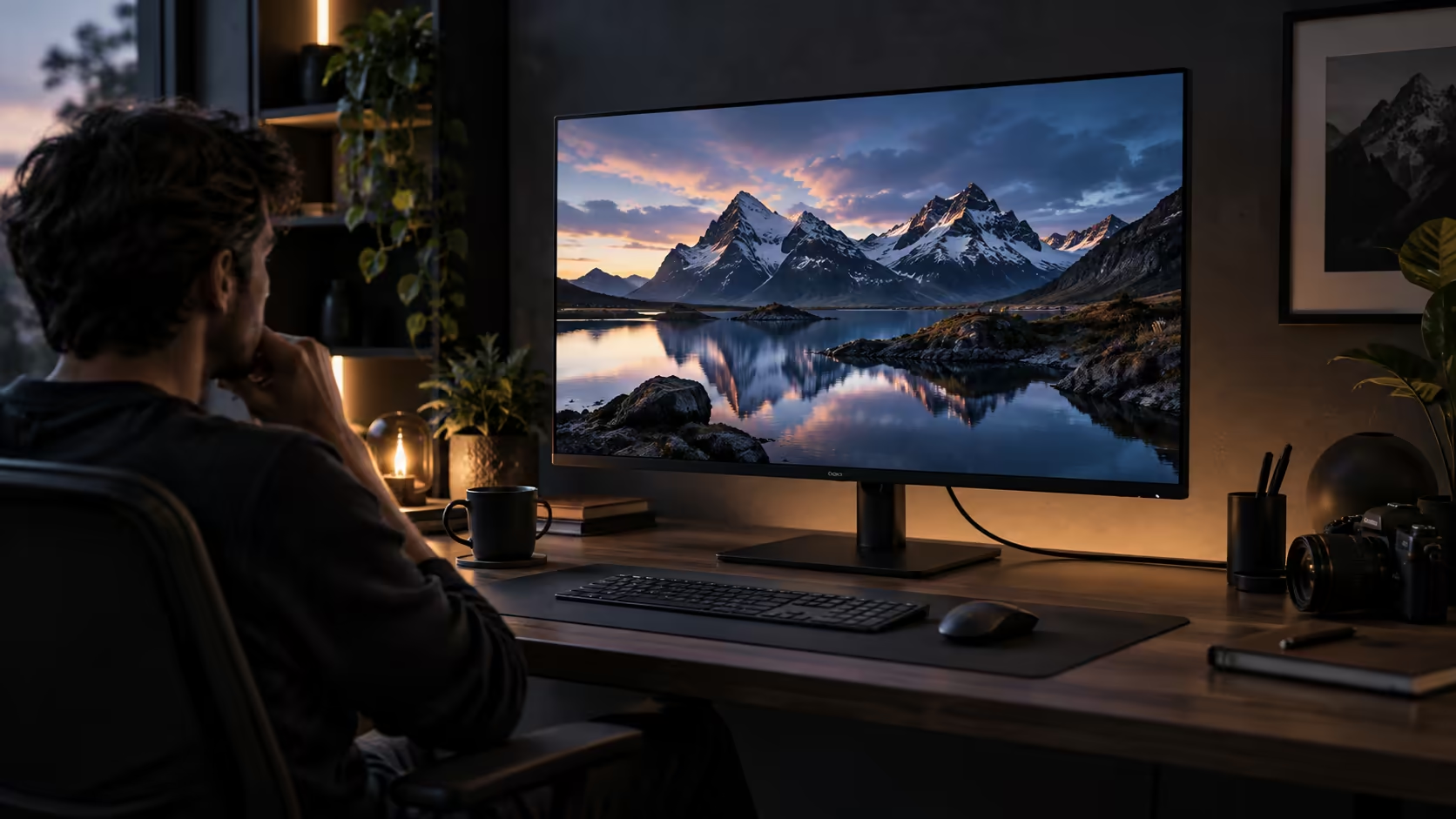
An office monitor fixed permanently at 4K 60Hz for spreadsheet and document work, with no plan to ever attach a console or a 120Hz panel to that same port, is a genuinely reasonable place to stop at HDMI 2.0. Check the specification on our monitor range for the panel in question; if 60Hz is its ceiling as well as your usage, the extra bandwidth in a 2.1 cable has nowhere to go on either end of the connection.
Frequently Asked Questions
Will an HDMI 2.1 cable make text look sharper on a 4K 60Hz monitor?
No. Text sharpness comes from resolution and the panel itself, both of which are identical regardless of which HDMI generation the cable is rated for.
Does a 48Gbps cable cost much more than a basic HDMI cable?
Not by much at short lengths, which is part of why buying ahead of a future upgrade is often worth the small difference in price.
If my monitor is limited to 60Hz, is there any reason to buy a 2.1 cable?
Only if you expect to replace the monitor, add a console, or otherwise reuse the same cable on a higher-refresh device later. Otherwise the extra rating goes unused.
Can I tell from the box alone whether a monitor supports higher refresh rates in future?
No. Refresh rate support is fixed by the panel itself and does not change with a firmware update, so check the specific model's listed maximum rather than assuming a newer purchase will unlock more.
Ready to decide if the upgrade is worth it for your screen?
Check whether your monitor's own ceiling is 60Hz permanently before spending on bandwidth it cannot use.