


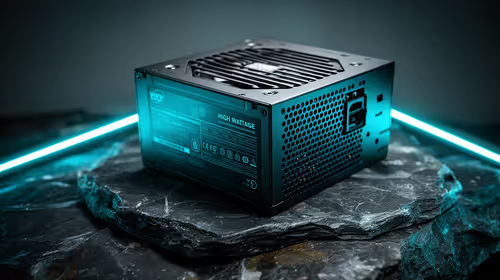
550W PSU Planning for RTX 5080 Super Builds in SA
550W for RTX 5080 Super needs a full-build check, not a simple yes. Review GPU guidance, CPU draw, transient load, connectors, PSU quality, and upgrade plans before deciding.
Read moreNVIDIA Ampere can be a smart choice when the complete GPU matches the professional workload. The R12,099 A1000 applies that architecture to 2304 CUDA cores, backed by 8GB GDDR6 on a 128-bit memory interface; relevant tests should confirm fit.
An architecture does not become unsuitable merely because a newer generation exists. It becomes a poor choice when the complete card no longer meets the software, project or budget requirement. NVIDIA Ampere architecture can remain sensible for professional work when a tested GPU configuration clears the tasks that matter.
Ampere remains a practical professional choice in the A1000 because it delivers 2,304 CUDA, 18 RT and 72 Tensor cores within a low-profile 50W design.
Ampere remains sensible when the complete card clears current software, project capacity, measured task and budget conditions. The RTX A1000 costs R12,099. Compute comes from 2304 CUDA cores, while the memory system combines 8GB GDDR6 with a 128-bit interface. Architecture age alone cannot establish value.
Architecture identifies the GPU design generation, not a standalone product. Memory capacity, interface, compute resources and the rest of the card still determine what the buyer is evaluating. A newer name does not automatically fix a mismatch in project capacity or application support.
On the A1000, Ampere identifies architecture, 2304 is the CUDA count, 8GB is GDDR6 capacity and 128-bit is interface width. Keep these figures together rather than comparing the architecture label with another card's isolated specification.
Use the current application version and a representative project. Confirm GPU support, selected device and the accelerated feature. Record completion time, stability and output correctness while holding settings constant.
This answers whether the Ampere card works for today's task. An older review, another program or a different project cannot replace that evidence. If the software requirement changes later, repeat the test rather than assuming the original conclusion lasts indefinitely.
The PNY A1000 option costs R12,099. Estimate how long its 8GB capacity and supported compute path can serve likely projects, then compare that useful period with alternatives in Evetech's professional GPU category.
Avoid projecting growth without evidence. A team whose files are stable may value a different balance from one moving to larger scenes or higher-resolution media. The smarter choice is the configuration that clears expected work without starving other components of budget.
Ampere may appear in conversations about AI, but a model or feature has specific framework, memory and device requirements. Check those directly. If the workflow needs wider platform resources, review Evetech's AI PC choices instead of assuming a graphics-card generation answers everything.
Document the reason for the decision: software, project, measured result and cost. That record makes "still smart" a testable conclusion rather than a debate about launch order.
List the current application versions, required features and projects, then note which changes the team genuinely expects during ownership. A newer architecture may offer capabilities that remain unused, while an Ampere card may continue serving stable work.
Recheck software guidance before major updates. If support or project requirements change, the original result should be reviewed rather than defended. This makes useful life a maintained technical judgement.
Set a future review trigger, such as a larger scene, a new model requirement or an application change. The trigger is more actionable than an arbitrary replacement year and keeps the R12,099 decision tied to work.
Check the cost of workflow change as well as hardware. Moving to a new card or platform may require retesting applications, updating deployment procedures or adjusting project settings. An Ampere option that already fits the current environment can have operational value beyond its core count.
Do not assume that continuity always wins. If expected projects exceed 8GB or software support moves elsewhere, the evidence changes. Keep integration effort as one decision row rather than using it to defend outdated hardware indefinitely.
The implementation also pairs 8GB GDDR6 with 192GB/sec bandwidth. Four Mini DisplayPort 1.4a connectors accommodate as many as four screens at 5K resolution. Those present-day features matter more than the age of the architecture label. If supported CAD, engineering, 3D or content workloads fit the memory and meet their completion targets, this Ampere card still has a clear workstation role.
It can be, when a complete Ampere card supports the application and meets project capacity, performance and budget requirements in testing.
The PNY RTX A1000 provides the example, combining 2304 CUDA cores with 8GB GDDR6 and a 128-bit interface.
Use current software, normal projects and comparable prices. Generation age alone does not establish whether the card is suitable.
The Ampere workstation card costs R12,099. Judge that amount against measured task fit and expected useful life.
Ready to judge Ampere by present-day work instead of generation order? Compare Evetech workstation graphics cards with current software support, real project evidence and the R12,099 reference in view.
It can be, when a complete Ampere card supports the application and meets project capacity, performance and budget requirements in testing.
The PNY RTX A1000 provides the example, combining 2304 CUDA cores with 8GB GDDR6 and a 128-bit interface.
Use current software, normal projects and comparable prices. Generation age alone does not establish whether the card is suitable.
The Ampere workstation card costs R12,099. Judge that amount against measured task fit and expected useful life.
550W for RTX 5080 Super needs a full-build check, not a simple yes. Review GPU guidance, CPU draw, transient load, connectors, PSU quality, and upgrade plans before deciding.
Read more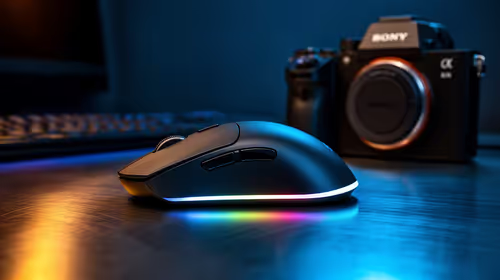
8000Hz polling is overrated for most SA gamers because gains can be tiny next to battery drain and monitor limits. Mbombela players should weigh mouse feel, game support, and system stability before chasing the number.
Read more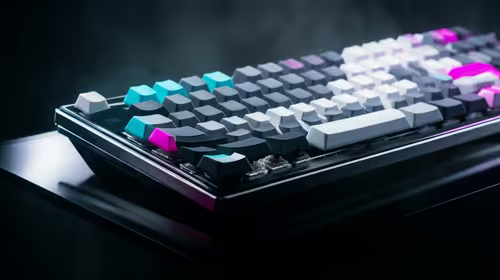
Magnetic switches are taking over SA gaming keyboards because actuation can be tuned. For Sandton gamers, rapid trigger, reset control, and profile depth can help, but layout, key feel, and software quality still matter.
Read more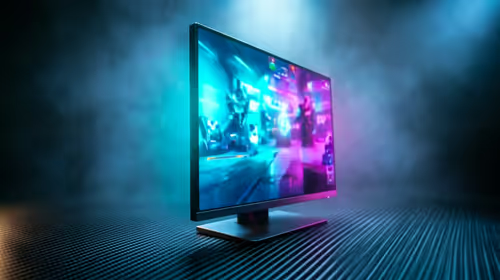
Polokwane oled monitor value questions need cautious SA context because pricing can move with availability, exchange rates, specs, and warranty support. Treat the trend as a planning signal, not a fixed price promise.
Read more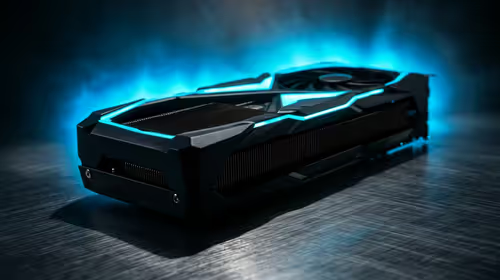
Arc B580 budget builds for Midrand gamers can shift with exchange rates, supply, specs, and model tier. Treat the title as a buying prompt, then compare SA warranty, timing, and build priorities.
Read more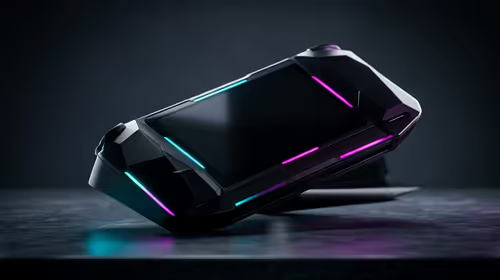
ROG Ally X may beat the LCD Steam Deck for SA gamers who value stronger handheld performance, more memory, and Windows flexibility. Compare battery life, controls, game libraries, and Polokwane support needs before deciding.
Read more
Minisforum's M2 Pro pairs Core Ultra X7, Arc B390 graphics and 32GB onboard memory in 1.8 litres. SA buyers should weigh its fixed memory and $1,439 launch offer against local mini PCs.

Lenovo says Legion Go failures linked to BIOS N3CN42WW are not user error. Affected SA owners should stop retrying the update, preserve proof and open a support case.

Smart monitors can add apps and convenience, but they also add privacy settings and unwanted-software risk. SA buyers should audit the operating system before paying for extras.

A fake 113GB GTA VI ISO reportedly used empty padding around a small malware payload. SA gamers should delete unofficial builds, keep Windows security active and wait for official channels.
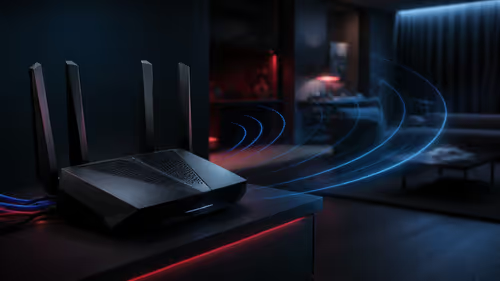
ASUS calls the ROG GT-BN98 the first Wi-Fi 8 gaming router. SA buyers should fix coverage and client limits before paying for a future wireless standard.
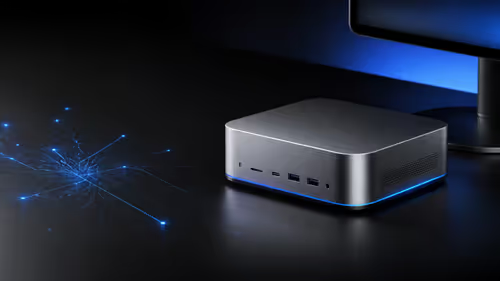
Apple's M6 Mac mini adds faster AI, graphics and networking in the same compact format. SA buyers should wait for a rand listing before comparing value.
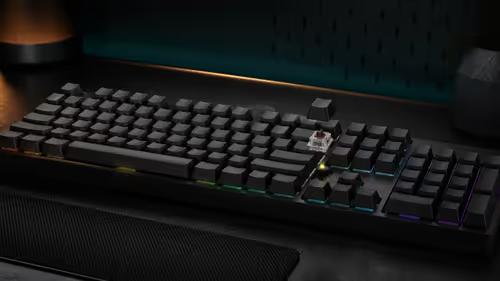
The Vulcan II XP adds hot-swappable switches, sound damping and gaming controls to a full-size wired board. SA buyers should compare feel before features.

Microsoft says Windows on Arm now has over 7,000 verified apps and games. SA buyers should still check each driver, game and work tool before switching.

Xbox Insiders can test disc-to-digital from 31 August 2026. Supported Xbox One and Series X discs gain a digital entitlement, but older discs, regions and title coverage still need exact checks.
ViewSonic's XG2738 pairs QHD QD-OLED with 240Hz and automatic panel care. SA buyers should compare warranty, brightness, ports and burn-in protection against today's R9,999-plus OLED shelf.

NVIDIA's final Windows 10 Game Ready driver is due in October 2026. SA gamers can keep using their GPU, but new game optimisations move on while critical security fixes continue quarterly.

JBL's new Quantum 520, 520X and 120 headsets cover wireless, Xbox-certified and wired use. SA buyers should compare connection, comfort and microphone needs before paying for a new badge.