


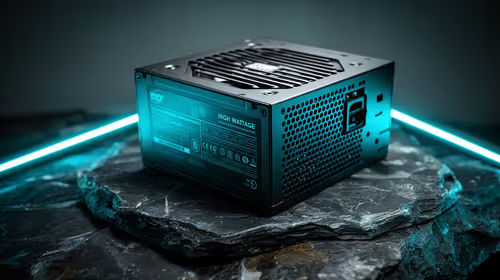
550W PSU Planning for RTX 5080 Super Builds in SA
550W for RTX 5080 Super needs a full-build check, not a simple yes. Review GPU guidance, CPU draw, transient load, connectors, PSU quality, and upgrade plans before deciding.
Read moreA cooling pad typically shaves a few degrees off intake temperatures, but it cannot fix dust-clogged internal fans or degraded thermal paste causing the real overheating. Evetech stocks cooling pads as a genuine supplement, not a substitute for internal maintenance.
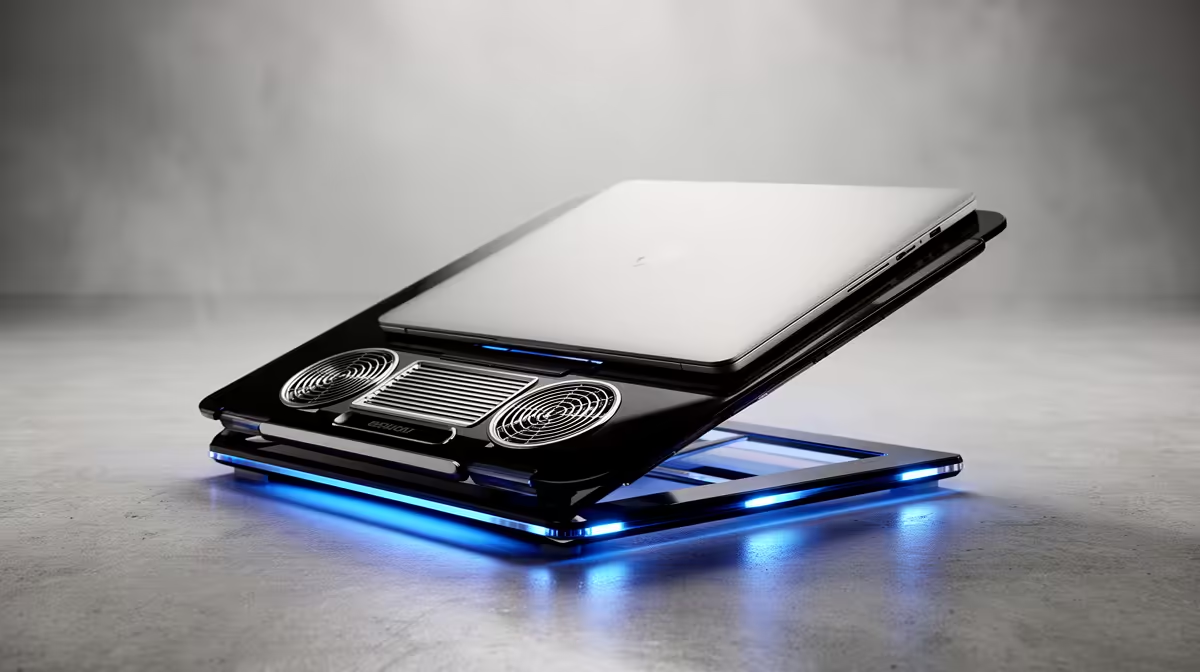
A cooling pad can give a gaming laptop cooler intake air and more breathing room under its base. That may reduce temperature or fan speed when the laptop draws air from below. It cannot clear a dust-packed heatsink, restore a failed fan or renew dried thermal material inside the chassis.
Lift the laptop on a firm surface and test the same game before buying anything. If elevation helps, a pad whose fans line up with the intake can add airflow. Expect the result to vary by chassis; measure temperature, clock speed and noise rather than relying on a promised number of degrees.
Evetech's popular laptop selection makes intake layouts and chassis sizes easier to compare. Its gaming notebook specials help match a pad to the machine's footprint without blocking rear or side exhausts.
Put the laptop on a desk, run a repeatable game scene and record CPU temperature, GPU temperature, clocks and fan sound after warm-up. Raise the rear edge on a stable stand and repeat.
If clocks improve or fans quieten, the base intake was restricted. A cooling pad may help. If nothing changes while temperatures remain high, the internal cooling path or power profile deserves attention.
A laptop that takes air through the keyboard or sides can gain little from fans blowing at a sealed bottom panel. Study the vents before choosing fan size or position.
A pad can separate the intake from a hot desk, bed or lap and feed it room-temperature air. Larger slow fans often make a softer sound than several tiny fast fans, though the best match depends on vent placement.
It can also improve ergonomics by raising the screen. Make sure the angle does not strain your wrists when using the built-in keyboard. An external keyboard solves that for a permanent desk setup.
USB power draw is small beside a gaming laptop's load, but the fan still consumes a port. A pass-through connector or powered hub may matter when ports are scarce.
Dust felted across an internal heatsink blocks air after it enters the chassis. A pad may force a little more through, but the obstruction remains. Grinding, clicking or a fan stuck at zero needs service.
Old thermal material, poor heatsink contact and a bent vapour chamber also sit beyond the pad. If temperatures rose from a known clean baseline, investigate the change.
A cooling pad cannot make an unrestricted processor ignore its designed temperature and power controls. Some laptops run near a temperature target while using extra cooling to hold higher clocks.
Keep room temperature, performance mode, game scene and fan profile the same. Warm the laptop for at least fifteen minutes. Compare sustained clocks and frame time as well as the highest temperature.
A two-degree change with quieter internal fans may be useful. A larger temperature drop that changes no clock, frame or noise can still be harmless, but decide whether it earns the desk space.
There is no dependable universal figure. Intake layout, room temperature, internal fan control and game load decide the result.
It can help restricted intake airflow. It cannot repair dust blockage, failed fans, heatsink contact or degraded internal thermal material.
Yes. Air should reach the laptop's intake vents without fighting the machine's exhaust direction.
Test the laptop raised on a firm desk, then choose a pad only when the intake layout and measured warm result show that more base airflow helps.
There is no dependable universal figure. Intake layout, room temperature, internal fan control and game load decide the result.
It can help restricted intake airflow. It cannot repair dust blockage, failed fans, heatsink contact or degraded internal thermal material.
Yes. Air should reach the laptop's intake vents without fighting the machine's exhaust direction. {{PRODUCTS: { facets: { query: "laptop" }, limit: 12, title: "Laptop Cooling", style: "4" } }}
550W for RTX 5080 Super needs a full-build check, not a simple yes. Review GPU guidance, CPU draw, transient load, connectors, PSU quality, and upgrade plans before deciding.
Read more
8000Hz polling is overrated for most SA gamers because gains can be tiny next to battery drain and monitor limits. Mbombela players should weigh mouse feel, game support, and system stability before chasing the number.
Read more
Magnetic switches are taking over SA gaming keyboards because actuation can be tuned. For Sandton gamers, rapid trigger, reset control, and profile depth can help, but layout, key feel, and software quality still matter.
Read more
Polokwane oled monitor value questions need cautious SA context because pricing can move with availability, exchange rates, specs, and warranty support. Treat the trend as a planning signal, not a fixed price promise.
Read more
Arc B580 budget builds for Midrand gamers can shift with exchange rates, supply, specs, and model tier. Treat the title as a buying prompt, then compare SA warranty, timing, and build priorities.
Read more
ROG Ally X may beat the LCD Steam Deck for SA gamers who value stronger handheld performance, more memory, and Windows flexibility. Compare battery life, controls, game libraries, and Polokwane support needs before deciding.
Read more
Minisforum's M2 Pro pairs Core Ultra X7, Arc B390 graphics and 32GB onboard memory in 1.8 litres. SA buyers should weigh its fixed memory and $1,439 launch offer against local mini PCs.

Lenovo says Legion Go failures linked to BIOS N3CN42WW are not user error. Affected SA owners should stop retrying the update, preserve proof and open a support case.

Smart monitors can add apps and convenience, but they also add privacy settings and unwanted-software risk. SA buyers should audit the operating system before paying for extras.

A fake 113GB GTA VI ISO reportedly used empty padding around a small malware payload. SA gamers should delete unofficial builds, keep Windows security active and wait for official channels.
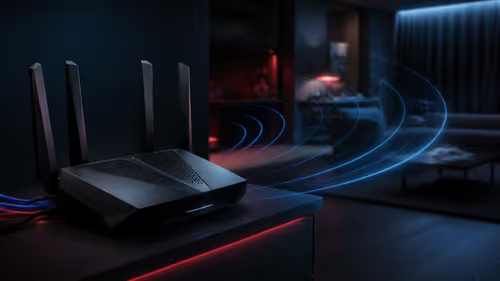
ASUS calls the ROG GT-BN98 the first Wi-Fi 8 gaming router. SA buyers should fix coverage and client limits before paying for a future wireless standard.
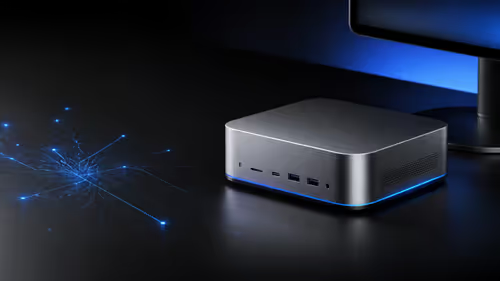
Apple's M6 Mac mini adds faster AI, graphics and networking in the same compact format. SA buyers should wait for a rand listing before comparing value.
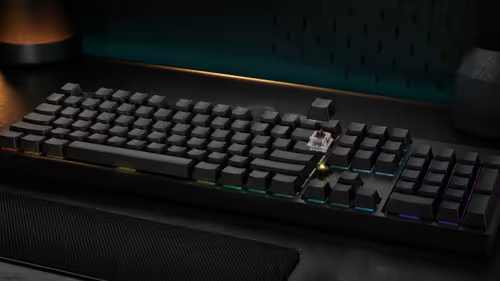
The Vulcan II XP adds hot-swappable switches, sound damping and gaming controls to a full-size wired board. SA buyers should compare feel before features.

Microsoft says Windows on Arm now has over 7,000 verified apps and games. SA buyers should still check each driver, game and work tool before switching.

Xbox Insiders can test disc-to-digital from 31 August 2026. Supported Xbox One and Series X discs gain a digital entitlement, but older discs, regions and title coverage still need exact checks.

ViewSonic's XG2738 pairs QHD QD-OLED with 240Hz and automatic panel care. SA buyers should compare warranty, brightness, ports and burn-in protection against today's R9,999-plus OLED shelf.

NVIDIA's final Windows 10 Game Ready driver is due in October 2026. SA gamers can keep using their GPU, but new game optimisations move on while critical security fixes continue quarterly.

JBL's new Quantum 520, 520X and 120 headsets cover wireless, Xbox-certified and wired use. SA buyers should compare connection, comfort and microphone needs before paying for a new badge.