Quick Answer
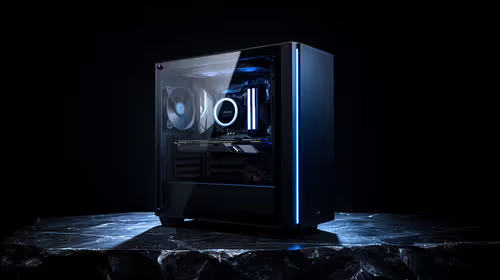
For a laptop-to-desktop upgrade, case fans matter the moment you build or buy a tower - unlike a laptop, a desktop relies on case airflow you control. Budget R150 to R400 per quality 120mm or 140mm fan at Evetech and run at least two intake plus one exhaust. Good airflow keeps a gaming CPU and GPU cooler and quieter than a laptop ever managed.
Why Fans Suddenly Matter On Desktop
A laptop hid its cooling - you never chose a fan. A desktop is the opposite: case airflow is yours to set up, and it directly affects temperatures, boost clocks and noise. A poorly ventilated case lets a gaming GPU heat-soak and throttle, losing fps; good airflow holds steady clocks.
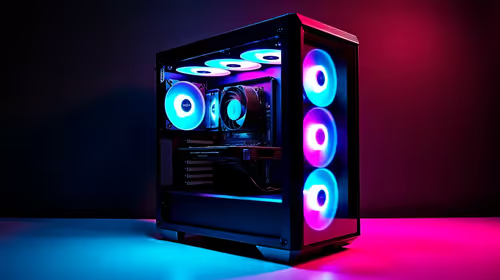
The basic recipe is front and bottom intakes feeding cool air across the GPU and CPU, with a rear or top exhaust pulling hot air out. Two intakes and one exhaust is a sensible starting point for most mid-towers.
When Case Fans Matter Most
They matter most for a gaming or content build with a hot GPU and CPU. For a light office desktop, the stock fans are often enough. As you add a discrete GPU or a higher-wattage CPU, extra airflow becomes the cheapest way to protect performance.
A 140mm fan moves more air at lower RPM than a 120mm, so it runs quieter for the same cooling - worth it where the case supports it.
Spend Bands
Basic 120mm fans run R150 to R250 each. Quiet, high-airflow 140mm PWM fans sit at R300 to R500. A three-fan kit for a fresh build is R600 to R1,200.
FAQ
How many case fans does a desktop need?
At least three for a gaming build - two intakes and one exhaust. That creates front-to-back airflow over the GPU and CPU. Light office desktops can run on stock cooling.
Are 140mm fans better than 120mm?
For the same airflow, 140mm fans spin slower and run quieter. If your case takes 140mm mounts, they are the better choice for a cool, quiet gaming build.
Do better fans really improve gaming performance?
Indirectly, yes. Good airflow stops a GPU and CPU heat-soaking and throttling, which holds boost clocks and protects fps in long sessions - something a laptop's fixed cooling could not.
two intakes and one exhaust with PWM fans, then tune a gentle fan curve in BIOS so the case ramps up only under gaming load and stays quiet at idle.