


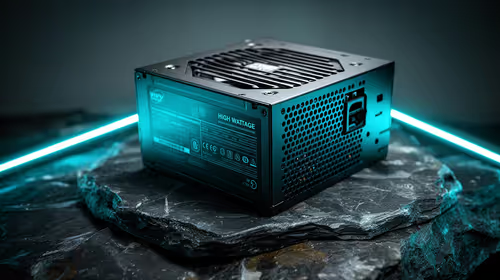
550W PSU Planning for RTX 5080 Super Builds in SA
550W for RTX 5080 Super needs a full-build check, not a simple yes. Review GPU guidance, CPU draw, transient load, connectors, PSU quality, and upgrade plans before deciding.
Read moreChoose large-format printing when repeated models need the additional width, depth or height without forced splitting. The R9,399 Neptune 4 Max offers 420 x 420 x 480mm of build volume as a concrete comparison point.
Extra build capacity matters only when real models or batch layouts use it. A large-format vs standard 3D printer decision should begin with measured projects, planned orientation and the cost of splitting work that does not fit.
Choose the Neptune 4 Max when projects genuinely use its 420x420x480mm capacity for a large single model or several smaller parts in one batch.
Choose a large-format machine when recurring parts need additional width, depth or height, or when a wide bed improves an established batch layout. The R9,399 Neptune 4 Max offers a 420 x 420 x 480mm printable envelope for that comparison. Select a standard-size printer when most jobs fit comfortably and the occasional oversized model can be divided without harming its function or finish.
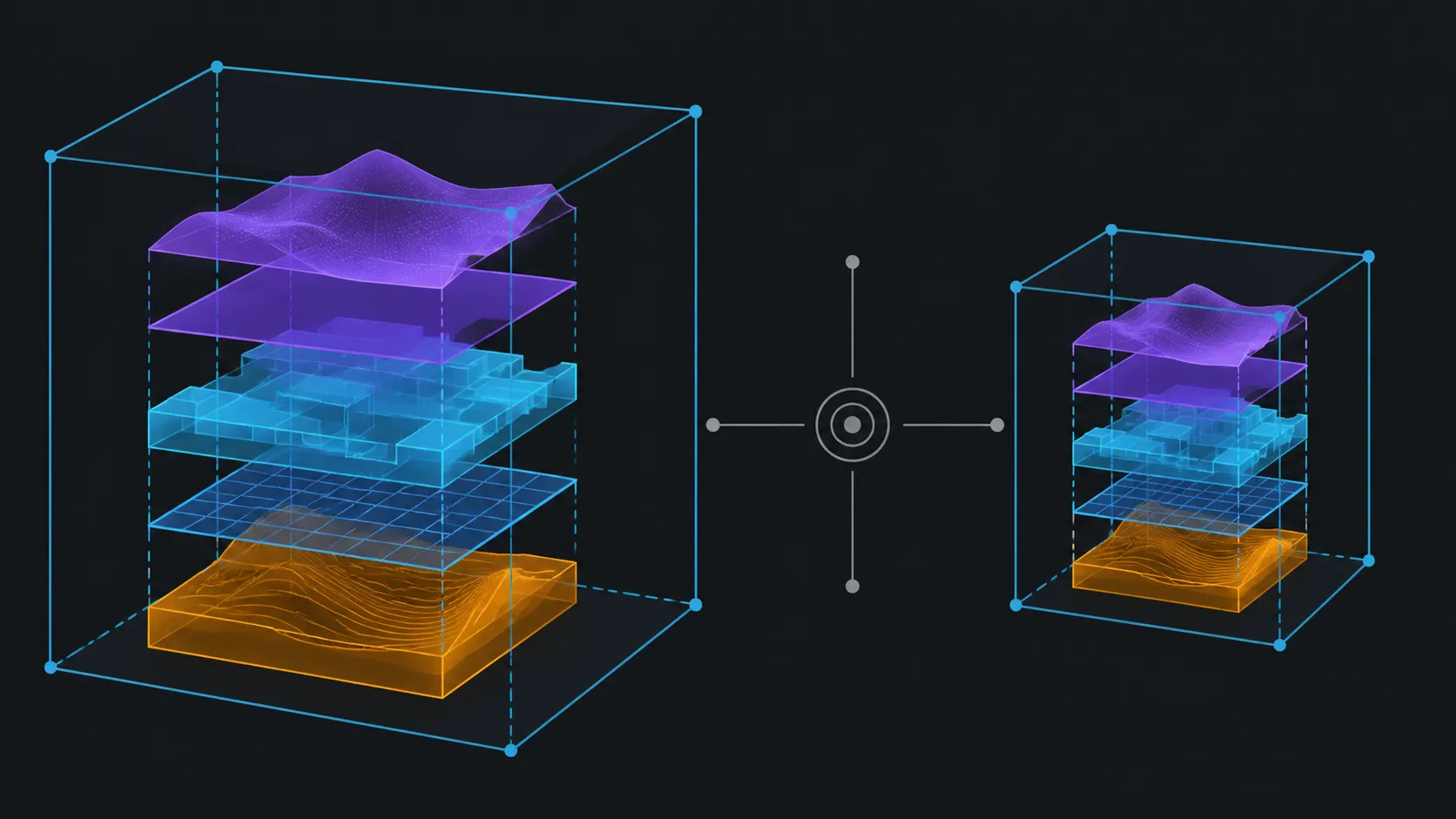
List the largest completed parts from the past few months and record their prepared dimensions, not only the original model size. Orientation and support structures can change the space a job consumes. Mark which axis blocked each failed fit.
Then add credible near-term work rather than hypothetical extremes. A machine should not be selected around a huge object that may never be printed. The large 3D printer collection at Evetech becomes easier to evaluate when each candidate is checked against the same dimension table.
Dividing a model can reduce the required envelope, but it introduces joint design, alignment, assembly and finishing. For a cosmetic prop, a seam may be acceptable after planned finishing. A functional prototype may need the join placed away from loads or mating features.
Count the actual steps rather than assuming one-piece output is always better. If splitting is quick and improves orientation, a smaller printer may remain sensible. If joins repeatedly consume labour or weaken the intended design, additional build room earns value.
A broader bed can hold more copies of a small part, although quantity alone does not establish throughput. A failed batch may affect several items at once, and spacing, motion and material behaviour still need testing.
Arrange the routine part in the slicer and compare one, several and full-bed layouts. Measure completed usable pieces per job, not the number initially placed. The Neptune's Klipper high-speed motherboard allows operation up to 500mm/s, but that figure does not predict batch quality or total completion time.
Explore the general 3D printer range on Evetech after deciding whether single-piece scale or repeated layout is the main capacity need.
Build volume is internal printable space, not exterior size. Before choosing any large-format printer, obtain its full dimensions and allow for moving components, spool placement, cable routes, plate handling and operator access. The 420 x 420 x 480mm figure cannot be used as the Neptune 4 Max footprint.
Material planning belongs alongside size. The hot end reaches 300C; compatibility still needs complete evidence for the chosen filament and workspace. Browse Evetech's printing filament options with exact material requirements already noted.
The right size leaves useful capacity without creating an awkward room layout or a feature paid for but rarely exercised. Before paying for extra height, rotate one tall project and check whether stability, support placement or visible finish makes that orientation acceptable. A fit achieved through an unsuitable pose is not useful capacity. Keep the original design constraint beside the slicer result.
The larger format also carries workflow implications: an 11x11 levelling mesh, a dual-sided plate and direct-drive extrusion support the surface and material path, while failed jobs can consume more time and filament. A standard printer may be easier to place for smaller work. Measure the biggest recurring object and batch layout before paying R9,399 for volume that remains empty.
It earns value when regular parts exceed a smaller envelope, avoid costly joins or create a proven batch arrangement that improves the workflow.
The printable limit is 420mm wide, 420mm deep and 480mm high. Model orientation must remain inside all three boundaries.
Usually not by themselves. Compare their frequency and splitting burden against the daily cost of housing and operating a larger machine.
No. It describes printable capacity. Obtain separate chassis, motion-clearance and access measurements before planning a room position.
Test a real repeated-part layout and count acceptable finished units. Do not assume a larger quantity placed automatically produces better throughput.
The Neptune 4 Max has a 300C nozzle, but filament suitability also depends on requirements beyond hot-end temperature.
Ready to choose printer size from measured projects? Compare large-format machines and filament at Evetech after mapping the parts, joins and room clearances that define useful capacity.
It earns value when regular parts exceed a smaller envelope, avoid costly joins or create a proven batch arrangement that improves the workflow.
The printable limit is 420mm wide, 420mm deep and 480mm high. Model orientation must remain inside all three boundaries.
Usually not by themselves. Compare their frequency and splitting burden against the daily cost of housing and operating a larger machine.
No. It describes printable capacity. Obtain separate chassis, motion-clearance and access measurements before planning a room position.
Test a real repeated-part layout and count acceptable finished units. Do not assume a larger quantity placed automatically produces better throughput.
The Neptune 4 Max has a 300C nozzle, but filament suitability also depends on requirements beyond hot-end temperature.
550W for RTX 5080 Super needs a full-build check, not a simple yes. Review GPU guidance, CPU draw, transient load, connectors, PSU quality, and upgrade plans before deciding.
Read more
8000Hz polling is overrated for most SA gamers because gains can be tiny next to battery drain and monitor limits. Mbombela players should weigh mouse feel, game support, and system stability before chasing the number.
Read more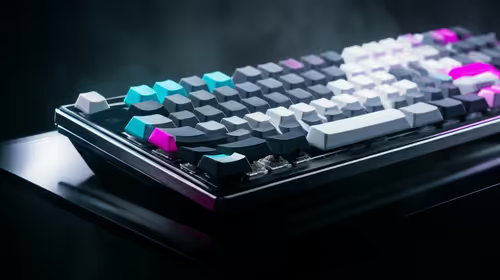
Magnetic switches are taking over SA gaming keyboards because actuation can be tuned. For Sandton gamers, rapid trigger, reset control, and profile depth can help, but layout, key feel, and software quality still matter.
Read more
Polokwane oled monitor value questions need cautious SA context because pricing can move with availability, exchange rates, specs, and warranty support. Treat the trend as a planning signal, not a fixed price promise.
Read more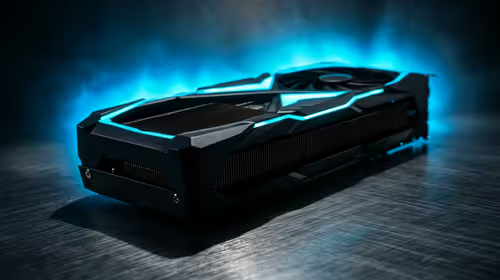
Arc B580 budget builds for Midrand gamers can shift with exchange rates, supply, specs, and model tier. Treat the title as a buying prompt, then compare SA warranty, timing, and build priorities.
Read more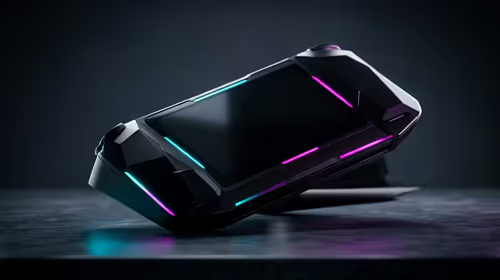
ROG Ally X may beat the LCD Steam Deck for SA gamers who value stronger handheld performance, more memory, and Windows flexibility. Compare battery life, controls, game libraries, and Polokwane support needs before deciding.
Read more
Minisforum's M2 Pro pairs Core Ultra X7, Arc B390 graphics and 32GB onboard memory in 1.8 litres. SA buyers should weigh its fixed memory and $1,439 launch offer against local mini PCs.

Lenovo says Legion Go failures linked to BIOS N3CN42WW are not user error. Affected SA owners should stop retrying the update, preserve proof and open a support case.

Smart monitors can add apps and convenience, but they also add privacy settings and unwanted-software risk. SA buyers should audit the operating system before paying for extras.

A fake 113GB GTA VI ISO reportedly used empty padding around a small malware payload. SA gamers should delete unofficial builds, keep Windows security active and wait for official channels.
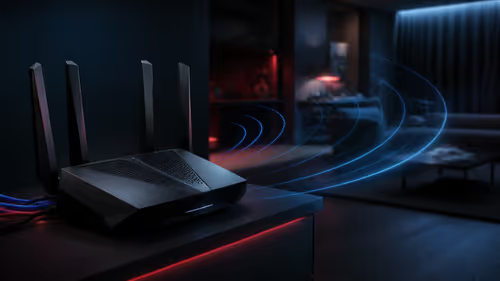
ASUS calls the ROG GT-BN98 the first Wi-Fi 8 gaming router. SA buyers should fix coverage and client limits before paying for a future wireless standard.
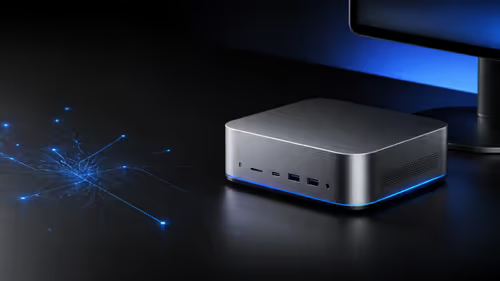
Apple's M6 Mac mini adds faster AI, graphics and networking in the same compact format. SA buyers should wait for a rand listing before comparing value.
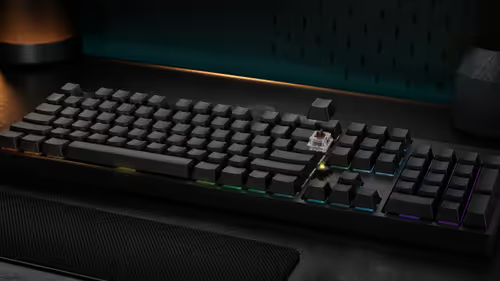
The Vulcan II XP adds hot-swappable switches, sound damping and gaming controls to a full-size wired board. SA buyers should compare feel before features.

Microsoft says Windows on Arm now has over 7,000 verified apps and games. SA buyers should still check each driver, game and work tool before switching.

Xbox Insiders can test disc-to-digital from 31 August 2026. Supported Xbox One and Series X discs gain a digital entitlement, but older discs, regions and title coverage still need exact checks.

ViewSonic's XG2738 pairs QHD QD-OLED with 240Hz and automatic panel care. SA buyers should compare warranty, brightness, ports and burn-in protection against today's R9,999-plus OLED shelf.

NVIDIA's final Windows 10 Game Ready driver is due in October 2026. SA gamers can keep using their GPU, but new game optimisations move on while critical security fixes continue quarterly.

JBL's new Quantum 520, 520X and 120 headsets cover wireless, Xbox-certified and wired use. SA buyers should compare connection, comfort and microphone needs before paying for a new badge.