A print that peels apart along its horizontal seams, splitting into a stack of loose sheets you can lever open with a fingernail, is the clearest sign your hotend is running too cold for the filament you loaded. Layer delamination happens when each fresh layer never gets hot enough to fuse into the one below it, so the bond stays mechanical instead of molecular. The fix is almost always two-part: more heat, and drier plastic.
Quick Answer
Raise your hotend temperature by 5 to 10 degrees and run the filament through a dryer before reprinting. Wet PLA and nylon turn trapped moisture into steam at the nozzle, which blows tiny voids into the weld between layers. Hotter plastic plus dry plastic restores the inter-layer grip that holds a part together.
Why Layers Pull Apart in the First Place
A solid print depends on each new bead of plastic briefly remelting the surface beneath it so the two flow into one continuous mass. When the nozzle temperature sits at the cold end of a material's range, that remelt never fully happens. The bead cools and stiffens before it can knit, leaving a weak seam that cracks under the slightest stress, often along the tallest, thinnest walls first.
Two things push a printer into that cold zone. The obvious one is a temperature setting copied from a generic profile that does not match your specific spool. The sneakier one is moisture. Hygroscopic filaments draw water out of the air, and Cape Town and coastal Durban humidity does this quickly. At the nozzle that water flashes to steam, popping the molten plastic and stopping clean layers from forming.
The Two-Step Fix
Start with heat. Bump the hotend up 5 degrees, print a short test tower, and check whether the seams still split. If they do, add another 5. Most PLA prints cleanly between 200 and 215 degrees, while PETG and ABS usually want the upper third of their stated band for strong bonding. Go in small increments so you do not introduce stringing or sag while chasing adhesion.
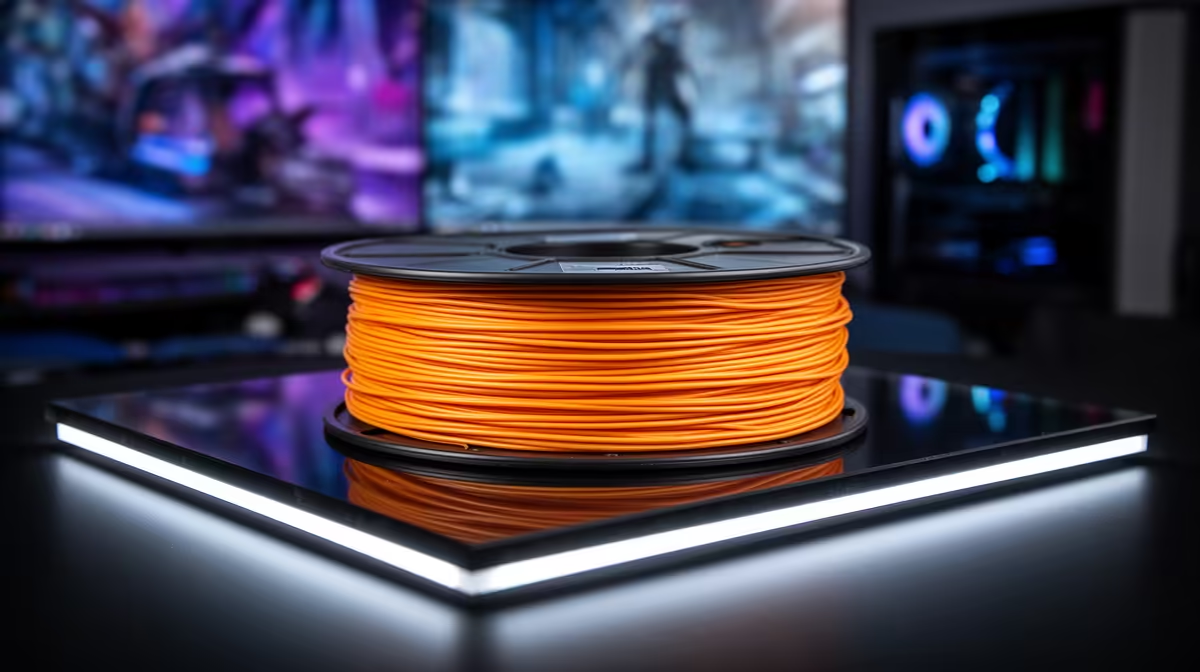
Then tackle the moisture. A filament dryer or a low oven cycle at around 50 to 60 degrees for several hours drives the water back out of the spool. Once dry, store the spool in a sealed box with desiccant so it does not soak the humidity straight back up. You can browse the broader maker tooling and spares over on the accessories best sellers shelf if you need a dryer or storage gear, and the current crop of 3D printing machines ship with more consistent hotends that hold temperature better through a long job.
A Few Other Levers
If heat and drying do not fully solve it, slow the print down. Faster moves cool each layer before the next arrives, and dropping speed buys the bond more time. Trim the part cooling fan on the lower layers too, since aggressive cooling freezes the seam early. On tall slender prints, those three adjustments together usually close the gap.
Frequently Asked Questions
How do I know whether it is temperature or moisture causing my split layers?
Wet filament usually crackles or pops at the nozzle and may leave a rough, foggy surface, while a pure temperature problem gives clean but weak layers that snap apart neatly. If you hear sizzling, dry the spool first.
How much should I raise the hotend temperature?
Start with a 5 to 10 degree bump and reprint a small test. Add another 5 degrees only if the seams still separate, so you do not trade adhesion for stringing.
How long does drying filament actually take?
A dedicated dryer or low oven at roughly 50 to 60 degrees needs several hours for most materials, and nylon can want longer. Reseal the spool with desiccant straight afterwards.
Does print speed affect layer bonding?
Yes. Slower printing keeps each layer warm enough to fuse with the next, so reducing speed by 20 to 30 percent often firms up a part that was delaminating at full pace.