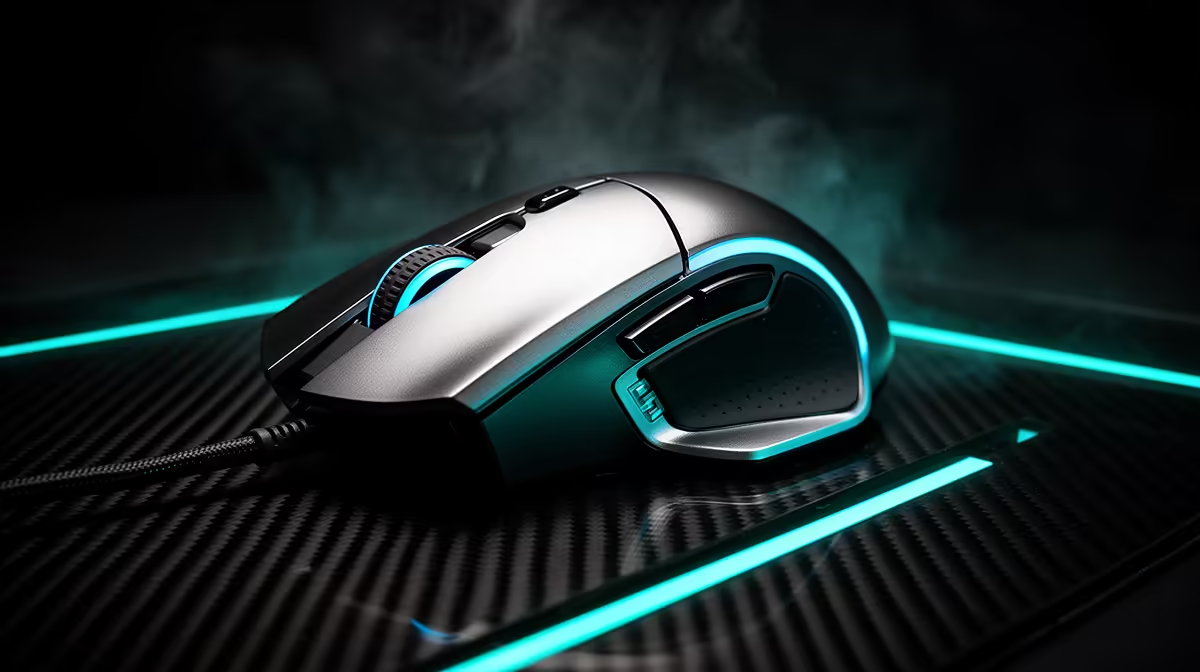
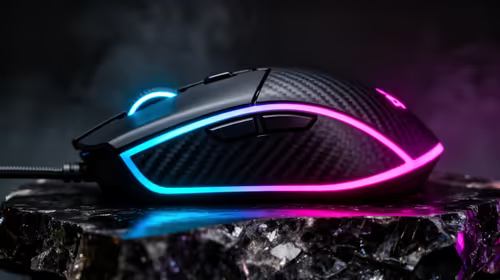
Mouse sensor tiers matter less than they did when budget models lost tracking during a fast swipe. A competent modern gaming sensor can already deliver clean, predictable motion at ordinary competitive settings. Flagship parts add headroom and higher report options.
Quick Answer
Judge a mouse by flawless tracking at your DPI, stable polling, low click and motion delay, lift-off behaviour and firmware. A flagship sensor can support extreme speed and resolution. A well-tuned mid-range sensor is enough for most players.
Compare full models in the gaming mouse deals, then use the mouse best sellers to shortlist shapes and weights. The sensor tier cannot rescue an uncomfortable shell.
Budget Sensors
A budget gaming sensor may cap DPI, polling rate or maximum tracking speed. That can be fine for a normal office-and-game setup when it tracks without acceleration, angle snapping or spin-outs at your hand speed.
Check whether the product saves DPI and button settings onboard. Poor software and an unstable wireless implementation can matter more than the silicon name. Avoid office mice that enter aggressive power-saving states during play.
Mid-Range Sensors
This is the value sweet spot. Many mid-range gaming mice provide clean tracking well beyond the speed a typical player can sustain, plus sensible lift-off and 1,000Hz polling.
Some support higher report rates with a compatible receiver. Treat that as an extra, not the definition of accuracy. The step from a sound 1,000Hz implementation to a higher rate can be smaller than a change in shape, skates or mousepad.
Flagship Sensors
Top sensors offer high maximum speed, high DPI, fine calibration features and support for 4,000Hz or 8,000Hz designs. Competitive players with a high-refresh display and stable frame rate may value the reduced report interval.
The mouse maker still chooses firmware, smoothing, power modes and wireless behaviour. Read measurements on the final product rather than assuming every mouse sharing a sensor performs alike.
Test the Setting You Use
Set your normal DPI and polling rate. Draw slow lines, make fast swipes and lift to reposition. Watch for skipped motion, spin-outs or a cursor jump on landing. Test over the mousepad you own.
Keep DPI high enough for clean desktop use and set game sensitivity around it. Very high headline DPI is rarely needed for hand movement. Consistency across the useful range carries more value.
FAQ
Do pro players need a flagship mouse sensor?
They need dependable tracking and low latency. A flagship model may add headroom, but shape, weight and a stable implementation remain central.
Can two mice with the same sensor feel different?
Yes. Firmware, polling, weight, skates, shell balance and click design change the result.
Is a budget sensor bad for shooters?
Only when it fails the speed, accuracy or latency your play requires. Check real tests and your own fast-swipe behaviour.
Buy enough sensor for clean tracking, then spend the rest of your attention on mouse shape, weight and control.