Quick Answer
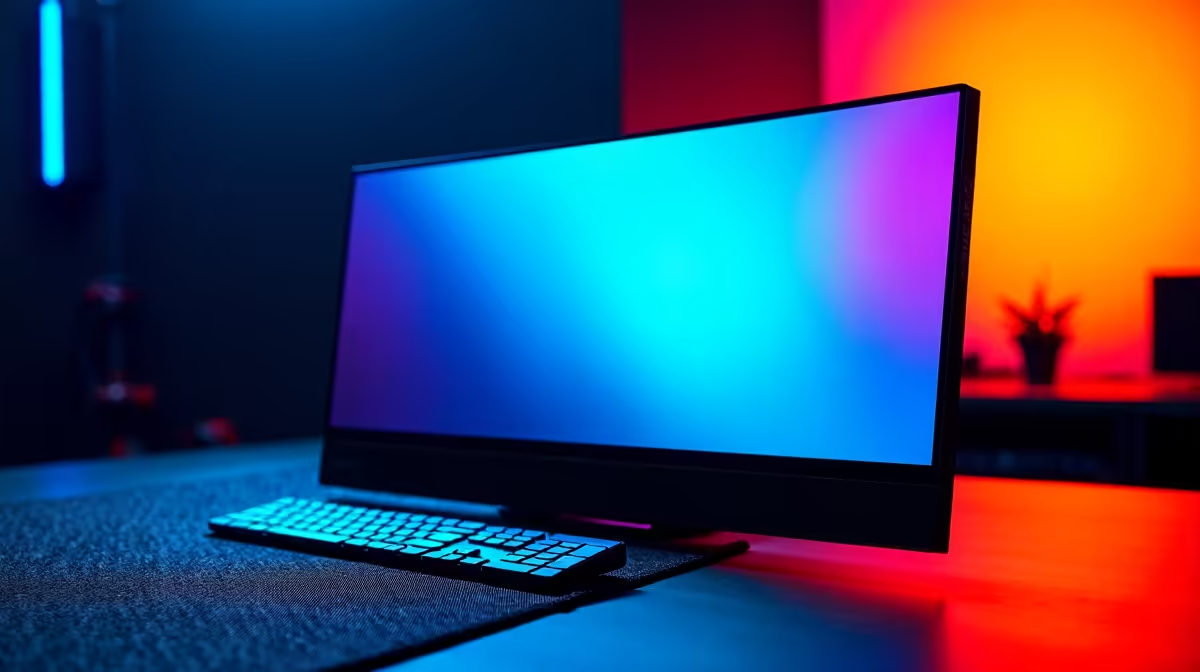
OLED gaming monitors suit SA players who want deep contrast and fast motion, with modern panels offering 0.03ms response and 240Hz-plus refresh. They are best for evening and mixed-light rooms; in harsh daylight, check brightness and reflections first. Choose by resolution, refresh rate, ports, panel-care features, and local warranty.
Image Quality And Comfort For Daily Gaming
OLED shines when you value contrast and motion clarity. Dark scenes look convincing and fast movement stays clean thanks to near-instant 0.03ms response. That makes it ideal for cinematic games, competitive sessions at 240Hz-plus, and mixed entertainment setups. The room still matters: a desk in harsh daylight needs a check of peak brightness and reflections, while evening play makes OLED's contrast easy to appreciate. Also weigh text clarity if the screen doubles as a long-session work display.
Ports, Resolution And Graphics Card Fit
Do not buy the panel in isolation. Match it to your GPU, resolution, and cable standard, since a 240Hz 1440p or 4K OLED only delivers if your card can feed it through the right DisplayPort or HDMI connection. Console users should confirm HDMI 2.1 features. Size is a comfort choice too: a 32-inch or 34-inch ultrawide feels immersive only if your desk depth lets you sit at a natural distance.
FAQ
Are OLED gaming monitors good for daytime use?
They can be, but glossy OLEDs show reflections in harsh light. Check peak brightness and consider a matte or semi-glossy panel if your desk sits in direct daylight.
What refresh rate do OLED gaming monitors offer?
Modern OLED gaming panels run 240Hz and higher with 0.03ms response, giving excellent motion clarity for competitive and fast-paced titles.
Do OLED monitors still get burn-in?
Modern panels include pixel-refresh and protection features that greatly reduce the risk. Let those features run, keep static elements in check, and avoid leaving bright fixed content up for hours.
screen must handle both work and gaming, compare text clarity, brightness controls, and panel-care settings before refresh rate. Then actually use the pixel-refresh routine to protect the panel.