


550W PSU Planning for RTX 5080 Super Builds in SA
550W for RTX 5080 Super needs a full-build check, not a simple yes. Review GPU guidance, CPU draw, transient load, connectors, PSU quality, and upgrade plans before deciding.
Read moreChoose OLED or IPS by comparing the exact panels, your visual work and relevant display measurements. At R17,999, the ProArt PZ13QA supplies the OLED side with a 13.3in WQXGA+ touchscreen.
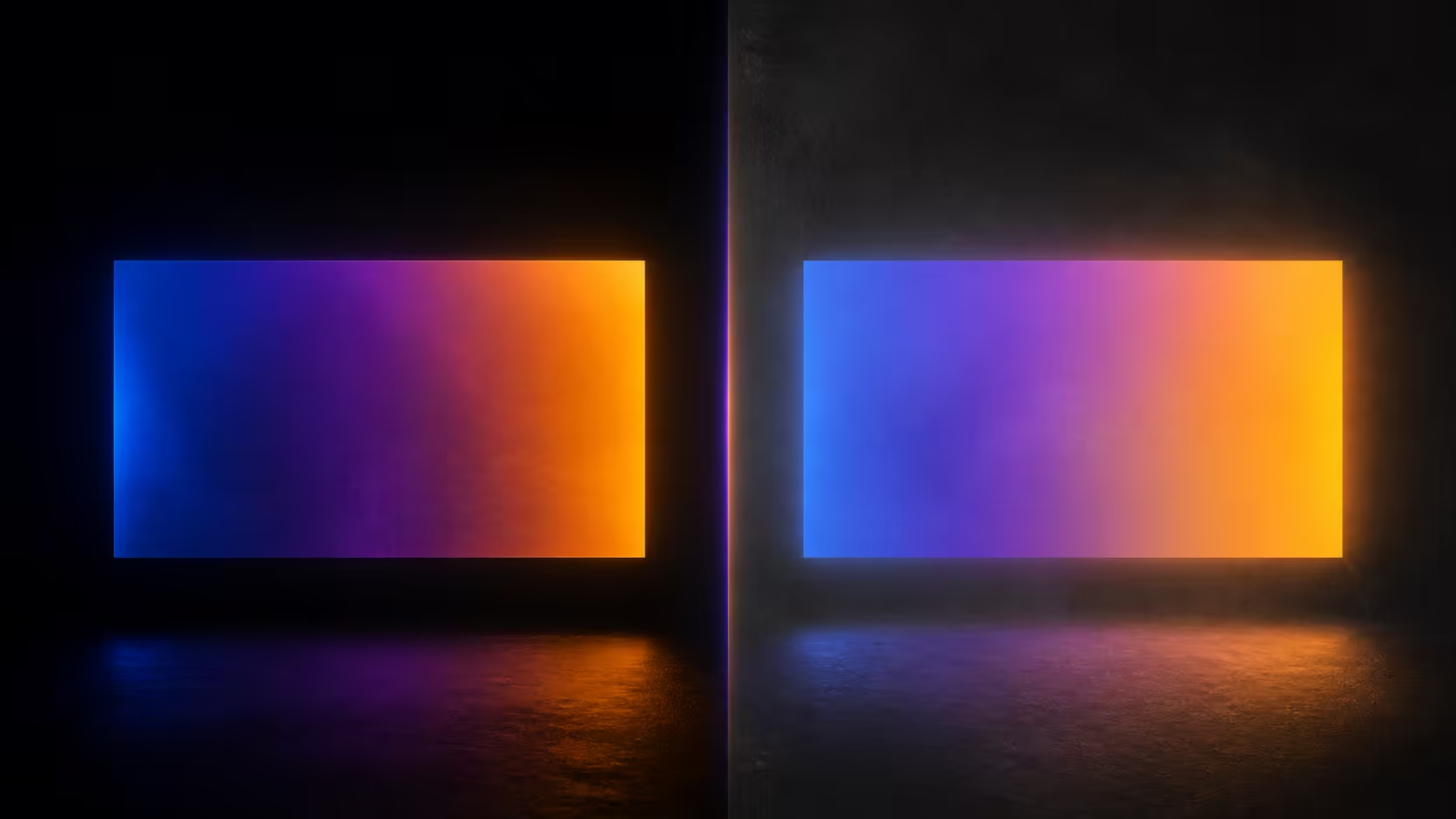
OLED and IPS describe different ways to produce an image, but creators buy a complete panel rather than a technology label. The right OLED vs IPS laptop display choice comes from the work, the measured screen behaviour and the viewing conditions that matter to it.
OLED can offer pixel-level light control, while IPS uses a backlight behind its liquid-crystal layer. Neither technology is automatically the best for every creator. The PZ13QA supplies the OLED comparison point at R17,999 through a 13.3in WQXGA+ touch panel. Judge that exact screen against one named IPS alternative.
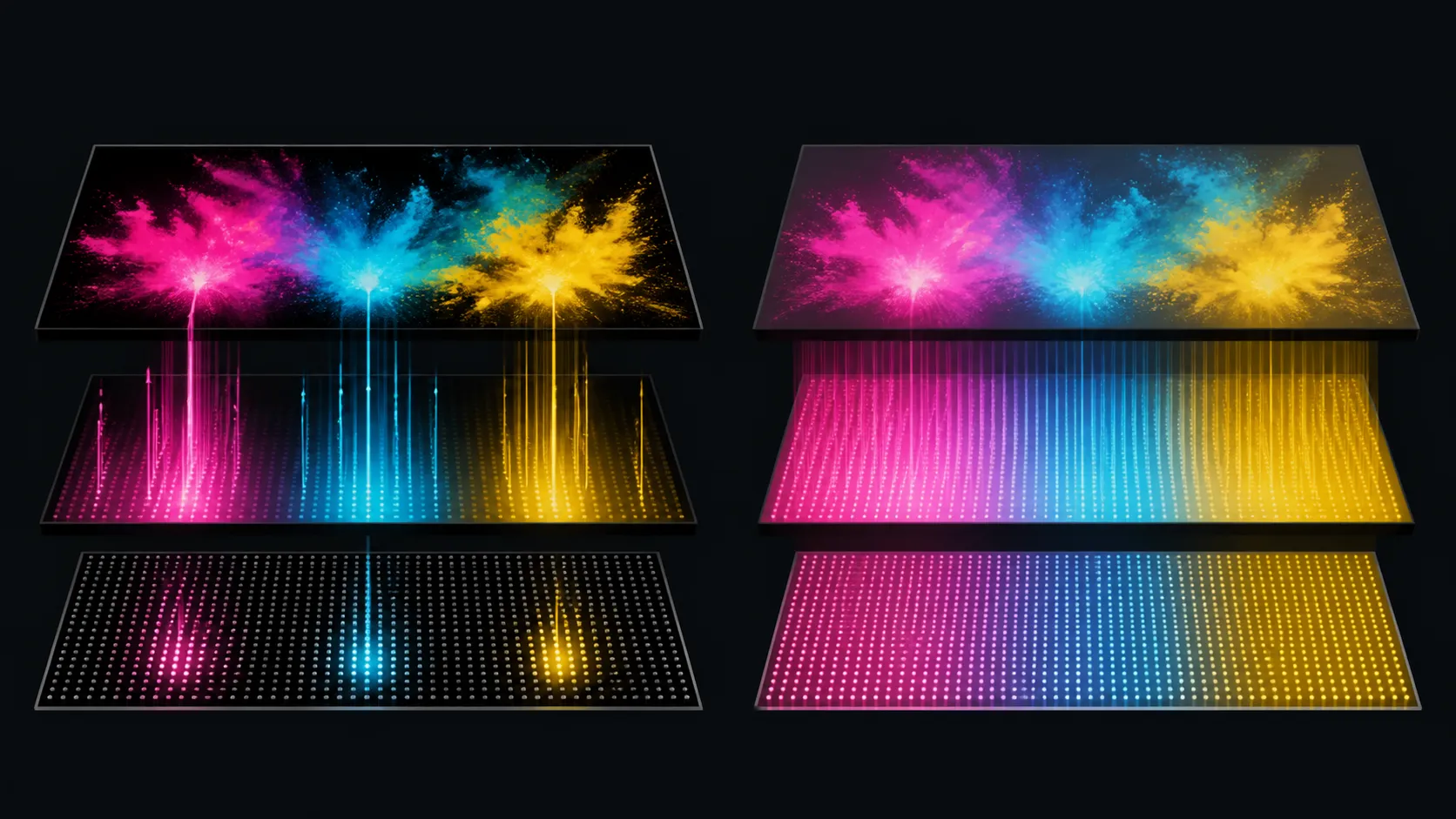
Start with the output you create. Photo review, illustration, video timelines and text-heavy layouts place different demands on a screen. Decide whether dark-scene separation, fine detail, motion, consistent colour or extended static use deserves the highest priority.
Panel technology explains part of the picture. It does not provide the brightness, colour coverage, calibration behaviour or refresh characteristics of an unnamed laptop. Use relevant measurements and a familiar project when those qualities affect paid work.
The creator laptop collection at Evetech lets you compare complete devices after setting those visual priorities. Keep processor, memory and storage equal enough that a display judgement does not accidentally become a platform comparison.
An OLED pixel creates its own light and can switch off individually. An IPS panel controls light from a backlight. That distinction can shape black levels and contrast behaviour, but implementation still matters, and the technology name alone cannot confirm a professional colour result.
Use the same image on both candidates, disable dramatic store-style presets and inspect from the positions used during work. Include mid-tones, gradients, skin tones and dark material if they occur in your projects. A fair review needs more than a vivid demo clip.
The PZ13QA adds direct touch to its WQXGA+ OLED screen. Touch may help with navigation and review, but it should not be counted as proof of stylus support. Confirm pen requirements independently if drawing or handwriting is central to the purchase.
Compare AI PC configurations through Evetech when local AI features also matter. The ProArt includes a 45 TOPS NPU, yet the NPU does not change the OLED-versus-IPS mechanism and should remain a separate decision line.
Create one page for the comparison and name the exact laptop on each side. Record screen size, resolution, touch capability, relevant measurements, scaling setting and the content used for review. This prevents an OLED result from one model being applied to every OLED panel, or an IPS result from being treated as a rule for the whole technology.
Add observations in task language. "Dark details remain distinguishable in this project" is more useful than "looks better" because it can be checked again. Note any trade-off that affects long sessions, such as interface size, reflections or the need to change a viewing preset, but only when it has been observed on the device.
Finish with a pass or fail for the visual work, not a technology winner. A panel can be the right choice for editing and the wrong choice for another creator's static layout routine. The log keeps that conclusion attached to its evidence.
No. The exact panel, project type and measured behaviour determine suitability. An IPS laptop with the right characteristics can fit one workflow better than an unrelated OLED model.
The OLED comparison model uses a 13.3in WQXGA+ touch panel. Those terms cover diagonal, resolution class, technology and input, not every professional display measurement.
Use the same content, comparable settings and normal room conditions. Judge the qualities required by your output instead of choosing the most dramatic default presentation.
Not necessarily. Finger input and an active stylus use distinct capability checks, so confirm the exact pen system before including digital drawing.
R17,999 covers this OLED-screen PZ13QA. The rest of that package includes Snapdragon X Plus, a 16GB LPDDR5X working set, 1TB for files and 45 TOPS of NPU capacity.
Ready to judge creator displays with your own material? Set the visual priorities first, then compare exact OLED and IPS laptops under the same practical viewing conditions.
No. The exact panel, project type and measured behaviour determine suitability. An IPS laptop with the right characteristics can fit one workflow better than an unrelated OLED model.
The OLED comparison model uses a 13.3in WQXGA+ touch panel. Those terms cover diagonal, resolution class, technology and input, not every professional display measurement.
Use the same content, comparable settings and normal room conditions. Judge the qualities required by your output instead of choosing the most dramatic default presentation.
Not necessarily. Finger input and an active stylus use distinct capability checks, so confirm the exact pen system before including digital drawing.
R17,999 covers this OLED-screen PZ13QA. The rest of that package includes Snapdragon X Plus, a 16GB LPDDR5X working set, 1TB for files and 45 TOPS of NPU capacity.
550W for RTX 5080 Super needs a full-build check, not a simple yes. Review GPU guidance, CPU draw, transient load, connectors, PSU quality, and upgrade plans before deciding.
Read more
8000Hz polling is overrated for most SA gamers because gains can be tiny next to battery drain and monitor limits. Mbombela players should weigh mouse feel, game support, and system stability before chasing the number.
Read more
Magnetic switches are taking over SA gaming keyboards because actuation can be tuned. For Sandton gamers, rapid trigger, reset control, and profile depth can help, but layout, key feel, and software quality still matter.
Read more
Polokwane oled monitor value questions need cautious SA context because pricing can move with availability, exchange rates, specs, and warranty support. Treat the trend as a planning signal, not a fixed price promise.
Read more
Arc B580 budget builds for Midrand gamers can shift with exchange rates, supply, specs, and model tier. Treat the title as a buying prompt, then compare SA warranty, timing, and build priorities.
Read more
ROG Ally X may beat the LCD Steam Deck for SA gamers who value stronger handheld performance, more memory, and Windows flexibility. Compare battery life, controls, game libraries, and Polokwane support needs before deciding.
Read more
Minisforum's M2 Pro pairs Core Ultra X7, Arc B390 graphics and 32GB onboard memory in 1.8 litres. SA buyers should weigh its fixed memory and $1,439 launch offer against local mini PCs.

Lenovo says Legion Go failures linked to BIOS N3CN42WW are not user error. Affected SA owners should stop retrying the update, preserve proof and open a support case.

Smart monitors can add apps and convenience, but they also add privacy settings and unwanted-software risk. SA buyers should audit the operating system before paying for extras.

A fake 113GB GTA VI ISO reportedly used empty padding around a small malware payload. SA gamers should delete unofficial builds, keep Windows security active and wait for official channels.
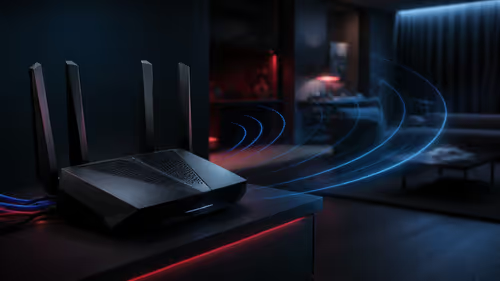
ASUS calls the ROG GT-BN98 the first Wi-Fi 8 gaming router. SA buyers should fix coverage and client limits before paying for a future wireless standard.
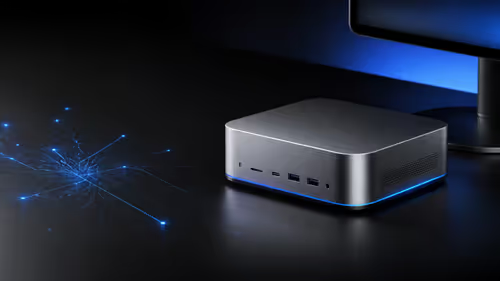
Apple's M6 Mac mini adds faster AI, graphics and networking in the same compact format. SA buyers should wait for a rand listing before comparing value.
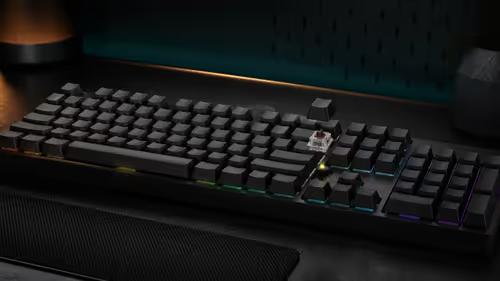
The Vulcan II XP adds hot-swappable switches, sound damping and gaming controls to a full-size wired board. SA buyers should compare feel before features.

Microsoft says Windows on Arm now has over 7,000 verified apps and games. SA buyers should still check each driver, game and work tool before switching.

Xbox Insiders can test disc-to-digital from 31 August 2026. Supported Xbox One and Series X discs gain a digital entitlement, but older discs, regions and title coverage still need exact checks.
ViewSonic's XG2738 pairs QHD QD-OLED with 240Hz and automatic panel care. SA buyers should compare warranty, brightness, ports and burn-in protection against today's R9,999-plus OLED shelf.

NVIDIA's final Windows 10 Game Ready driver is due in October 2026. SA gamers can keep using their GPU, but new game optimisations move on while critical security fixes continue quarterly.

JBL's new Quantum 520, 520X and 120 headsets cover wireless, Xbox-certified and wired use. SA buyers should compare connection, comfort and microphone needs before paying for a new badge.