RAM prices have cycled through shortage and oversupply many times. Demand can fall faster than new fabs stop producing, inventories build and prices weaken. The reverse happens when output discipline, node transitions or a new demand wave meet lean stock. The 2026 cycle stands out because AI infrastructure is pulling on HBM, server DRAM and broader memory investment at once.
Quick Answer
Do not read 2020 to 2026 as a smooth price line. Pandemic demand, logistics, PC inventory corrections, supplier cuts and the AI build-out created different phases. The present spike may prove more persistent than a simple restocking bump, but memory remains cyclical and no history chart can promise the turning month.
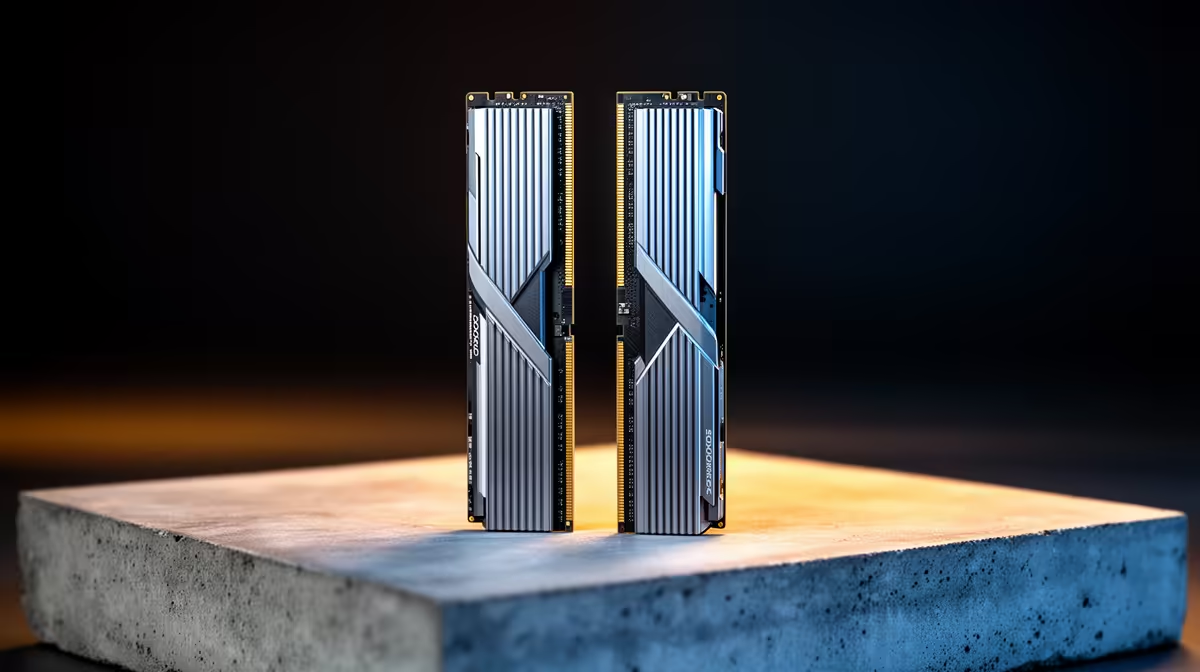
Evetech's DDR5 catalogue gives you current product-level comparisons. The popular memory kits help keep the decision tied to usable capacity and platform support rather than a broad index.
2020 and 2021 Were Disrupted Years
PC and electronics demand rose while logistics and semiconductor supply faced disruption. Memory shared that wider pressure, though product generations and contracts moved on their own schedules.
Retail prices did not follow one global index at once. Old stock, currency and regional supply created lags.
The Downcycle Followed Inventory
As PC demand cooled and inventories grew, buyers worked through excess stock. Suppliers responded with production discipline and capital changes. Falling component cost reached finished kits over time.
That downcycle is a reminder that shortages can reverse. It does not tell us when AI-era demand will slow or new output will catch it.
What Is Different in 2026
HBM and server memory serve large AI systems with high capacity and bandwidth. Major suppliers are expanding high-value AI products and reporting strong demand.
This affects company-wide allocation and investment, but consumer DDR5 is not the same package or contract. Conventional demand, yields and inventory still matter.
New clean-room and tool capacity takes years, which can make structural demand harder to answer than one quarter of restocking.
Use History Without Timing the Bottom
Buy from workload need and total build value. Track the exact kit, not a generic dollars-per-gigabyte graph. A motherboard may favour a stable mainstream speed over a discounted extreme bin.
If the PC works today, waiting is an option. If capacity causes paging and lost work, the cost of delay belongs in the calculation.
Keep a dated screenshot or note for the exact SKU and ignore stockless teaser prices. A useful history records products you could buy, including their warranty and delivery conditions, rather than a theoretical chip index alone.
FAQ
Have RAM shortages happened before 2026?
Yes. Memory has a long supply-and-demand cycle with periods of tightness and oversupply.
What makes 2026 different?
Large AI infrastructure demand is raising HBM and server-memory priorities across the dominant suppliers.
Do cycles last months or years?
Either. Inventory can turn quickly, while new capacity and structural demand can take years to rebalance.
Use the cycle as risk context, then buy or wait from the exact kit, workload need and total build cost in front of you.